

Cet article intègre les principes fondamentaux du bus CAN Conception de circuits imprimés dans une orientation orientée ingénierie, analyse approfondie. Il commence par les tendances du marché et approfondit progressivement les points de décision techniques clés., comme la formule du coefficient de réflexion, critères de longueur du talon, et le placement stratégique des selfs de mode commun. Il se termine par une liste de contrôle de conception complète. Chaque élément de données contenu dans cet article provient de sources faisant autorité, et chaque conclusion a été validée dans des conditions de fonctionnement pratiques. Que vous conceviez un calculateur de qualité automobile ou que vous installiez un bus CAN industriel longue distance, cet article vous aidera à réexaminer ces “niveau millimétrique” détails qui déterminent le succès ou l’échec de la communication.
Après avoir lu cet article, vous acquerrez une compréhension approfondie de:
- Pourquoi le cœur du bus CAN PCB le design est un jeu de compromis au niveau millimétrique.
- Comment garantir l'intégrité du signal à l'ère CAN FD et CAN XL grâce au placement précis des résistances de terminaison, contrôle de talon, et disposition de suppression en mode commun.
- Comment éliminer les risques cachés qui pourraient vous tourmenter lors de la production de masse, à partir de la conception de haut niveau.
1. Introduction: La communication CAN est partout, mais le défi de la conception de PCB ne fait que commencer
Des cockpits automobiles aux lignes de production industrielles, La technologie du bus CAN connaît une pénétration profonde et une itération rapide sans précédent.
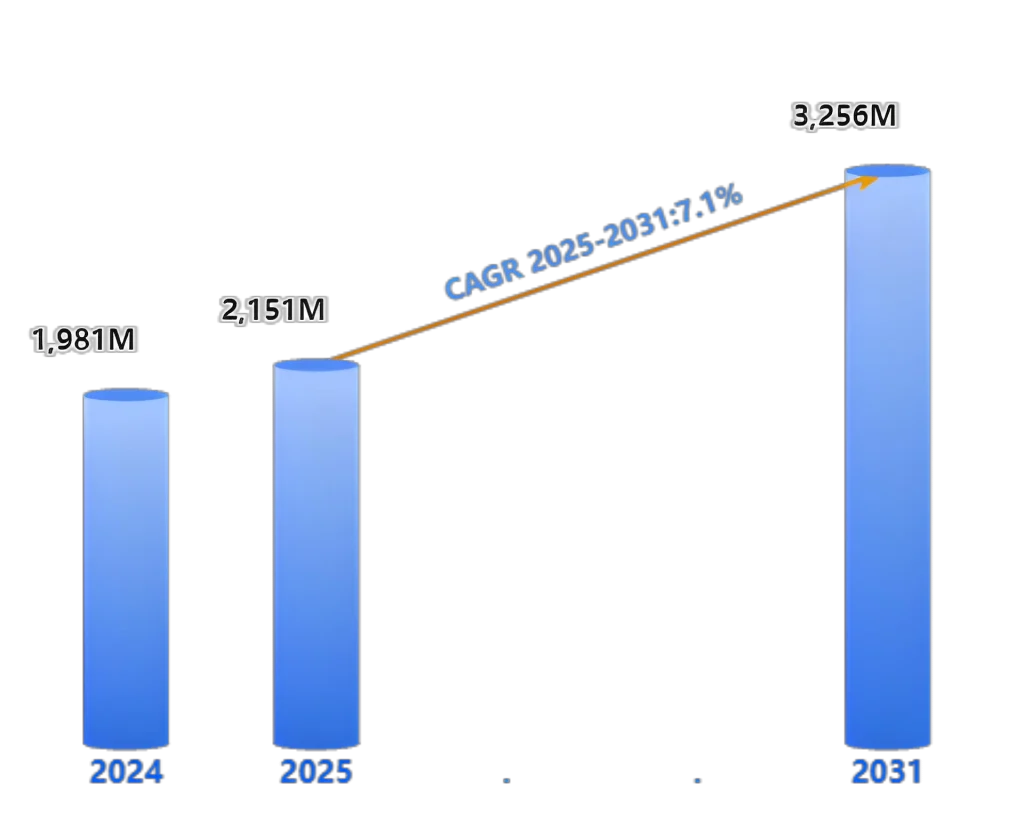
Selon un rapport de l'industrie publié par QYResearch, le marché mondial des émetteurs-récepteurs de bus CAN était évalué à environ USD 2.151 milliards dans 2024 et devrait atteindre USD 3.465 milliards 2032, représentant un taux de croissance annuel composé (TCAC) d'environ 7.1% depuis 2026 à 2032. Le réseau global de la zone de contrôleur (PEUT) le marché était évalué à environ USD 1.981 milliards dans 2024 et devrait atteindre USD 3.256 milliards 2031. Entre-temps, le marché des modules d'interface de bus CAN était évalué à USD 1.33 milliards dans 2025 et devrait croître à un TCAC de 7.98% pour atteindre l'USD 2.28 milliards 2032. Derrière ces chiffres se cache le fait que l’évolution des technologies de communication redéfinit les limites de la conception des couches physiques..
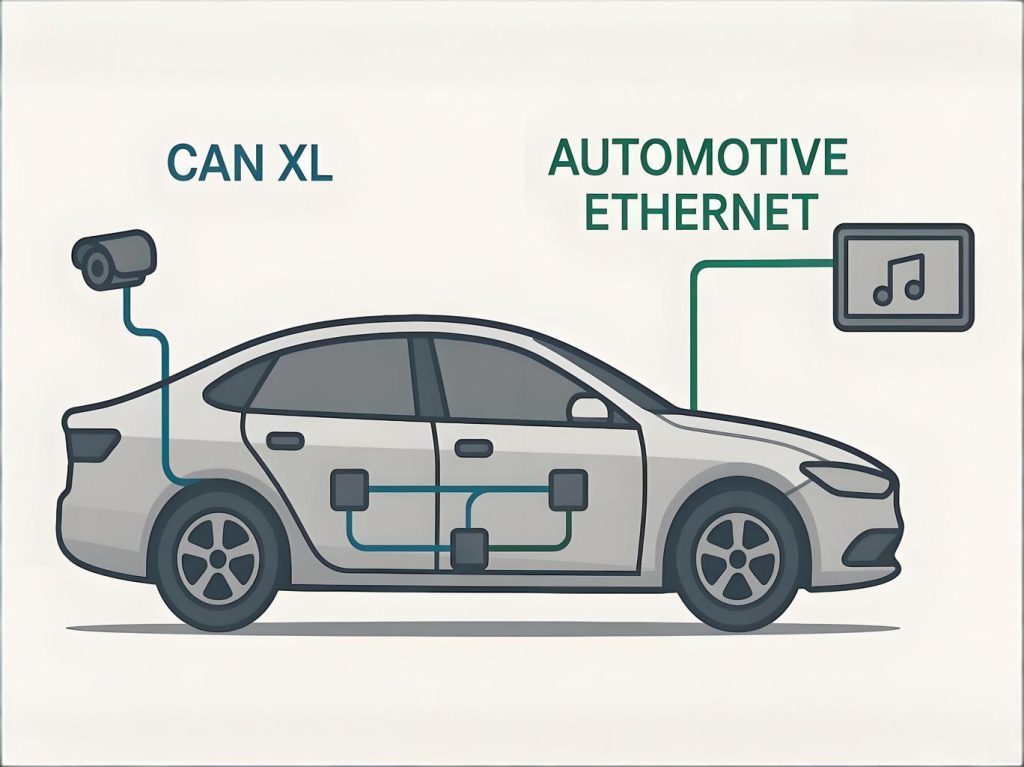
Les changements dans le secteur de l’électronique automobile sont particulièrement spectaculaires. Dès 2024, la part du CAN traditionnel dans les systèmes électroniques automobiles a chuté de plus de 90% dans 2018 à environ 60%, tandis que la part du CAN FD est passée de moins de 5% à environ 25%. Selon les enquêtes de l'industrie, le taux de pénétration de CAN FD dans les modèles de voitures nouvellement lancés en 2025 dépassera 60%. Le taux de transmission de phase de données de CAN FD peut atteindre 8 Mbit/s, soit huit fois celui du CAN traditionnel (avec une limite supérieure de 1 Mbit/s). La technologie CAN XL progresse également rapidement, avec une longueur maximale de champ de données de 2024 octets, fournir une base de couche physique plus solide pour les réseaux fédérateurs bas de gamme et le fonctionnement sous-jacent des protocoles Ethernet haut de gamme.
Plus le débit de données est élevé, plus le “détails” dans la conception de PCB devient. Chaque “niveau millimétrique” une erreur dans la conception de la couche physique peut être amplifiée au niveau du réseau et entraîner des pannes de communication catastrophiques.
2. Résistance de terminaison: La logique physique et la recherche de l'excellence derrière 120Ω
Dans une topologie de bus CAN, les deux résistances de 120 Ω aux extrémités physiques du bus constituent la dernière et la plus importante ligne de défense pour l'intégrité du signal.
La valeur de 120Ω n'est pas arbitraire. Selon l'ISO 11898-2 standard, l'impédance caractéristique de la paire différentielle CAN_H et CAN_L est spécifiée comme 120Ω. Cette spécification est parfaitement cohérente avec l'impédance caractéristique des câbles à paires torsadées, blindés ou non, largement utilisés dans l'industrie automobile..
Dans la théorie des lignes de transmission, l'efficacité de l'adaptation des résistances de terminaison peut être mesurée par le coefficient de réflexion. La définition mathématique du coefficient de réflexion (C) est le suivant:
Γ = (Z_L – Z_0) / (Z_L + Z_0)
OùZ_L est l'impédance de charge (c'est-à-dire, la résistance de terminaison), etZ_0 est l'impédance caractéristique (120Oh) de la ligne de transmission (traces différentielles). Lorsqu'aucune résistance de terminaison n'est connectée à l'extrémité du bus, Z_L se rapproche de l'infini, et Γ ≈ 1, ce qui signifie que presque toute l'énergie du signal est réfléchie. Lorsqu'une résistance de terminaison de 120 Ω est correctement connectée, Z_L ≈ Z_0, alors Γ ≈ 0, les reflets disparaissent, et la forme d'onde devient propre.
Dans la sélection et la disposition des composants, c'est une bataille persistante contre les paramètres parasites. Résistances à puce dans 0603 ou 0402 les packages sont préférés car ils ont une inductance parasite inférieure à celle des 0805 emballer. La résistance de terminaison et ses vias de connexion doivent être placés aussi près que possible du connecteur ou des broches de l'émetteur-récepteur CAN.. Le chemin allant du plot de résistance au via sur le plan GND doit être “court et épais” pour minimiser l'inductance du chemin de retour.
3. Stubs et topologie: Le “Tueur invisible” au niveau millimétrique dans la conception des circuits imprimés du bus CAN
Alors que CAN FD se dirige vers 8 Mbps et des débits de données encore plus élevés, le “bout” évolue d'une clause de routine dans les spécifications de conception à un facteur clé affectant le succès ou l'échec du système.
Dans un “guirlande” topologie, une fois que le délai aller-retour de chaque court segment de trace bifurquant du bus principal vers l'émetteur-récepteur dépasse 1/4 du temps de montée du signal, les réflexions commencent à avoir un impact significatif sur la qualité du signal. La formule théorique pour calculer la longueur du talon est la suivante:
L_stub = 0.1 × t_r × v × c
Où v est la vitesse de propagation du signal dans le Matériau diélectrique PCB (environ 0.5 fois la vitesse de la lumière c pour matériau FR4), c est la vitesse de la lumière (3×10⁸m/s), et t_r est le temps de montée du signal.
Quand le temps de montéet_r de CAN FD se raccourcit à 10 ns, la longueur théorique maximale autorisée du talonL_stub est approximativement:
L_stub = 0.1 × (10×10⁻⁹ s) × 0.5 × (3×10⁸ m/s) = 0.15 m
C'est 150 mm. Pour les CAN traditionnels avec un temps de montée de 50 ns, cette valeur est aussi élevée que 750 mm.
Cependant, dans les conditions réelles de travail — dérive de température, vieillissement des composants, et l'effet cumulatif des réflexions de plusieurs nœuds - peuvent gravement comprimer cette marge. Donc, l'industrie recommande généralement de contrôler la longueur du tronçon sur le PCB du bus CAN à l'intérieur 100 mm (0.1 m).
Dans une conception pratique, le “guirlande” la topologie doit être strictement respectée, avec des résistances de terminaison placées aux extrémités physiques du bus. Toute tentative de “étoile” la topologie transformera chaque branche en un stub incontrôlable, entraînant une forte détérioration de la qualité du signal.
4. Self de mode commun et terminaison divisée: Attaque et défense en EMC
Le placement de la self de mode commun est le détail le plus délicat de toute la conception CEM., tester les compétences du concepteur.
L'ordre de placement correct est: Connecteur → Diode TVS → Self de mode commun → Résistance de terminaison → Émetteur-récepteur CAN. La self de mode commun doit être placée entre la résistance de terminaison et le connecteur, jamais entre la résistance de terminaison et l'émetteur-récepteur. La présence de la résistance de terminaison (120Oh) est d'absorber l'énergie du mode différentiel sur le bus. Si la self est placée après la résistance de terminaison, sa propre capacité parasite (généralement de quelques pF à plus de dix pF) interagira avec la résistance 120Ω, former une résonance inutile aux hautes fréquences et détériorer la qualité du signal.
En termes de sélection de composants, une self de mode commun de 51 μH à 100 μH est recommandée pour les applications CAN embarquées, en utilisant un 0603 ou 0805 emballer. Série DLW43SH de Murata (avec un DCR typique de 4-6Ω) est un choix classique et fiable. Pour les applications CAN FD à vitesse plus élevée, une attention particulière doit être portée à la fréquence de résonance propre du starter (SRF), et modèles avec un SRF supérieur à 100 MHz doit être sélectionné.
La terminaison fractionnée est un moyen plus raffiné d'optimiser le filtrage en mode commun. Il utilise deux résistances de 60 Ω en série pour remplacer une seule résistance de terminaison de 120 Ω., et le point médian des deux résistances est connecté à GND via un condensateur (valeur typique: 4.7nF à 47nF).
Ce réseau RC forme un filtre passe-bas, et sa fréquence de coupure peut être estimée comme:
f_c ≈ 1 / (2π × R_eq × C), oùR_eq = (R/2) = 30Ω
Quand C vaut 10nF, la fréquence de coupuref_c est approximativement 530 kHz. Cela signifie que le bruit de mode commun haute fréquence sur le bus peut être efficacement contourné vers la terre via ce condensateur., tandis que le chemin du signal différentiel n'est presque pas affecté.
5. Conclusion et liste de contrôle de conception: La dernière étape de la théorie à la production de masse
| Vérifier l'article | Exigence de conception |
|---|---|
| Impédance différentielle | 120Ω ±10 % (±7 % recommandé pour CAN FD) |
| Résistance de terminaison | Un 120Ω à chaque extrémité du bus physique, 1% tolérance, 0603 ou 0402 emballer |
| Inclinaison intra-paire | ≤2,54 millimètres (≤1 mm pour CAN FD) |
| Longueur du talon | ≤100 millimètres, plus c'est court, mieux c'est |
| Topologie | Chaîne en série stricte, terminaison aux deux extrémités, topologie en étoile interdite |
| Starter en mode commun | Situé entre la résistance de terminaison et le connecteur, 51-100µH, SRF > 100 MHz |
| Plan de référence | Complet, plan GND continu, aucun routage de trace à travers des plans divisés |
| Espacement par rapport à d'autres signaux | >3W ou >50 mil, éviter le routage parallèle longue distance |
| Protection ESD | TVS près du connecteur, capacité de jonction <10 pF, contrôler strictement la capacité totale du nœud |
| Résiliation fractionnée | Facultatif (2×60Ω en série + 4.7Capuchon nF-47nF à GND), améliore le filtrage en mode commun |
| Nombre de voies | ≤3 vias sur paire différentielle CAN pour éviter l'introduction d'inductance parasite et de discontinuité d'impédance |
| Coin des traces | Utiliser un routage en biseau ou en arc à 45°, 90° coins strictement interdits |
Toute l'essence de la conception des circuits imprimés du bus CAN est condensée dans l'exécution rigoureuse de chaque détail répertorié ci-dessus.. En tant que bus CAN professionnel Fournisseur de PCBA, nous avons aidé des milliers d'ingénieurs à réussir, du schématique à la production de masse.
Pour transformer votre projet de bus CAN des dessins de conception en fiable, produits productibles en série, veuillez nous contacter pour les professionnels PCB services d'assistance à la conception et de fabrication.
Notes de citation des données
- Toutes les données citées proviennent de sources accessibles au public, rapports de recherche faisant autorité (Recherche et marchés, Recherche GII, QYRecherche, Forum TI E2E, Remarque sur l'application NXP, Publications du CiA, etc.).
- Tous les paramètres et formules électriques ont été validés de manière croisée avec des sources traditionnelles.
- Les citations standard incluent le numéro standard et l'année.