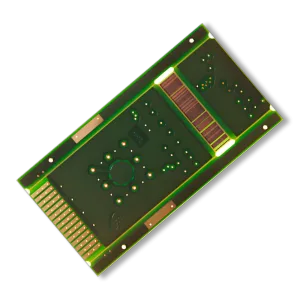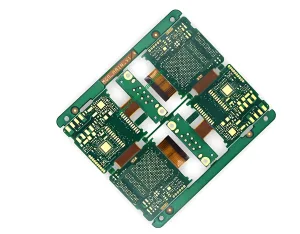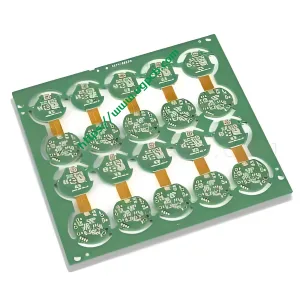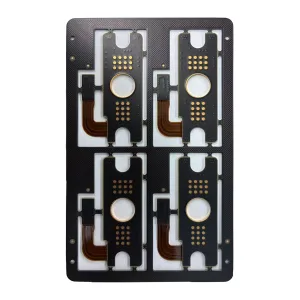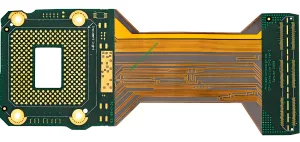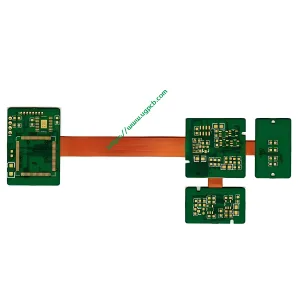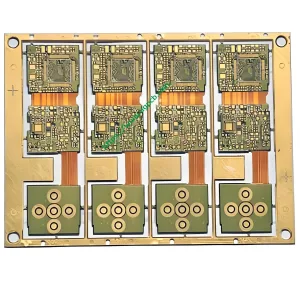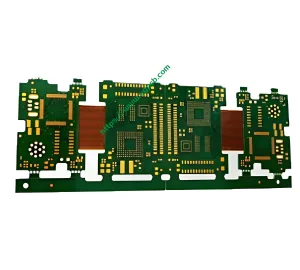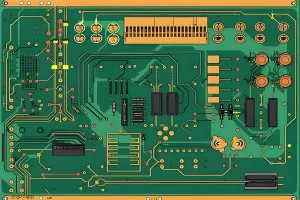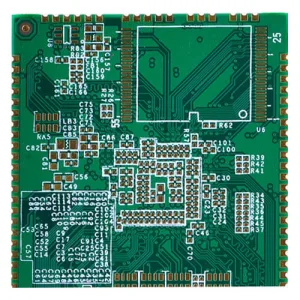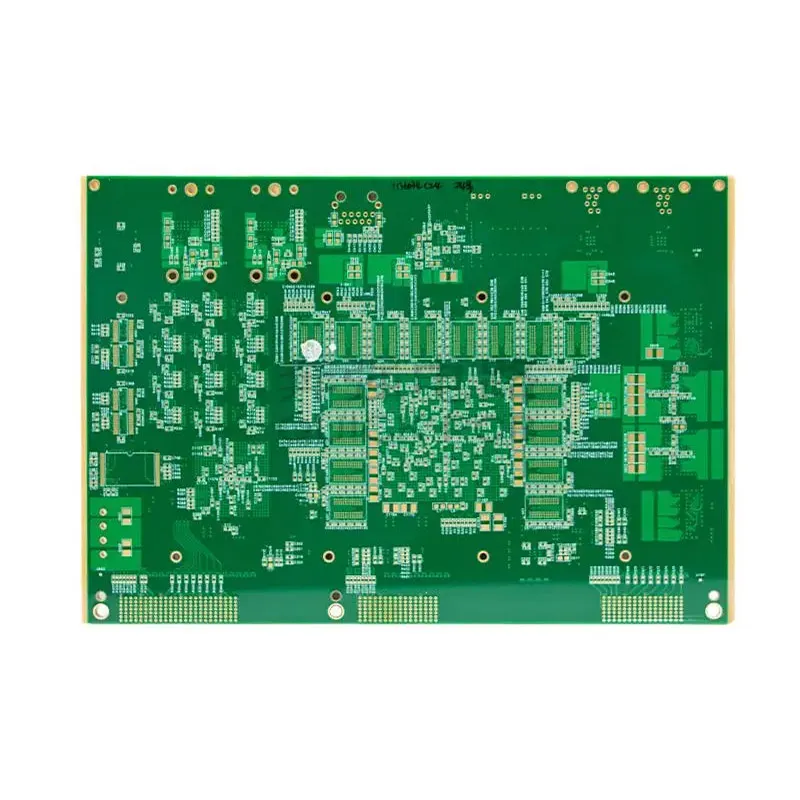
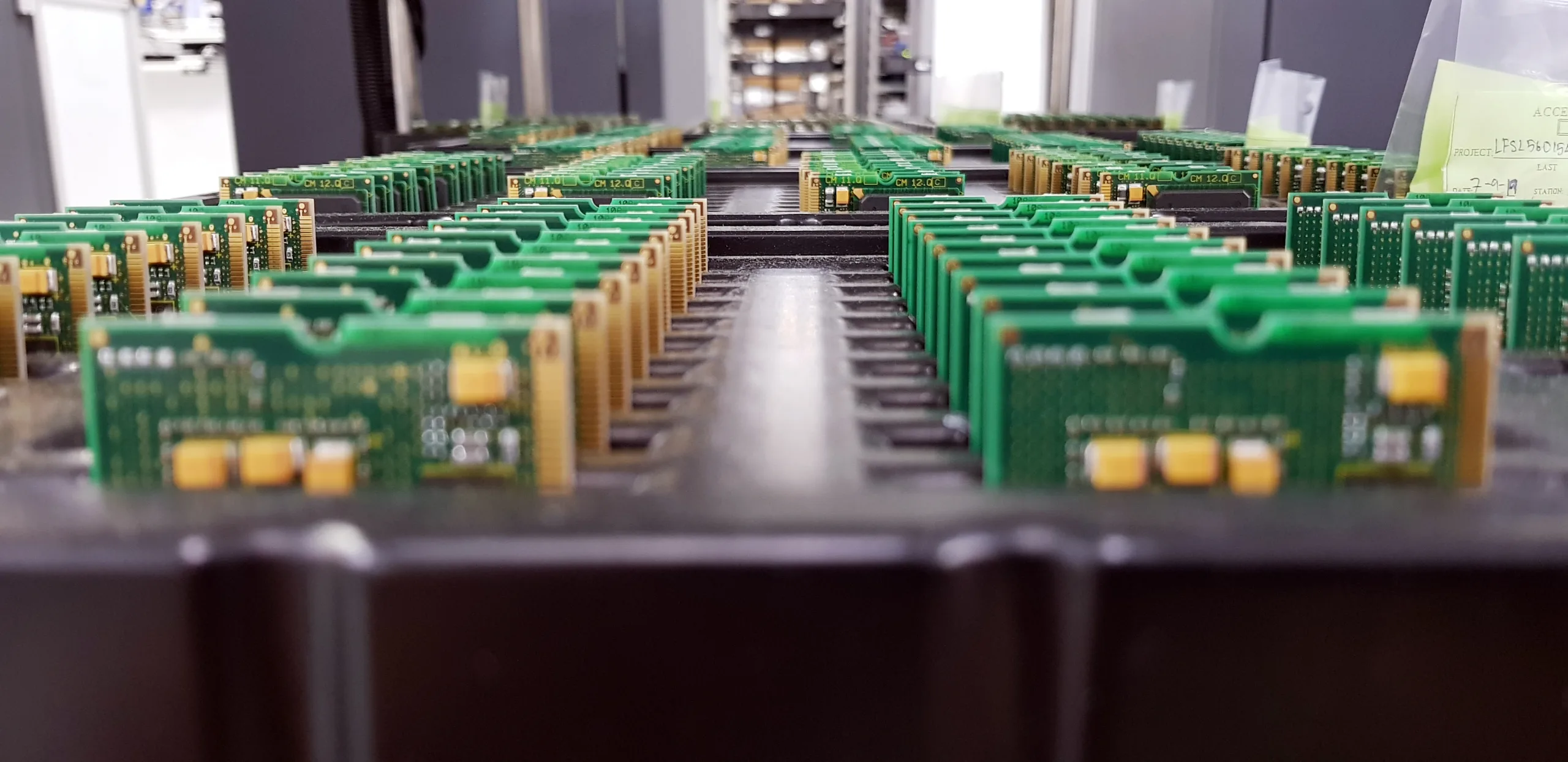
Comme communication 5G, aérospatial, et les appareils électroniques médicaux haut de gamme progressent rapidement, l'espace interne du produit devient de plus en plus compact, tout en exigeant une stabilité et une fiabilité de transmission du signal plus élevées. Rigide traditionnel PCB ou les connexions par câbles ne peuvent plus répondre à ces exigences de conception complexes. UGPCB 8-couche PCB rigide-flexible, avec sa structure intégrée rigide-flex unique, résout parfaitement les défis de l'assemblage tridimensionnel et de l'interconnexion haute densité. Il fournit un idéal “rigide et flexible” support pour vos créations.
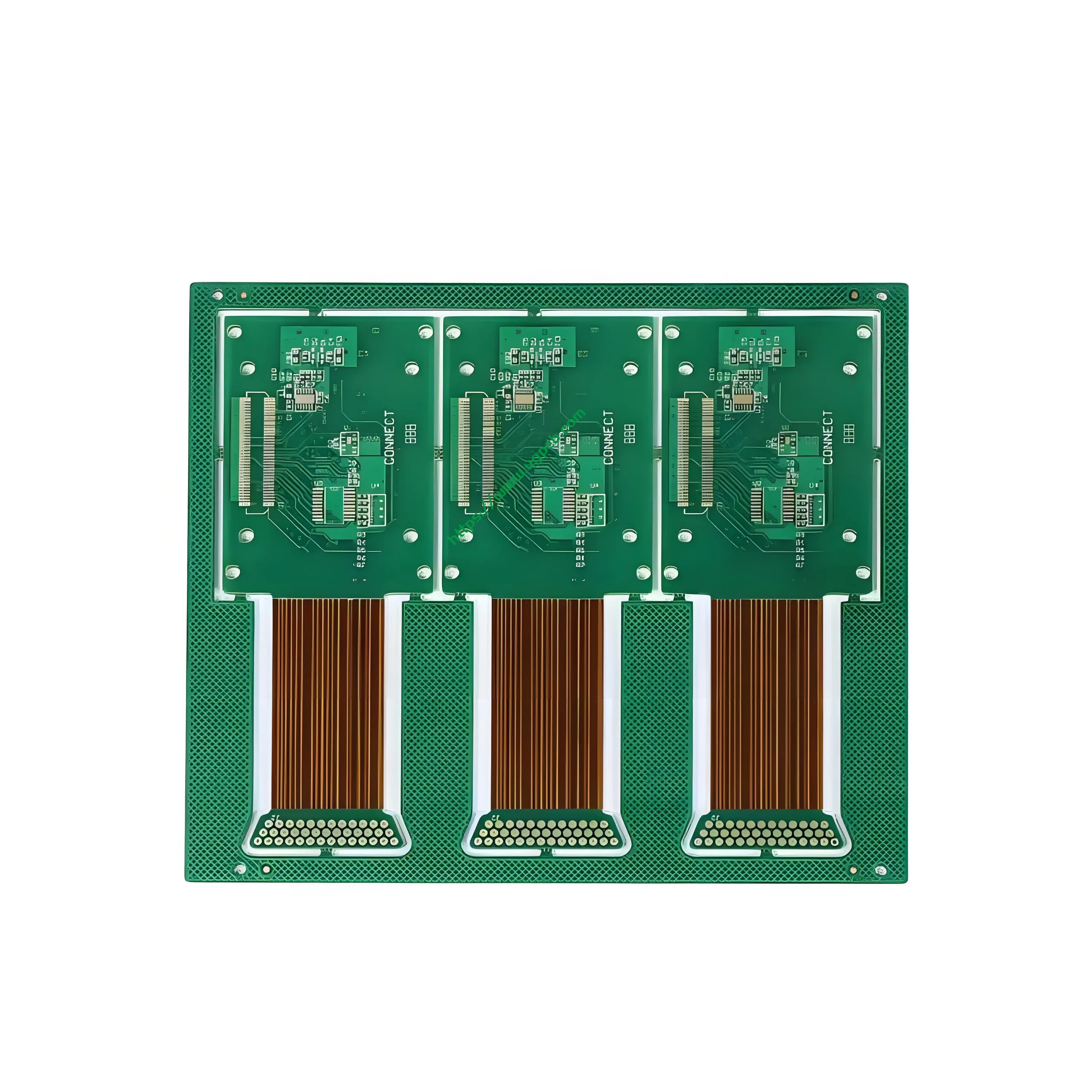
Qu'est-ce qu'un PCB rigide-flexible?
UN PCB rigide-flexible est un circuit imprimé composite formé en combinant circuits imprimés flexibles et circuits imprimés rigides grâce à un processus de laminage, selon les exigences spécifiques de conception du circuit.
Ce n'est pas une simple superposition physique. Plutôt, il intègre les caractéristiques de pliage et de pliage des circuits flexibles avec la haute résistance mécanique et la capacité de charge des circuits rigides. Dans le produit de l’UGPCB, nous réalisons une interconnexion électrique transparente entre 4 couches rigides et 4 couches flexibles grâce à une conception d'empilage précise. Cela permet à un seul circuit imprimé de monter les composants en toute sécurité tout en se pliant et en naviguant dans des espaces restreints..
Faits saillants de conception: Structure rigide-flexible précise à 8 couches
Pour répondre aux exigences strictes des équipements de communication en matière d'intégrité du signal et de stabilité mécanique, Le produit de l'UGPCB adopte une configuration symétrique 8-couche (4R+4F) conception de structures.
-
Contrôle d'empilement: Quatre couches rigides (en utilisant FR-4) héberger des dispositifs logiques complexes, tandis que quatre couches flexibles (en utilisant du polyimide) permettre les connexions de signaux dans différentes zones. Cette conception évite efficacement l'atténuation du signal et les erreurs d'assemblage causées par les connecteurs et les câbles..
-
Correspondance d'impédance: À l'interface rigide-flexible, nous mettons en œuvre des transitions de trace douces pour assurer la continuité de l'impédance, ce qui est critique pour communication à grande vitesse applications.
-
Considération du rayon de courbure: Considérant la contrainte de flexion des structures multicouches, notre conception garantit que le rayon de courbure de la zone flexible est nettement plus grand que la valeur minimale autorisée (généralement plus de 10 fois l'épaisseur totale) pour éviter la rupture de la feuille de cuivre.
Principe de fonctionnement et structure
Le principe de fonctionnement de ce PCB rigide-flexible à 8 couches repose sur sa structure physique unique:
-
Zones rigides: Les quatre couches rigides assurent principalement un support mécanique aux composants, comme le montage de puces de contrôle principales, modules d'alimentation, et connecteurs. Les circuits internes sont interconnectés via des trous traversants plaqués.
-
Zones flexibles: Les quatre couches flexibles agissent comme “colonne vertébrale électrique,” responsable de la transmission des données entre les différents modules de l'appareil (par ex., entre la carte de commande principale et le panneau d'affichage ou le frontal RF). En raison de l'utilisation de polyimide substrat, ils peuvent se plier sous différentes formes pour s'adapter au boîtier de l'appareil.
-
Interface d'interconnexion: La jonction entre sections rigides et flexibles est spécialement traitée (par ex., connexions en forme de larme, transitions par étapes) pour assurer la fiabilité des connexions électriques lors de flexions dynamiques.
Matériaux de base et avantages en termes de performances
L'UGPCB sélectionne des matériaux de première qualité pour ce produit afin de garantir d'excellentes performances dans les environnements difficiles.:
-
Substrat: Combinaison de FR-4 et Polyimide. FR-4 offre une résistance mécanique dans les zones rigides, tandis que PI offre une résistance thermique exceptionnelle, résistance chimique, et flexibilité de vie dans des zones flexibles.
-
Feuille de cuivre: L'ensemble du conseil utilise 1 once épaisseur du cuivre. Pour zones flexibles soumises à des flexions dynamiques, l'utilisation de cuivre recuit laminé assure une excellente résistance à la flexion.
-
Finition de surface: Immersion Or avec 3m” épaisseur de l'or. L'épaisse couche d'or offre une planéité de surface supérieure et une fiabilité de contact supérieure., particulièrement adapté aux contacts nécessitant des insertions/retraits fréquents ou une connexion stable à long terme dans les équipements de communication.
Processus de fabrication et contrôle qualité
Pour réaliser haute précision 4mil/4mil traces et structures complexes à 8 couches, L'UGPCB suit un processus de production strictement standardisé:
-
Préparation de la couche interne: Fabriquer séparément quatre couches intérieures rigides et quatre couches intérieures flexibles. Utiliser micro-gravure pour traiter la surface flexible du panneau, assurer l'adhérence des traces.
-
Ouverture de fenêtre et oxyde brun: Fenêtres découpées avec précision dans les feuilles de liaison pour les zones rigides et flexibles afin d'éviter une flux de résine cela pourrait affecter la flexibilité des zones de flexion.
-
Laminage: Utiliser préimprégné sans écoulement pour lier des sections rigides et flexibles ensemble sous haute température et pression dans un processus de stratification unique ou séquentiel, assurant une liaison forte sans vides.
-
Forage et placage: Utiliser radiographie forage pour assurer précision d'alignement de plusieurs couches. Puis percez et retirez le frottis, suivi d'un placage de cuivre autocatalytique pour obtenir une connexion intercouche.
-
Routage: Utilisez un fraisage au laser ou à profondeur contrôlée pour fraiser avec précision l'excès de matériau dans les zones flexibles., libérer les sections flexibles.
Classification et applications des produits
Structurellement, ce produit appartient à panneaux rigides-flexibles multicouches (Taper 3 ou 4 selon les normes IPC-6013).
Scénarios d'application principaux:
-
Équipement de communication: Tels que les éléments d'antenne de station de base, connexions carte à carte au sein de RRU/BBU, modules de transmission de signaux haute fréquence.
-
Contrôle industriel: Connexions de circuits dans les bras robotiques, connexions entre les disques durs des PC industriels et les cartes mères.
-
Électronique médicale: Endoscopes, appareils auditifs, et divers miniaturisés, moniteurs portables haute fiabilité.
-
Électronique automobile: Cartes de boutons de commande au volant, connexions du module de caméra embarqué.
Pourquoi choisir le PCB rigide-flexible à 8 couches d'UGPCB?
Dans la fabrication de panneaux rigides-flexibles multicouches complexes, alignement intercalaire, contrôle du flux de résine, et une protection flexible des zones sont trois défis majeurs. UGPCB, avec son avancée systèmes d'alignement laser et fraiseuses à profondeur contrôlée, maintient la tolérance d'enregistrement intercouche à un niveau de pointe de l'industrie.
Que vous conceviez des stations de base de communication de nouvelle génération ou que vous développiez des équipements médicaux sophistiqués, UGPCB 8-PCB rigide-flexible à couche est un choix digne de confiance. Cela aidera votre produit à atteindre des possibilités infinies dans un espace limité.
Prêt à transformer votre conception innovante en réalité?
Ne laissez pas les processus complexes de fabrication de PCB ralentir votre développement. L'UGPCB offre un service à guichet unique, de l'examen technique à la production de masse.
Téléchargez vos fichiers Gerber maintenant pour un rapport d'analyse DFM gratuit et un devis hautement compétitif! Nos ingénieurs fourniront la solution de fabrication optimale dans 24 heures.
[Cliquez ici pour obtenir un devis]
UGPCB – Axé sur la haute précision Fabrication de circuits imprimés, Fournir un noyau fiable pour vos produits!