Dans l’évolution rapide d’aujourd’hui vers la légèreté, mince, court, et appareils électroniques compacts, le PCB rigide-flexible est devenu incontournable dans les domaines de haute précision comme les télécommunications, instruments médicaux, et aérospatial. Sa combinaison unique de support rigide et de flexibilité tridimensionnelle en fait un composant d'interconnexion essentiel.
En tant que professionnel Fabricant de PCB, L'UGPCB présente son système haute performance PCB rigide-flexible de masque de soudure jaune (R-FPCB) . Cet article explore cette carte avancée, construit avec FR-4 + Matériaux PI et un 6-couche rigide plus 4 couches flexibles structure. Nous examinerons ses principes de conception, procédés de fabrication, et applications, montrant comment il permet une transmission de signal plus stable et une disposition du système plus compacte.
1. Définition et présentation du produit
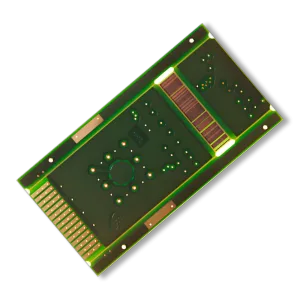
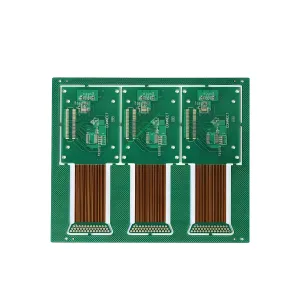
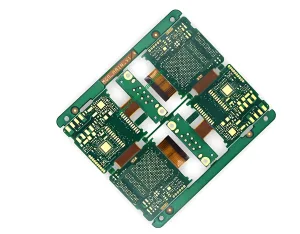
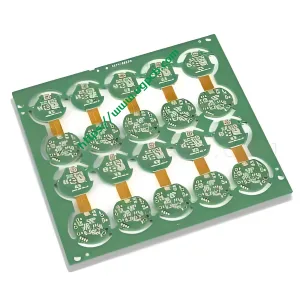
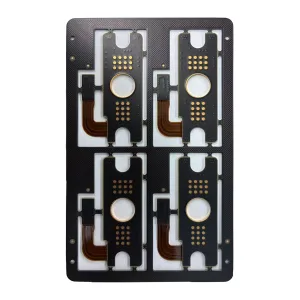
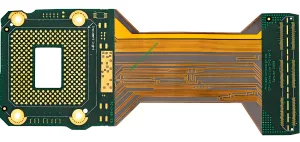
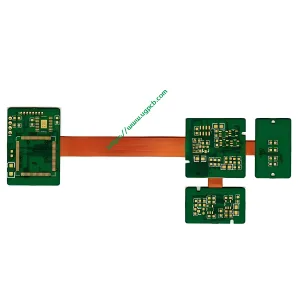
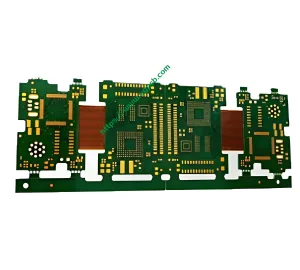
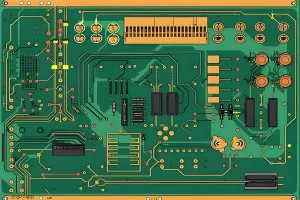
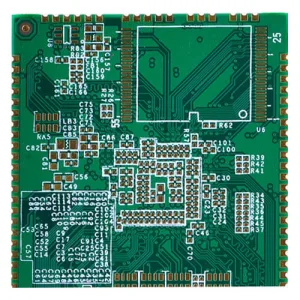
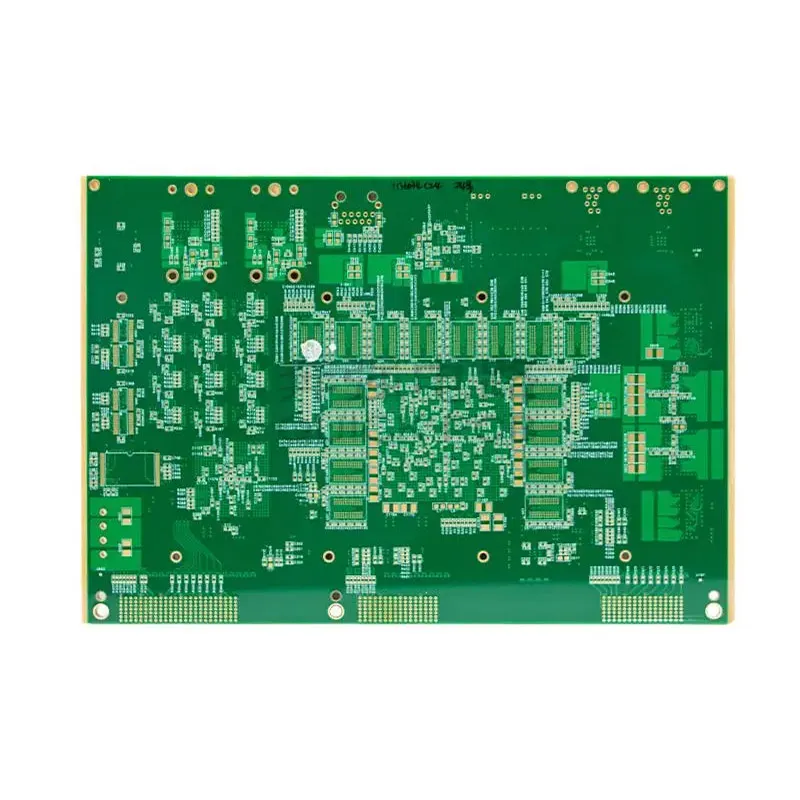
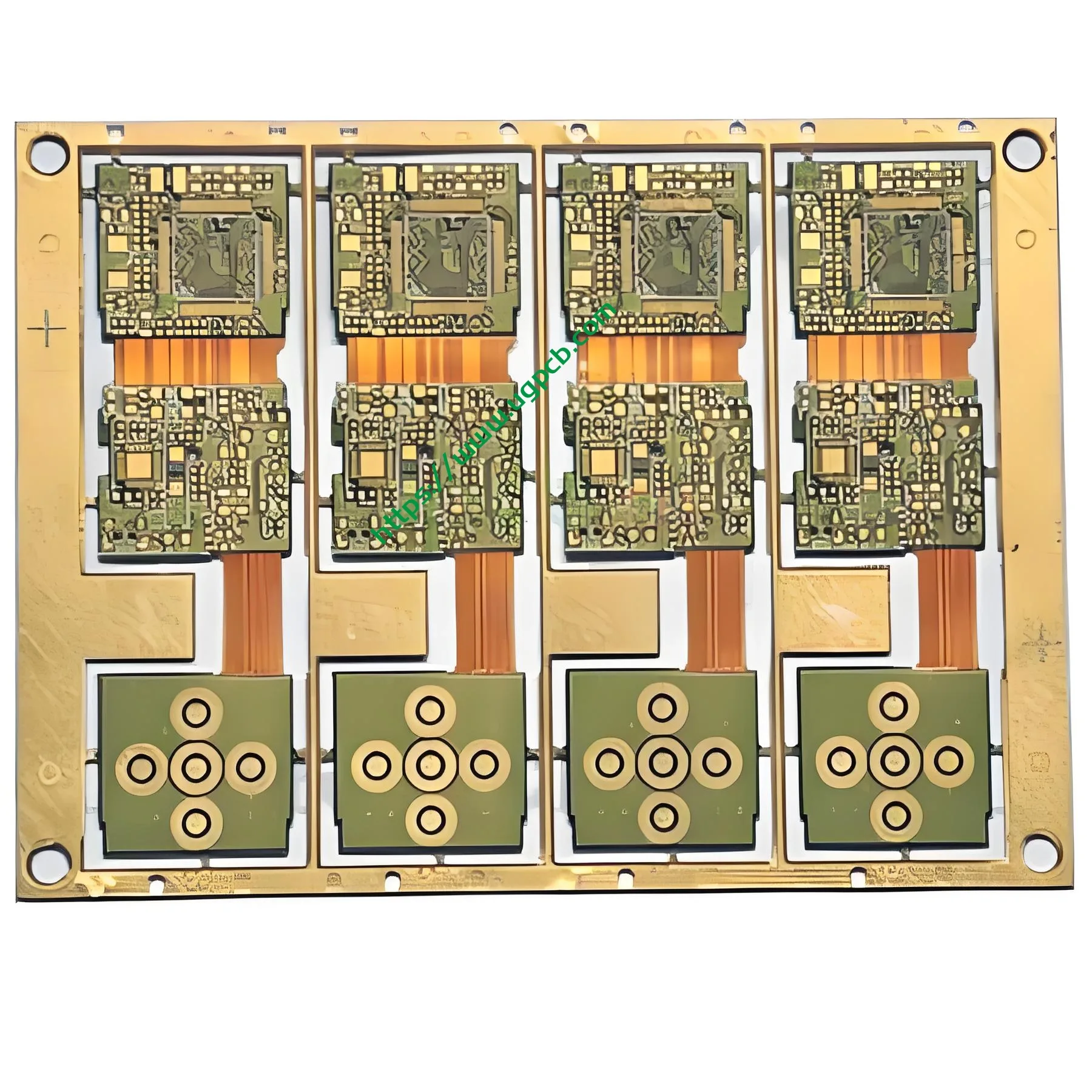
UGPCBCarte Rigide-Flex Jaune Soldermask intègre un PCB rigide et un circuit imprimé flexible dans une solution d'interconnexion unique via un processus de stratification.
Spécifications clés:
Empilement des couches: 6 couches (6L) en sections rigides / 4 couches (4L) en sections flexibles
Combinaison de matériaux: FR-4 (zones rigides) + PI (Polyimide, zones flexibles)
Couleur de la surface: Masque de soudure jaune (rigide) / Couverture blanche (fléchir)
Épaisseur finie: 0.4mm (sections rigides) / 0.2mm (sections flexibles)
Cette conception conserve le support structurel et la capacité de transport de composants des zones rigides tout en utilisant la capacité de pliage des sections flexibles.. Il réalise une véritable intégration rigide-flexible, éliminant le besoin de connecteurs et de câbles plats traditionnels.
2. Principes de conception et technologie
UN. Principe de fonctionnement
Le cœur de la technologie rigide-flexible réside dans une interconnexion transparente. L'UGPCB stratifie des couches PI flexibles avec des couches FR-4 rigides à haute température et pression.. Dans les zones flexibles, Le matériau FR-4 est retiré, laisser la base PI avec un revêtement pour permettre le pliage. Dans les zones rigides, FR-4 reste à prendre en charge composants. Cette structure élimine les points de contact physiques des connecteurs, améliorant considérablement Intégrité du signal (ET) et résistance aux vibrations.
B. Considérations de conception
Contrôle de l'impédance: Pour circuits imprimés de communication haute fréquence, Un contrôle strict de la largeur et de l'espacement des traces de 3,5 mil garantit une impédance différentielle constante (par ex., 100Oh).
Protection des zones de transition: La jonction entre sections rigides et flexibles (le talon) est un point de stress. La conception de l'UGPCB utilise des transitions arrondies et des largeurs de trace effilées pour éviter les fissures lors du pliage..
Correspondance d'empilement: Une épaisseur de cuivre uniforme de 1 OZ est maintenue pour éviter la rupture par fatigue dans les sections flexibles lors de la flexion dynamique.
3. Analyse des matériaux et des performances
UN. Matériaux de base
FR-4 (Zones rigides): Un stratifié époxy renforcé de fibre de verre. Il offre une haute résistance mécanique, résistance à la chaleur, et isolation, fournissant une plate-forme stable pour le montage de composants lourds tels que des puces et des connecteurs.
PI (Zones flexibles): Film polyimide. Il offre une excellente résistance aux hautes températures (fonctionnement >150°C), un faible facteur de perte diélectrique (Df), et une durée de vie élevée.
Finition de surface: Immersion Or (ACCEPTER). Ce processus chimique dépose une couche de nickel-or sur le cuivre.
Avantages: Planéité de surface élevée adaptée aux circuits à pas fin (3.5espacement en millimètres), forte résistance à l'oxydation, et une bonne soudabilité ainsi qu'une capacité de liaison par fil d'aluminium.
B. Spécifications de performances clés
| Paramètre | Spécification | Avantage technique |
|---|---|---|
| Min.. Trace / espace | 3.5mil / 3.5mil | Prend en charge le routage haute densité pour les modules de communication compacts. |
| Min.. Perceuse mécanique | 0.1mm | La technologie Micro-via améliore l'utilisation des canaux de routage et réduit la capacité parasite intercouche. |
| Épaisseur finie | 0.4mm (Rigide) / 0.2mm (Fléchir) | La conception ultra fine permet d'économiser de l'espace à l'intérieur du boîtier de l'appareil. |
| Épaisseur du cuivre | 1once (35µm) | Équilibre la capacité de transport de courant avec l’endurance à la flexion, assurer l'intégrité du signal. |
4. Classification structurelle et caractéristiques
UN. Classification structurelle
Ce produit est un structure asymétrique (6-couche rigide + 4-couche flexible) dans la catégorie des panneaux rigides-flexibles multicouches. En général, les planches rigides-flexibles sont classées comme:
Type en couches: Les couches flexibles s'étendent indépendamment, comme on le voit dans ce produit.
Type sans couches: L'ensemble du tableau utilise un matériau flexible, avec des raidisseurs ajoutés à des zones spécifiques.
B. Caractéristiques du produit
Haute fiabilité: La finition dorée par immersion combinée au matériau PI garantit des performances électriques stables même dans des environnements difficiles (température et humidité élevées).
Haute précision: Les capacités de fabrication de lignes fines de 3,5 mil et de micro vias de 0,1 mm résolvent les problèmes d'interconnexion haute densité.
Optimisation de l'espace: Remplace les connecteurs, réduisant de plus le volume d'installation 60% et réduire le poids global du produit.
Différenciation visuelle: Le masque de soudure jaune offre une apparence unique et offre un contraste plus clair lors de l'assemblage SMT, faciliter l'inspection optique.
5. Processus de fabrication et contrôle qualité
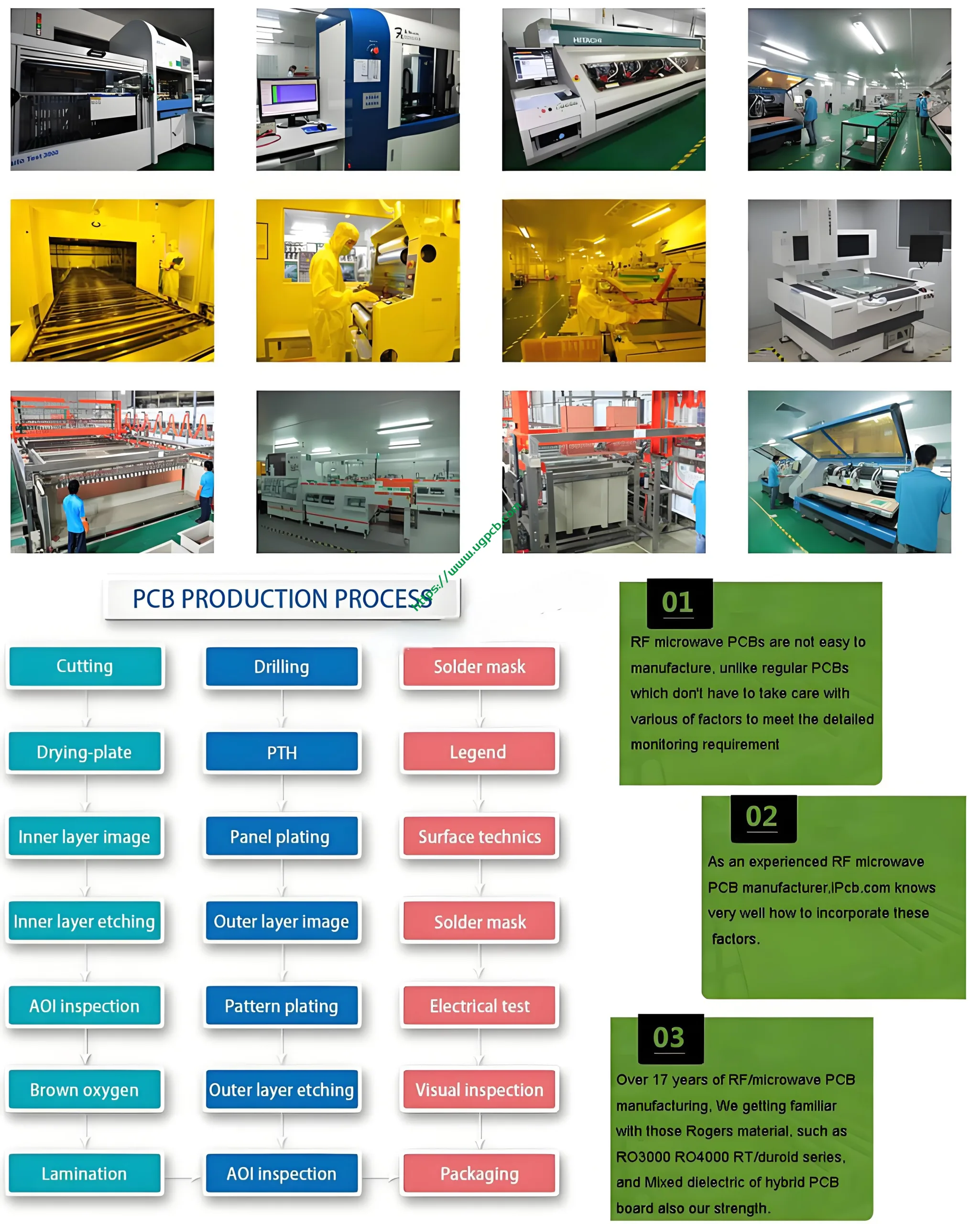
Assurer la fiabilité de cette structure complexe 6L+4L, L'UGPCB suit un flux de production rigoureux:
Circuit de couche interne (Zone flexible): Des circuits fins de 3,5 mil sont formés sur le matériau de base PI à l'aide d'un laser ou d'une photolithographie..
Stratification de couverture: Un film protecteur est laminé sur le circuit flexible, ne laissant que les zones des tampons exposées.
Laminage: Les couches rigides et flexibles sont alignées et laminées sous vide. Les contrôles clés sont le profil de température et le débit de résine pour éviter les vides..
Forage & Placage: 0.1Des micro vias de mm sont percés. Le dépôt autocatalytique de cuivre crée des connexions intercouches.
Couche externe & Masque de soudure: Le masque de soudure jaune est appliqué sur les zones rigides; la couverture blanche reste sur les zones flexibles.
Finition de surface: L'or d'immersion (ACCEPTER) est appliqué avec une épaisseur contrôlée: 0.05-0.1μm Au / 3-5µm Ni.
Profilage & Test électrique: Le routage laser ou le poinçonnage définissent la forme finale. 100% AOI et sonde volante les tests vérifient l'intégrité électrique.
6. Applications
Ce produit est principalement destiné auxcarte de communication secteur. Les applications clés incluent:
5Stations de base de communication G: Utilisé pour plier les connexions dans les modules RF, résoudre les besoins d'interconnexion compacte entre les antennes et les cartes mères.
Smartphones & Appareils portables: La section flexible de 0,2 mm permet une flexion dynamique dans les charnières de téléphone pliables.
Électronique médicale: Utilisé dans des appareils tels que les sondes d'endoscope à ultrasons, tirer parti de la biocompatibilité et du routage haute densité de PI.
Électronique automobile: Modules de caméra ADAS qui doivent résister à des vibrations constantes et aux chocs thermiques.
7. Pourquoi choisir UGPCB?
Les ingénieurs sont souvent confrontés à des défis liés aux faibles rendements et aux longs délais de livraison pour les conceptions rigides-flexibles complexes.. L'UGPCB est un partenaire de chaîne d'approvisionnement fiable offrant:
Capacité de fabrication: Capacité de production de masse pour 3,5 millions de traces/espace, surmonter les barrières d’interconnexion à haute densité.
Source des matériaux: Utilise des matériaux de haute qualité provenant de fournisseurs tels que Shengyi/ITEQ pour FR-4 et DuPont/Tayoho pour PI, garantir la qualité à la source.
Assistance technique: Fournit un DFM gratuit (Conception de la fabrication) vérifications pour aider à optimiser les conceptions, surtout dans la zone de transition rigide-flexible.
Concevez-vous un circuit imprimé qui doit à la fois contenir des circuits intégrés complexes et être flexible dans un espace restreint ??
L'UGPCB propose désormais des services de prototypage et de production en série pour cela.6-couche rigide + 4-couche de masque de soudure jaune flexible PCB rigide-flexible.
👉 Obtenez un devis rapide aujourd'hui
Envoyez vos fichiers Gerber et vos exigences techniques à [sales@ugpcb.com] ou cliquez sur le chat en ligne. Notre équipe d'ingénierie fournira un rapport DFM professionnel et un devis compétitif dans les délais 24 heures.