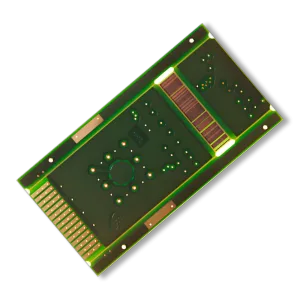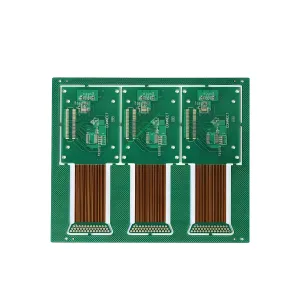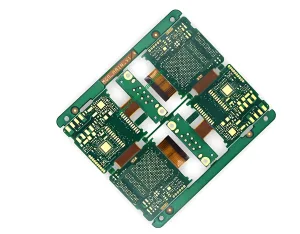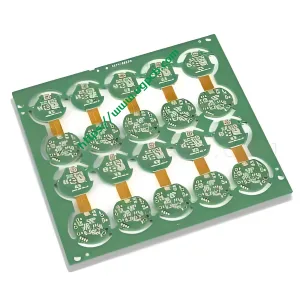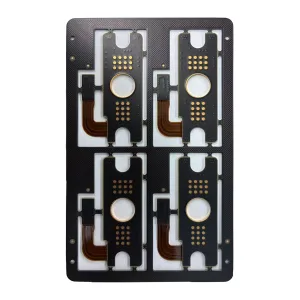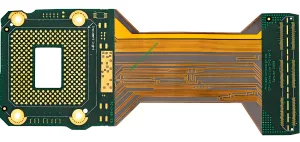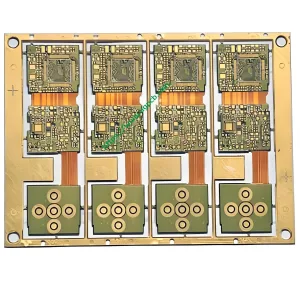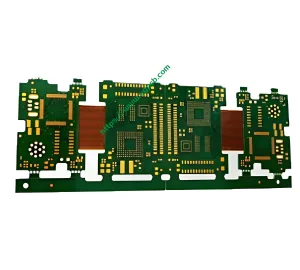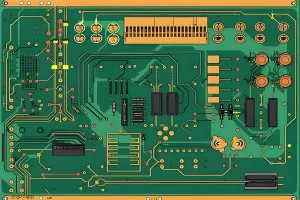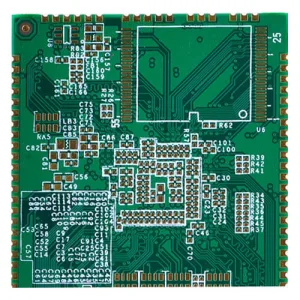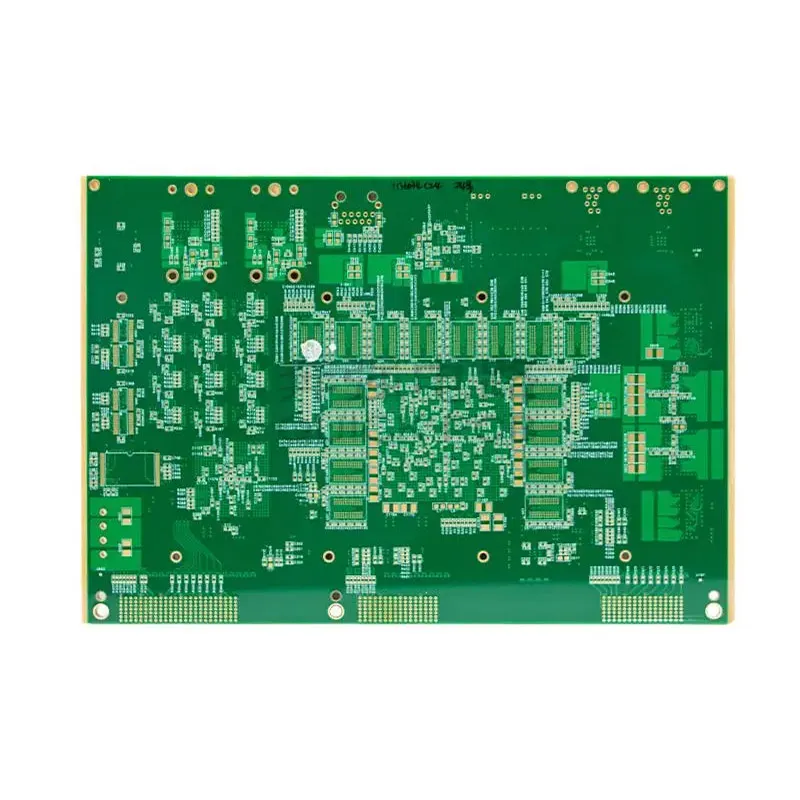
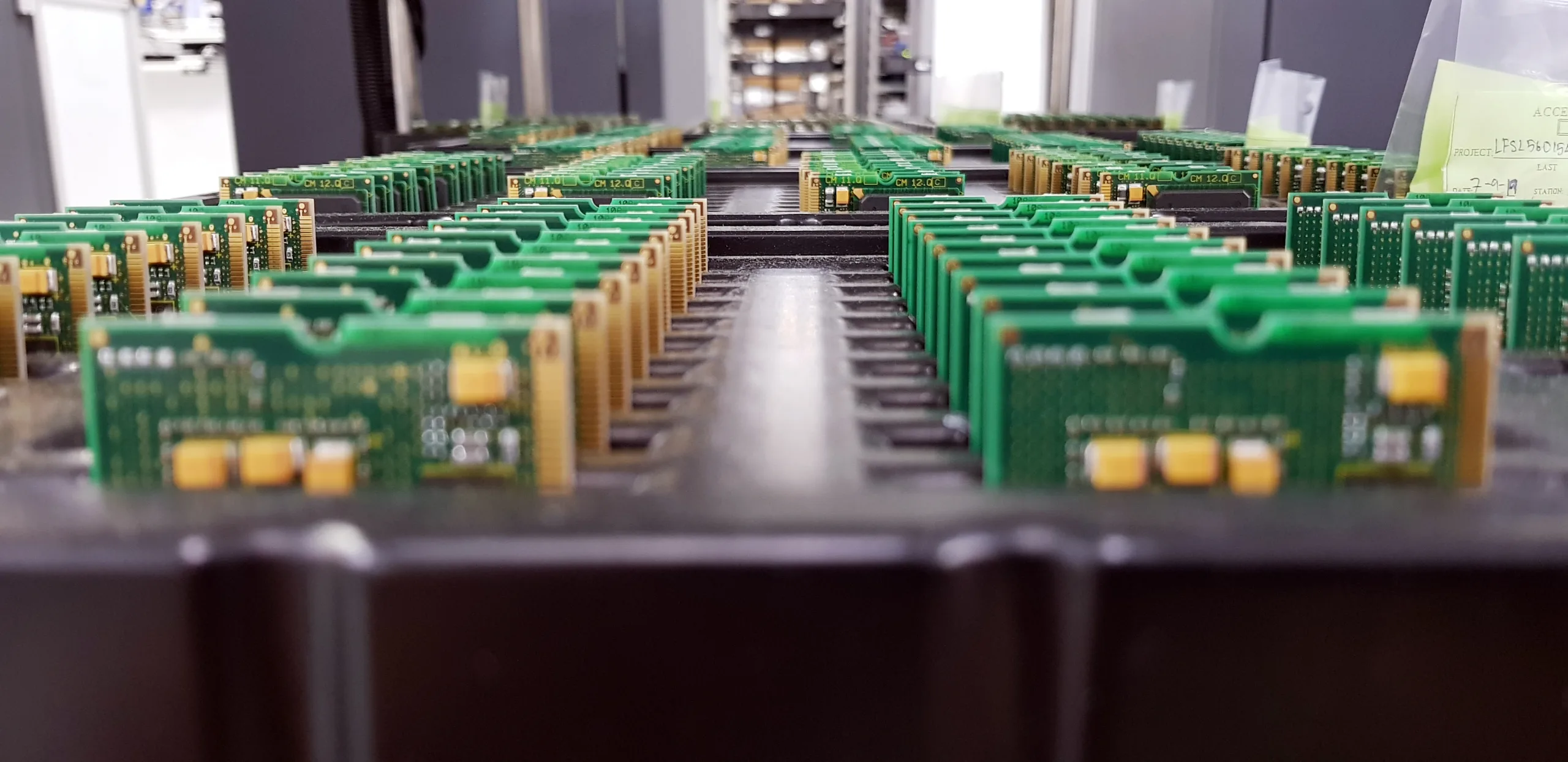
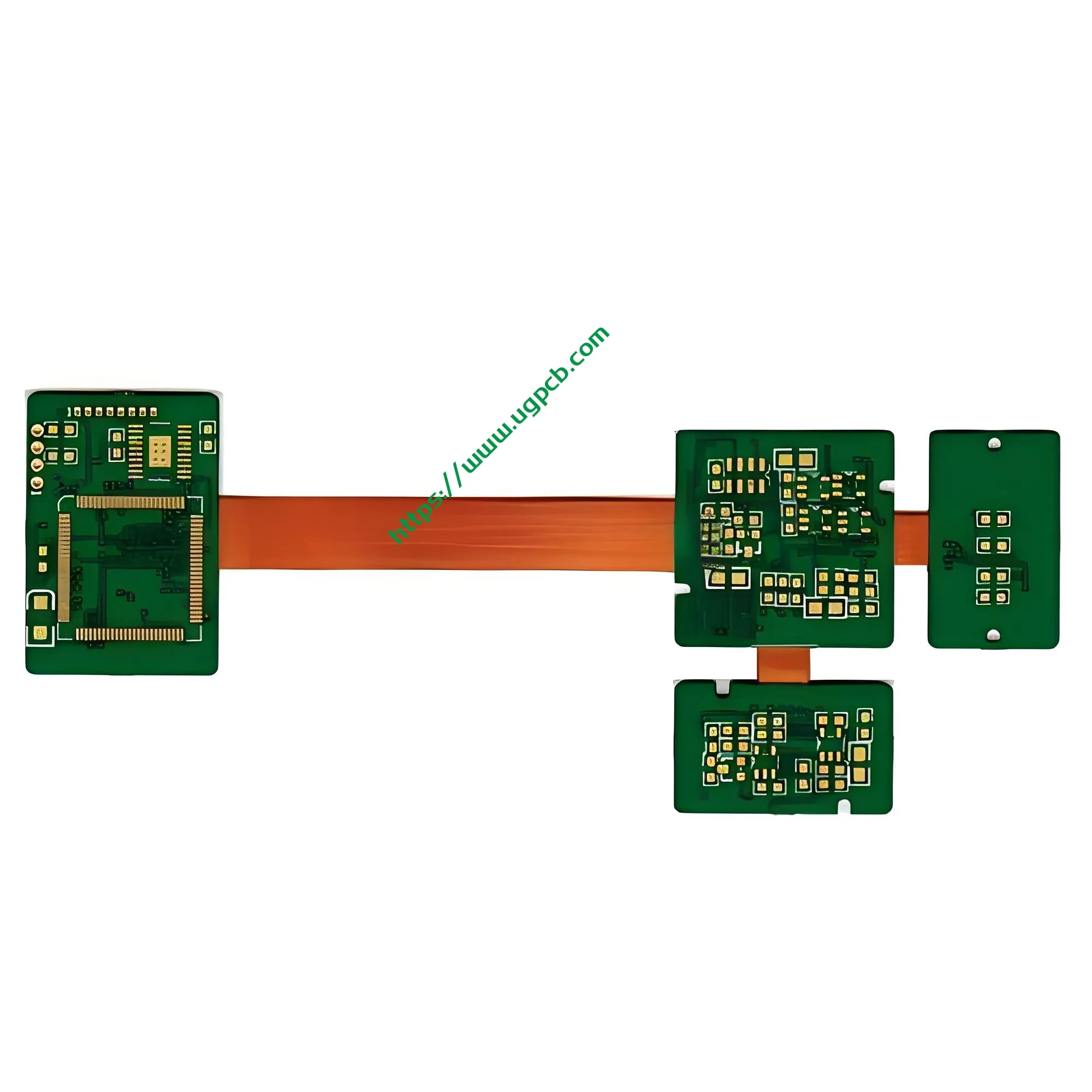
À mesure que les produits électroniques évoluent vers haute fréquence, grande vitesse, léger, et pliable dessins, PCB rigides traditionnels ou circuits imprimés flexibles (FPC) ne peut plus à lui seul répondre aux exigences des modules RF complexes, caméras pour smartphones, ou endoscopes médicaux. En tant que leader de confiance dans Fabrication de PCB, UGPCB présente le 8-PCB rigide-flexible haute vitesse en couche. Avec son unique 6-couche rigide + 2-couche flexible structure intégrée, cette planche offre un équilibre optimal de Intégrité du signal, stabilité mécanique, et utilisation de l'espace.
Cet article en donne un aperçu détaillé PCB rigide-flexible—couvrant sa définition, matériels, processus de fabrication, et applications - pour vous aider à comprendre pourquoi il s'agit du choix préféré pour des performances élevées PCB de modules.
1. Présentation et définition du produit
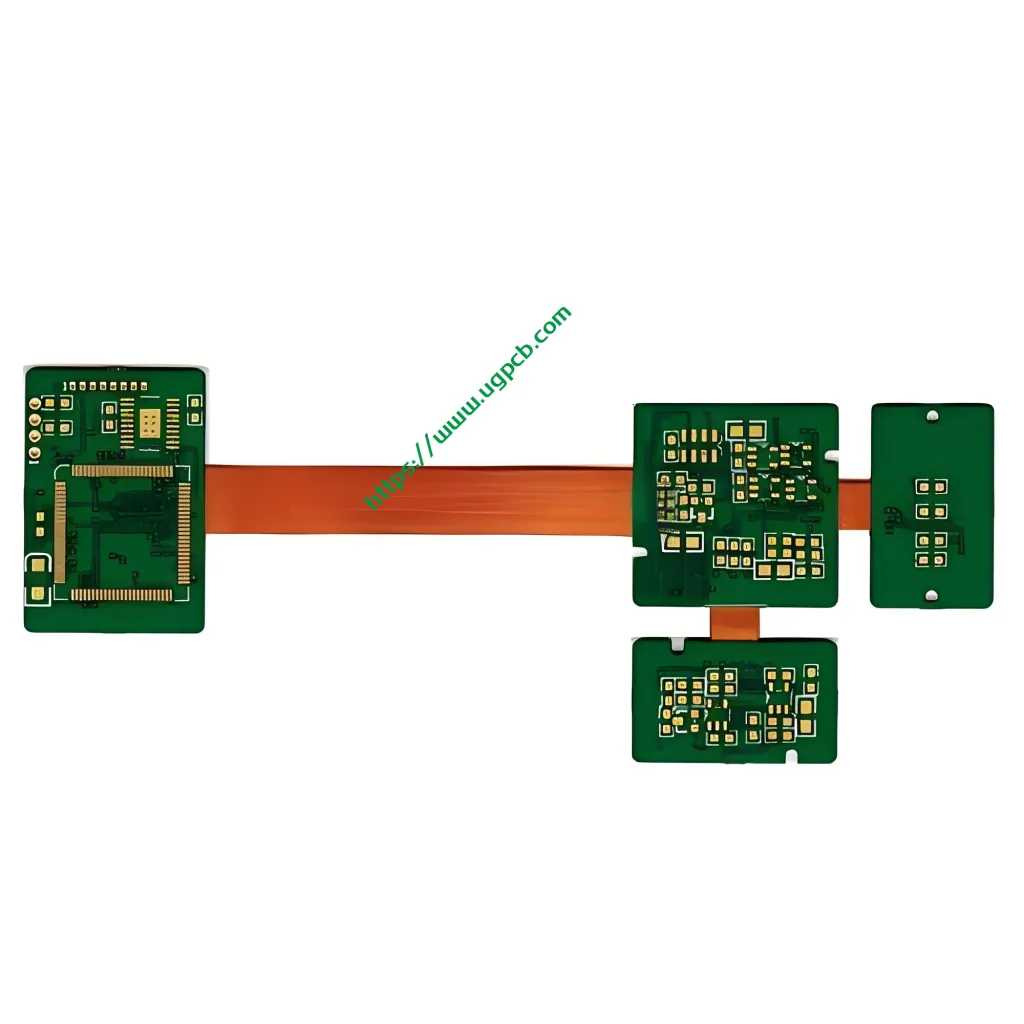
Le8-PCB rigide-flexible haute vitesse en couche n'est pas simplement une carte rigide connectée à une carte flexible via un connecteur. Plutôt, c'est une structure unifiée formée par stratificationFR4 (substrat rigide) etPI (polyimide, substrat flexible) en un seul composant.
- Répartition de la structure: 6L rigide (6-section rigide en couche) + Flex 2L (2-section flexible de couche).
- Positionnement de base: Idéal pour les appareils électroniques compacts nécessitant transmission de signaux à grande vitesse, flexion dynamique, et haute fiabilité.
Cette conception élimine les connecteurs carte à carte traditionnels, réduisant les risques de défaillance des joints de soudure tout en améliorant considérablement compatibilité électromagnétique (CEM) . Il représente une avancée majeure dans circuit imprimé à grande vitesse technologie.
2. Considérations de conception et principe de fonctionnement
Considérations de conception
Lors de la conception de ceciPCB rigide-flexible, L’équipe d’ingénierie de l’UGPCB se concentre sur trois domaines critiques:
- Contrôle de l'impédance: Pour les signaux à grande vitesse, nous contrôlons strictement largeur et espacement des traces. Ce produit atteint un minimum 3mil/3mil trace / espace, assurer une impédance différentielle constante (par ex., 90Ω ou 100Ω).
- Protection des zones de transition: La jonction entre les sections rigides et flexibles est un point de concentration des contraintes. Nous appliquons compensation en forme de larme et ouvertures de recouvrement optimisées pour éviter les coupures de circuit lors du pliage dynamique.
- Symétrie d'empilement: Pour éviter la déformation causée par le CTE (coefficient de dilatation thermique) disparité lors du soudage à haute température, la section rigide utilise un empilement symétrique à 6 couches, tandis que la section flexible utilise un matériau PI à haut module.
Principe de fonctionnement
Le couche flexible (PI) agit comme un pont reliant plusieurs modules fonctionnels rigides. Pendant le pliage, la section flexible transmet des signaux de données à grande vitesse (comme MIPI ou USB 3.0) et le pouvoir, tandis que les sections rigides portent du BGA haute densité composants et appareils passifs. Cette conception permet à l'ensemble du système de circuit de s'insérer dans des boîtiers de produits compacts ou irréguliers.
3. Matériaux et spécifications clés
UGPCB utilise des matériaux haut de gamme provenant de grandes marques mondiales pour garantir les performances et la fiabilité électriques.. Vous trouverez ci-dessous les principales spécifications de ce modèle:
| Paramètre | Spécification | Aperçu technique |
|---|---|---|
| Matériau de base | FR4 + PI | La section rigide utilise du FR4 à haute Tg (Tg > 150° C) pour la stabilité du brasage; la section flexible utilise du polyimide (PI) pour la flexibilité et la résistance à la chaleur. |
| Épaisseur du cuivre | 1 once | Fini 1 Le cuivre oz supporte des charges de courant plus élevées et aide à réduire la perte d'effet cutané danssignaux à grande vitesse. |
| Épaisseur du panneau fini | 1.0 mm | Équilibre le support mécanique avec les exigences des appareils minces. |
| Finition de surface | Immersion Or | 2m” épaisseur de l'or. Fournit un appartement, surface soudable avec une excellente résistance à l'oxydation, idéal pour les BGA à pas fin et la liaison de fils d'aluminium. |
| Taille minimale du trou | 0.2 mm (mécanique) | Soutien interconnexion haute densité (IDH) dessins; les vias aveugles et enterrés peuvent économiser davantage d'espace de routage. |
| Trace minimale / Espace | 3mil / 3mil | Capacité fine pour un routage haute densité, assurer l'intégrité du signal à hautes fréquences. |
4. Classification des produits et caractéristiques structurelles
Classement scientifique
Selon les normes IPC-2223, ce produit est classé comme unPCB flexible-rigide dynamique.
- Par structure: Rigide-flex asymétrique (6-couche rigide + 2-couche flexible).
- Par candidature: Grande vitesse, haute fréquence module PCB.
Caractéristiques structurelles
- Interconnexion intégrée: Élimine les connecteurs, réduisant la perte d'insertion et la réflexion du signal. L'intégrité du signal s'améliore d'environ 30% par rapport aux solutions traditionnelles de cartes rigides et de connecteurs.
- Durabilité flexible élevée: La section flexible à 2 couches utilise laminé recuit (Rampe) cuivre, qui offre une meilleure durée de vie en flexion que l'électrodéposition (Élégant) cuivre, résister à des dizaines de milliers de virages dynamiques.
- Fin et léger: D'une épaisseur totale de 1.0 mm, cela permet d'économiser jusqu'à 60% d'espace sur l'axe Z une fois plié.
5. Processus de fabrication et contrôle qualité
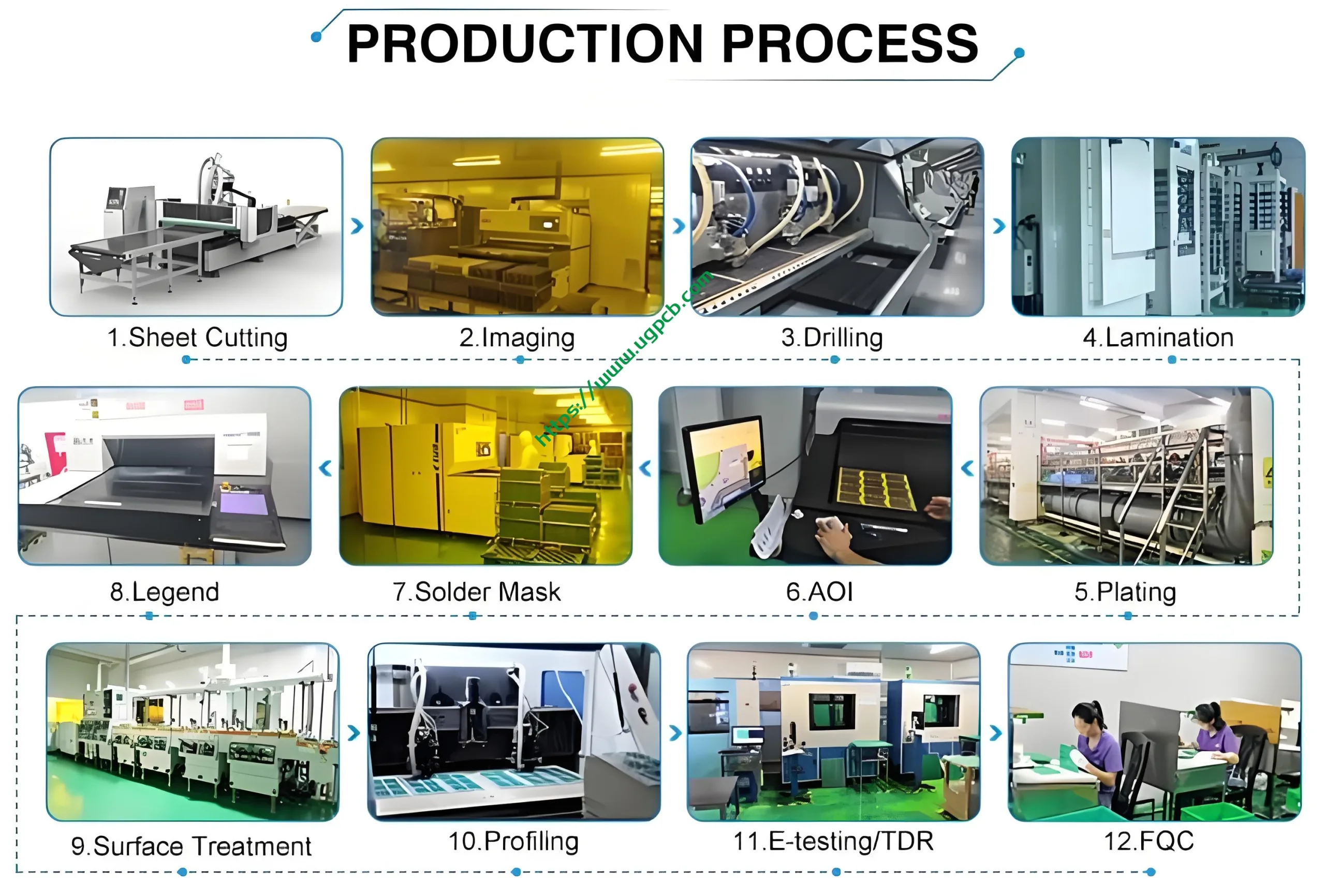
L'UGPCB exploite une ligne de production entièrement intégrée pour garantir que chaquePCB rigide-flexible haute vitesse répond à des normes de qualité strictes. Le processus de base comprend:
- Préparation de la couche flexible: Le substrat PI est traité à l'aide d'un film sec de couche interne et d'une gravure pour former des circuits fins (3mil de largeur de trace) dans la zone flexible.
- Stratification de couverture: Un revêtement est appliqué sur les circuits flexibles pour les protéger et définir la zone de courbure.
- Empilage de couches rigides: Le préimprégné FR4 est précisément aligné avec la couche flexible traitée. Il s'agit d'une étape critique pour garantir que la résine remplit l'interface rigide-flexible sans vides..
- Laminage: Les couches rigides et flexibles sont fusionnées sous haute température et pression.
- Forage et placage: 0.2 Un perçage mécanique de mm est effectué, suivi d'un placage de cuivre autocatalytique pour établir des connexions intercouches.
- Finition de surface: L'or d'immersion est appliqué avec une épaisseur contrôlée de 2m” pour garantir la soudabilité et la résistance à l'oxydation.
- Routage et tests électriques: La découpe au laser ou le poinçonnage façonne la planche, suivi de 100% test de sonde volante ou de luminaire pour garantir l'absence de court-circuit ou d'ouverture.
6. Scénarios d'application
Ce8-PCB rigide-flexible à grande vitesse est conçu pour la haute densité, applications de haute fiabilité, y compris:
- Smartphones et appareils portables: Utilisé dans les connexions de la carte mère du téléphone pliable et le module de caméra (CCM) assemblées, tirer parti des capacités de pliage pour l’intégration des charnières.
- Dispositifs médicaux: Tels que les endoscopes à ultrasons et les appareils auditifs. La taille compacte et la fiabilité des PCB rigides-flexibles garantissent une transmission stable du signal dans les environnements critiques.
- Électronique automobile: Modules de caméra embarqués et systèmes LiDAR. Répond aux exigences de qualité automobile en matière de résistance aux vibrations et de cycles de température (-40° C à 125 ° C).
- Aérospatial et défense: Modules de communication par satellite et systèmes de guidage de missiles. Réduit le poids tout en conservant une grande fiabilité.
- Contrôle industriel: Articulations de robots et entraînements de servomoteurs. La section flexible absorbe les contraintes mécaniques dues au mouvement.
7. Pourquoi choisir UGPCB?
La fabrication de PCB rigides-flexibles présente des défis techniques, particulièrement danslaminage sans vide à l'interface rigide-flexible etcontrôler le retrait du matériau du PI. L’UGPCB y répond avec une expertise avérée:
- Compensation précise du retrait: Avec des données détaillées sur les différents taux d’expansion de PI et FR4, nous maintenons l'enregistrement couche à couche dans un délai de ± 2 mil.
- Assurance du signal à grande vitesse: Pour circuit imprimé à grande vitesse applications, nous contrôlons strictement la constante diélectrique (Ne sait pas) et facteur de dissipation (Df), et fournir des rapports de tests d'impédance.
- Prise en charge de la personnalisation: Du prototype à la production de masse, nous soutenons sur mesure module PCB des solutions avec des délais fiables.
8. Obtenez un devis aujourd'hui
Votre produit de nouvelle génération est-il toujours limité par la taille du connecteur et la perte de signal ?? Il est temps de passer au8-PCB rigide-flexible haute vitesse en couche.
[Contacter les ingénieurs UGPCB] pour:
Prix de volume compétitifs.
Rapport d'analyse DFM gratuit (dans 24 heures).
Recommandations d'optimisation d'impédance.