Présentation du produit
Comme Fabrication de PCB les coûts continuent d'augmenter, les ingénieurs et les professionnels des achats recherchent activement des solutions rentables qui ne compromettent pas les performances. Le circuit imprimé d'huile de carbone double face offre une réponse convaincante à ce défi.
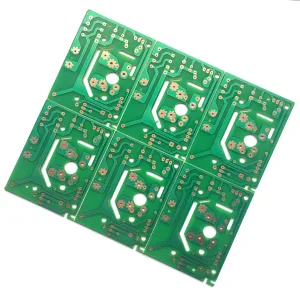
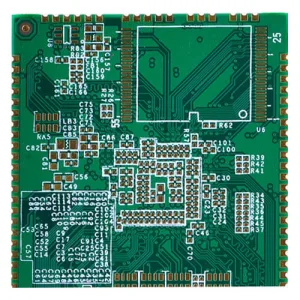
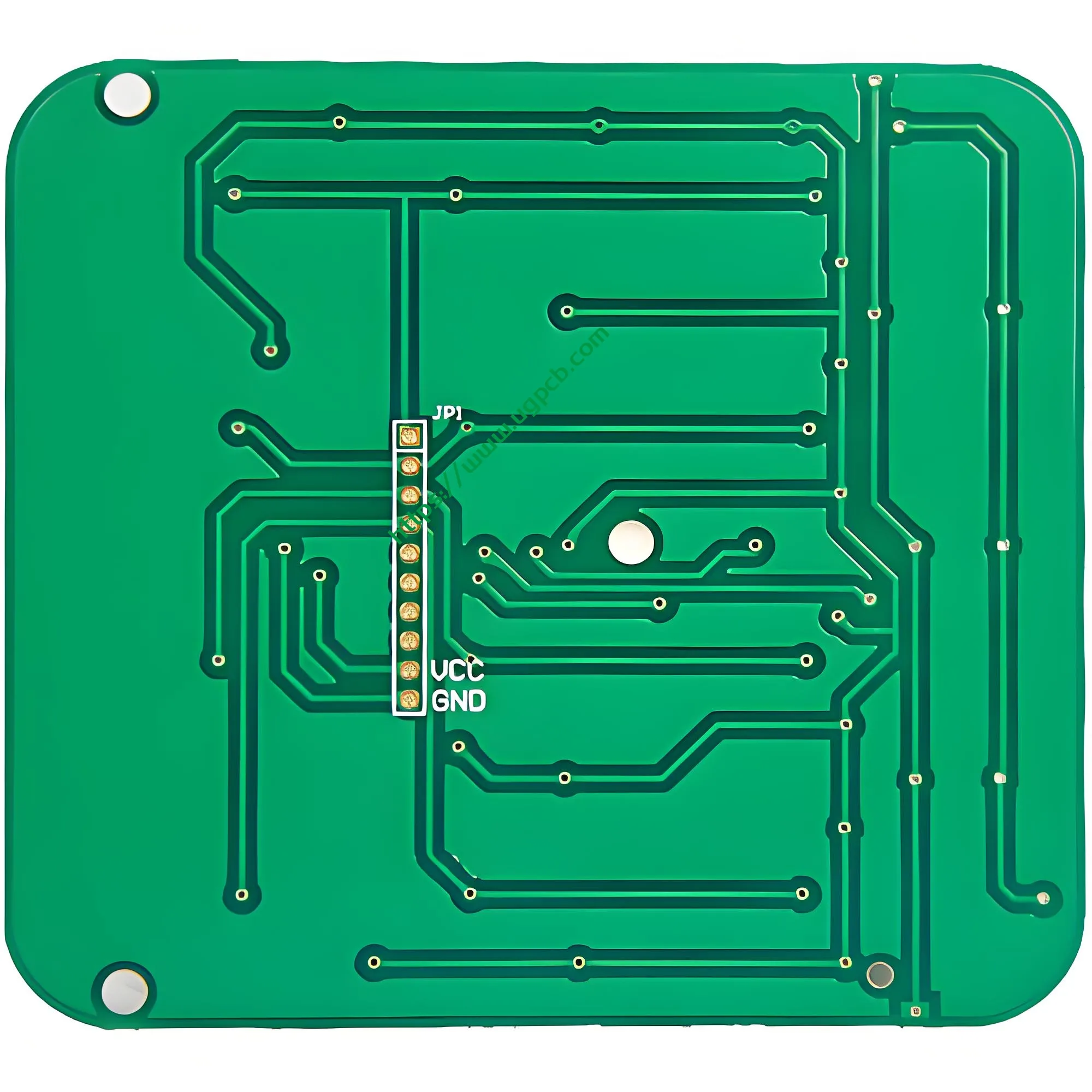
L'UGPCB présente cecicircuit imprimé d'huile de carbone double face avec les spécifications suivantes:
| Paramètre | Spécification |
|---|---|
| Matériau de base | FR4 |
| Épaisseur du panneau | 1.6mm |
| Nombre de couches | 2 couches (double face) |
| Taille du conseil | 43.68 × 38,9 mm |
| Diamètre minimum du trou | 0.33mm |
| Largeur de trace / Espacement | 0.32 × 0,36 mm |
| Épaisseur de la feuille de cuivre | 35/35µm (1OZ des deux côtés) |
| Finition de surface | Processus d'huile de carbone |
| Masque de soudure / Légende | Masque de soudure vert / sérigraphie blanche |
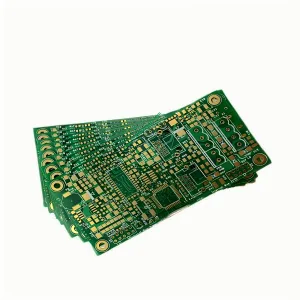
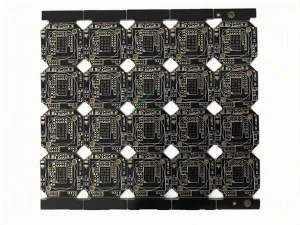
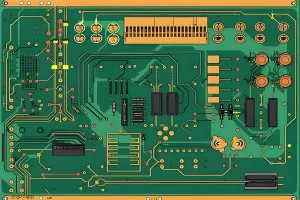
C'est unPCB rigide standard double face. Il combine des traces de cuivre traditionnelles avec unfinition de surface à l'huile de carbone qui forme des tampons de film de carbone conducteur à des endroits désignés. Le résultat est une carte qui offre à la fois l'excellente conductivité des traces de cuivre et la résistance supérieure à l'usure des contacts à film de carbone.. Cela en fait un choix idéal pour les applications de clavier dans l'électronique grand public., électronique automobile, et dispositifs médicaux.
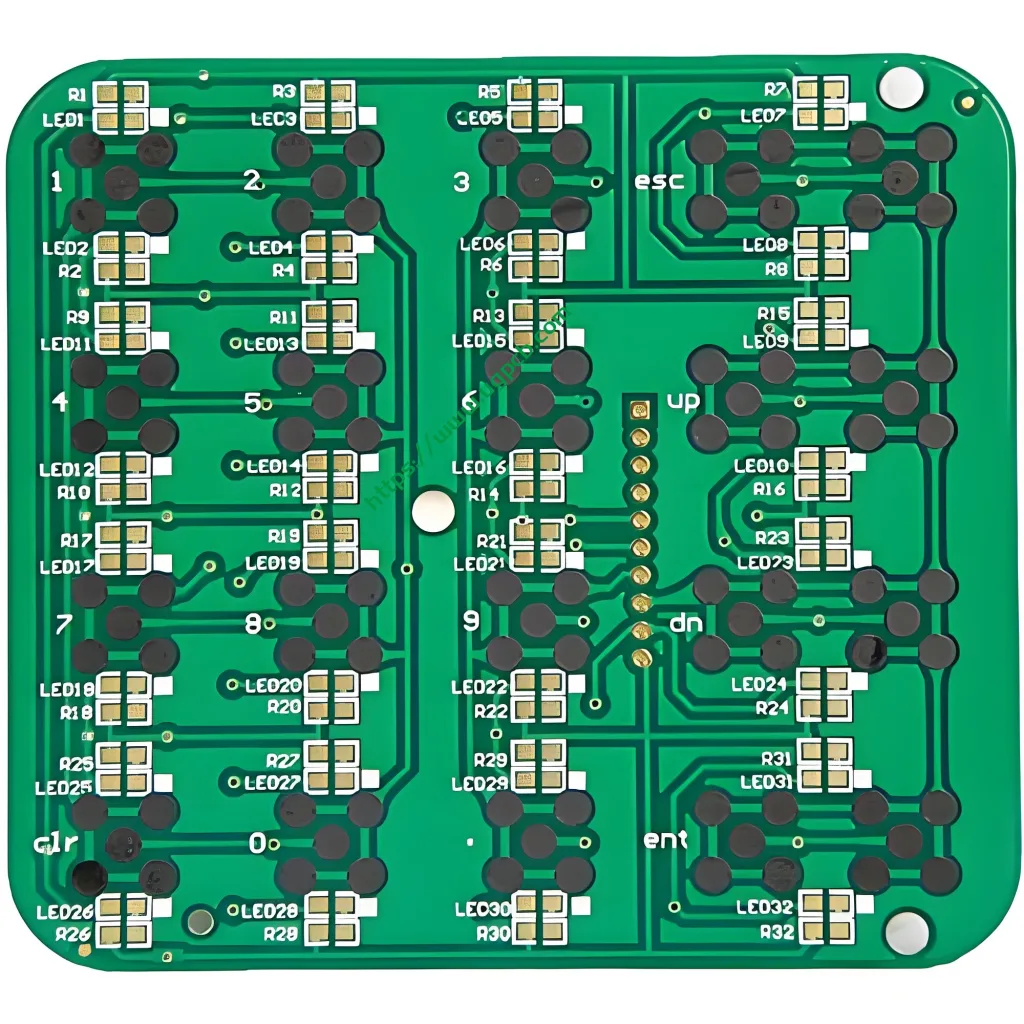
Qu'est-ce qu'un circuit imprimé d'huile de carbone double face?
UN circuit imprimé d'huile de carbone double face est un circuit imprimé qui utilise encre conductrice à base de carbone (communément appelé huile de carbone ou encre de carbone) appliqué par sérigraphie sur des zones désignées du Substrat PCB. Après durcissement, cela forme un motif conducteur en film de carbone.
Le pétrole carboné est un encre conductrice composé principalement de poudre de carbone conductrice, résine thermodurcissable, et divers additifs. Il est imprimé avec précision à des endroits spécifiques sur le circuit imprimé – généralement les zones de contact du clavier – en utilisant technologie de sérigraphie. Après durcissement à haute température, l'huile de carbone forme un film de carbone avec une valeur de résistance définie.
Par rapport au traditionnelclaviers plaqués or, les claviers à huile de carbone offrent un net avantage.Les claviers à huile de carbone sont très résistants à l'usure et peuvent supporter des opérations répétées, dure généralement des centaines de milliers, voire des millions de cycles de commutation. Le remplacement des claviers en or coûteux par des claviers à huile de carbone est devenu une tendance majeure de l'industrie..
Les panneaux d'huile de carbone sont une méthode courante de traitement de surface pour les PCB simple face et double face.. Grâce à une série de processus, y compris l'inspection, essai, et tests de déverminage, ces PCB obtenir un fonctionnement fiable à long terme.
Directives de conception
Concevoir uncircuit imprimé d'huile de carbone double face nécessite une attention particulière aux aspects techniques clés suivants:
Largeur et espacement des traces d'huile de carbone
Selon les spécifications de fabrication de l'huile de carbone pour PCB de l'industrie, la largeur des traces d'huile de carbone doit être supérieure à 6 mil (environ 0,152 mm). Les films d'huile de carbone sont identifiés comme “CGV” (couche supérieure) ou “GBC” (couche inférieure) et sont sortis sous forme de films positifs.
En raison de l'excellente conductivité de l'huile de carbone, Un espacement adéquat doit être maintenu entre les éléments d'huile de carbone sur la carte finie pour éviter les courts-circuits. Les dégagements minimum typiques sont:
La tolérance d'alignement minimale pour l'huile de carbone est±6 mil.
Fenêtre à huile de carbone et espacement des motifs en cuivre
Pour tenir compte des tolérances d'alignement et éviter les fuites d'huile qui pourraient exposer le cuivre, le tampon d'huile de carbone doit être plus grand que le tampon de cuivre de:
Le même espace doit être maintenu entre la fenêtre d'huile de carbone et les motifs en cuivre environnants pour empêcher l'huile de carbone de recouvrir les traces de cuivre adjacentes et de provoquer des courts-circuits..
Contrôle de l'épaisseur de l'huile de carbone
L'épaisseur de l'huile de carbone affecte directement la résistance de la tôle et la résistance à l'usure. Les spécifications standard de l'industrie sont les suivantes:
- Épaisseur de l'huile de carbone à impression unique: 0.3–1,0 million, tolérance ±0,3 mil
- Épaisseur d'huile de carbone à double impression: 1.0–2,0 millions, tolérance ±0,4 mil
Pour une épaisseur d'huile de carbone supérieure à 1,0 mil, un processus de double impression est requis. Le film d'huile de carbone pour la deuxième impression doit être 3 mm plus petit de chaque côté que le film de la première impression..
Références aux normes de conception
Lors de la conception d'uncircuit imprimé d'huile de carbone double face, les normes internationales suivantes doivent être respectées:
- CIB-2221: Norme générique sur la conception des cartes imprimées – couvre l'espacement, autorisation, et exigences de conception structurelle
- IPC-6012: Spécifications de qualification et de performance pour les cartes imprimées rigides – définit les exigences de performance et les critères de qualification du produit
- IPC-TM-650: Manuel des méthodes de test – fournit des procédures de test standardisées pour les performances des PCB à l'huile de carbone
Principe de fonctionnement
Lecircuit imprimé d'huile de carbone double face fonctionne à deux niveaux fondamentaux:
Principe de conduction
La conductivité de l'huile de carbone est déterminée par sa formulation, qui se compose de poudre de carbone conductrice, résine thermodurcissable, et divers additifs. La conductivité est mesurée parrésistance de la feuille (unité: Oh/□).
D'après la loi d'Ohm:
R = ρ × L / S
Où R est la résistance, ρ est la résistivité, L est la longueur du conducteur, et S est la section transversale du conducteur. Pour la couche conductrice du film de carbone, la résistance de la feuille est inversement proportionnelle à l'épaisseur du film: Rs = ρ / t (où t est l'épaisseur du film de carbone).
Les panneaux à base d'huile de carbone atteignent généralement une résistance de feuille de ≤20Ω/□, offrant un excellent rapport qualité-prix. Certaines formulations d'huile de carbone à faible résistance incorporent également une petite quantité d'huile d'argent pour améliorer encore la conductivité..
Principe de commutation du clavier
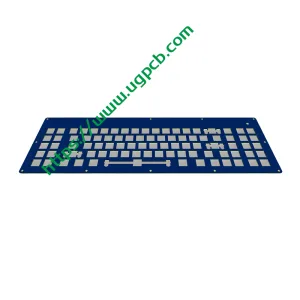
Dans les applications de clavier, lecircuit imprimé d'huile de carbone double face fonctionne comme suit: quand un clavier en caoutchouc (ou autre élément élastique) est pressé, les particules de carbone conductrices au bas du clavier entrent en contact avec letampon d'huile de carbone sur le PCB, terminer le circuit. Le tampon d'huile de carbone sert de support au clavier.conducteur de contact, remplacement des contacts plaqués or traditionnels.
Les avantages des contacts à l'huile de carbone comprennent:
- Dureté de surface élevée etexcellente résistance à l'usure
- Faible résistance de contact ettemps de réponse rapide
- Inertie chimique, offrerésistance à la corrosion et résistance à l'oxydation
Applications
Cartes de circuits imprimés à huile de carbone double face sont largement utilisés dans diverses industries:
Electronique grand public
- Télécommandes: Télécommandes de télévision, télécommandes de climatiseur
- Calculatrices: Panneaux de clavier
- Claviers: Claviers d'ordinateur, claviers à membrane
- Appareils de jeu et claviers électroniques
Électronique automobile
- Tableaux de commande des interrupteurs de fenêtre
- Panneaux de commande de climatisation
- Groupes d'instruments et contrôleurs de siège
Dispositifs médicaux
- Panneaux opérateurs pour équipements médicaux
- Électrodes de bandelettes de test de glycémie
Industriel et communications
- Panneaux d'équipement de contrôle industriel
- Équipement de communication
- Étiquette intelligente RFID
Alternatives rentables
Cartes de circuits imprimés à l'huile de carbone peut remplacer les processus traditionnels suivants:
- Processus traversants cuivrés
- Procédés de remplissage de pâte d'argent
- Procédés de remplissage de pâte de cuivre
Respectueux de l'environnement, Le remplissage par pâte de carbone à faible coût est une tendance dominante de l'industrie. Microsoft a adopté l'huile de carbone pour le remplissage des cartes d'alimentation, remplacement complet des cartes double couche par des trous cuivrés.
Classement du produit
Cartes de circuits imprimés à huile de carbone double face peut être classé selon les dimensions suivantes:
Par type de conductivité
- Panneaux d'huile de carbone à faible résistance: Résistance de feuille ≤20Ω/□ – adaptée aux contacts du clavier
- Panneaux d'huile de carbone haute résistance: Convient aux potentiomètres et aux couches de résistances
- Panneaux remplis d'huile de carbone: Utilisez de l'huile de carbone pour remplir les trous des connexions intercouches.
Par matériau de base
- Panneaux d'huile de carbone FR4: Substrat en fibre de verre/époxy (ce produit)
- Panneaux d'huile de carbone CEM-1: Substrat en matériau composite époxy
- Panneaux d'huile de carbone en polyimide: Substrat souple
Par nombre de couches
- Panneaux d'huile de carbone simple face
- Panneaux d'huile de carbone double face (ce produit)
- Panneaux multicouches d'huile de carbone
Par combinaison de finition de surface
- ACCEPTER + huile de carbone
- HASL + huile de carbone
- OSP + huile de carbone
- Huile de carbone + boîte à immersion (actuellement non adapté à la production de masse en raison de problèmes de contamination de la surface par l'étain)
Matériels
Matériau de base – FR4
Ce produit utilise FR4 comme matériau de base. FR4 est la désignation industrielle pour les stratifiés cuivrés en résine époxy renforcée de fibres de verre., offre:
- Excellente résistance mécanique et stabilité dimensionnelle
- Propriétés d'isolation électrique supérieures
- Bonne résistance à l'humidité et à la chaleur
- Constante diélectrique d'environ 4,2 à 4,3
FR4 est le matériau de base le plus couramment utilisé pour les PCB rigides et offre une bonne compatibilité d'adhérence avec l'huile de carbone.
Couche conductrice – Feuille de cuivre
Les deux côtés utilisent35µm (1once) feuille de cuivre, assurant une excellente conductivité et capacité de transport de courant.
Matériau de l'huile de carbone
Le pétrole carboné est unencre conductrice à base de carbone composé de:
- Poudre de carbone conductrice: 30%–50% de teneur – détermine la conductivité
- Résine thermodurcissable: Fournit des propriétés d’adhésion et de durcissement
- Divers additifs: Régule les caractéristiques d'écoulement et les performances d'adhésion
L'huile de carbone doit présenterforte adhérence, résistance au pelage, et résistance à l'usure.
Masque de soudure et légende
- Masque de soudure: Encre verte – protège les circuits et prévient les courts-circuits
- Légende: Sérigraphie blanche – identifie l'emplacement des composants et les numéros de carte
Spécifications de performance
Performance électrique
| Paramètre | Spécification | Référence |
|---|---|---|
| Résistance de la feuille | ≤20Ω/□ | Norme industrielle |
| Taux de changement de résistance | ≤10% (après 1 millions de cycles) | Norme industrielle |
Performances mécaniques
Précision dimensionnelle
| Paramètre | Spécification |
|---|---|
| Diamètre minimum du trou | 0.33mm |
| Largeur de trace minimale | 0.32mm |
| Espacement minimum des traces | 0.36mm |
| Épaisseur du panneau | 1.6mm |
Fiabilité environnementale
ParIPC-TM-650 exigences standards:
- Test de chaleur humide (IPC-TM-650 2.6.3.7): 1000 heures à 40°C / 90% RH – changement de résistance de la feuille d'huile de carbone ≤ 20 %
- Test de cyclage de température (IPC-TM-650 2.6.7): 100 cycles de -40°C à 85°C – pas de fissuration de l’huile de carbone, fluctuation de résistance à la marche ≤ 15 %
- Essai de résistance à l'abrasion (IPC-TM-650 2.5.9): Après 1000 cycles – coefficient d’abrasion ≤5mg
Structure du produit
La structure typique d'uncircuit imprimé d'huile de carbone double face (de haut en bas):
- Couche de légende (blanc): Désignateurs de référence des composants
- Couche de masque de soudure (vert): Protection des circuits et prévention des courts-circuits
- Couche d'huile de carbone: Film de carbone conducteur aux emplacements désignés du clavier
- Traces de cuivre supérieures (35µm): Circuits conducteurs
- Substrat FR4 (1.6mm): Support isolant
- Traces de cuivre inférieures (35µm): Circuits conducteurs
- Couche de masque de soudure (vert): Protection du circuit de la couche inférieure
- Couche de légende (blanc): Identificateurs de couche inférieure
La couche d'huile de carbone est appliquée uniquement sur les zones de contact du clavier désignées ou sur les zones conductrices., pas à tous les niveaux.
Caractéristiques clés
Avantage de coût significatif
Le procédé à l'huile de carbone élimine certaines étapes de cuivrage et de gravure., reducing material costs by 15%–25%. Compared to hard gold plating, carbon ink costs are 40%–60% lower.
Long Wear Life
Carbon oil keypads offer exceptional wear resistance, lasting over 1 million switching cycles with a resistance change rate of ≤10%.
Simple, Efficient Process
Carbon oil application usessérigraphie rather than lengthy electroplating processes. Production lead times can beshortened by over 30%.
Excellent Environmental Resistance
Carbon oil ischemically inert, offering better acid and alkali resistance than copper. It performs more reliably in humid or dusty environments. Carbon film surface hardness reaches3H (pencil hardness test), outperforming unprotected copper surfaces (1–2H).
Flexible Design Options
Carbon oil can be printed directly to form resistors, claviers, and other functional modules, réduisant le nombre de joints de soudure de 30 à 50 %.
Processus de fabrication
Le processus de fabrication typique d'uncircuit imprimé d'huile de carbone double face:
- Découpe de matériaux: Couper le stratifié cuivré FR4 aux dimensions de travail
- Forage: Percer des trous de passage et des trous de montage (diamètre minimum 0,33 mm)
- Nettoyage des surfaces: Nettoyage chimique pour éliminer les oxydes, huiles, et contaminants
- Cuivre chimique / électroplaste: Placage via trous pour connexions intercouches
- Transfert de motif: Exposition et développement pour former des modèles de circuits
- Gravure: Retirez la feuille de cuivre des zones hors circuit
- Bande: Retirer le film sec
- Impression du masque de soudure: Appliquer de l'encre de masque de soudure verte
- Durcissement du masque de soudure: Durcissement à haute température du masque de soudure
- Finition de surface – impression à l'huile de carbone:
- Huile de carbone sérigraphiée à des endroits désignés (impression simple ou double)
- Pré-cuisson (80°C × 30 minutes)
- Remède principal (150°C × 30 à 60 minutes)
- Impression de légende: Imprimer les identifiants en sérigraphie blanche
- Profilage: Routage du routeur, Coupe en V, etc..
- Tests électriques: Tests de continuité, essai d'isolation
- Contrôle final et emballage
Pour les PCB avecACCEPTER + huile de carbone finition combinée, carbon oil printing is typically performed after ENIG, with blue tape applied to protect carbon oil areas.
Scénarios d'application
Remote Controls and Appliance Control Panels
Carbon oil contacts offerlong press life and low contact resistance for fast response. Typical applications include TV remotes, télécommandes de climatiseur, and washing machine control panels.

Automotive Electronic Control Modules
Carbon oil circuits inside vehicle door panels offerstrong corrosion resistance, performing reliably in complex automotive environments and solving the oxidation and breakage issues common with traditional solutions.
Medical Device Operator Panels
Carbon oil-printed touch sensing areas maintain stable operation in oily, humid environments. Carbon oil materials also offer excellentbiocompatibilité.
Industrial Keyboards and POS Systems
In POS terminals and industrial keyboards, circuits combining carbon oil with FR4 substrates adapt to temperature variations and deliver stable, reliable performance.
Why Choose UGPCB for Your Double-Sided Carbon Oil Circuit Board?
✅ International Standard Compliance
Product design and manufacturing strictly followCIB-2221 (Norme générique sur la conception des cartes imprimées), IPC-6012 (Rigid Board Performance Specification), etIPC-TM-650 (Manuel des méthodes d'essai).
✅ Precision Manufacturing Capabilities
- Minimum hole diameter 0.33mm – supports high-density designs
- Largeur/espacement minimum des traces 0.32 × 0.36mm – industry-leading precision
- Carbon oil sheet resistance ≤20Ω/□ – excellent conductivity
✅ One-Stop Service
UGPCB provides end-to-end services from Conception de circuits imprimés and manufacturing to Assemblage PCBA.
✅ High Reliability Guarantee
Carbon oil contacts offer wear life≥1 millions de cycles with resistance change rate ≤10%, ensuring long-term stable operation.
Demandez un devis aujourd'hui
Lecircuit imprimé d'huile de carbone double face is ahighly cost-effective solution for keypad applications in consumer electronics, électronique automobile, et dispositifs médicaux.
Que vous ayez besoin Prototypage PCB, production en volume, ou turnkey PCBA services, UGPCB delivers professional technical support and competitive pricing.
📧Contact us today for a free technical consultation and custom quote!
- Site web: www.ugpcb.com
- One-stop services: Conception de circuits imprimés, fabrication, et assemblage PCBA
Déclaration de source de données
The technical data and standards cited in this article are derived from the following authoritative sources:
- IPC (Association reliant les industries électroniques) Normes:
- IPC-2221 – Generic Standard on Printed Board Design
- IPC-6012 – Qualification and Performance Specification for Rigid Printed Boards
- IPC-TM-650 – Test Methods Manual
- Industry Standard Technical Specifications:
- PCB carbon oil manufacturing requirements (carbon oil trace width ≥6mil, film naming conventions, etc.)
- Carbon oil screen printing thickness control specifications (impression unique: 0.3–1,0 million; double impression: 1.0–2,0 millions)
- Littérature technique de l'industrie:
- Carbon oil PCB manufacturing specifications – three key dimensions
- Carbon oil process PCB technical analysis
- Carbon oil PCB vs. standard PCB comparison