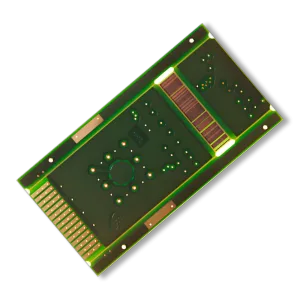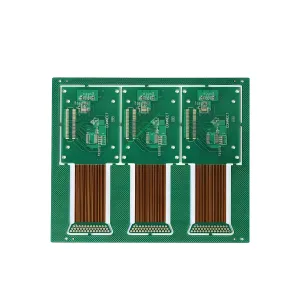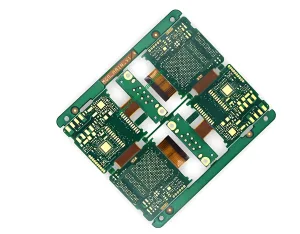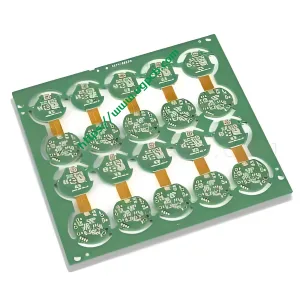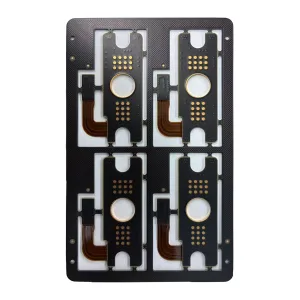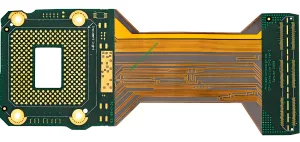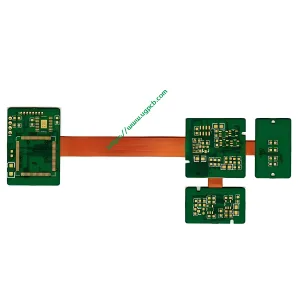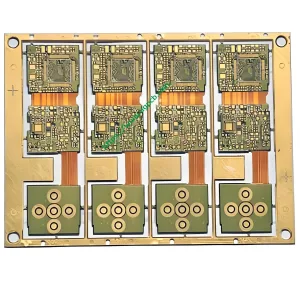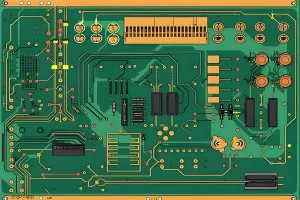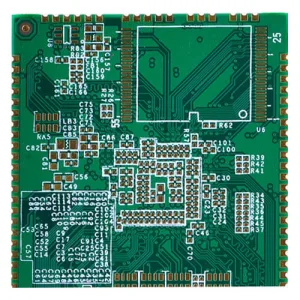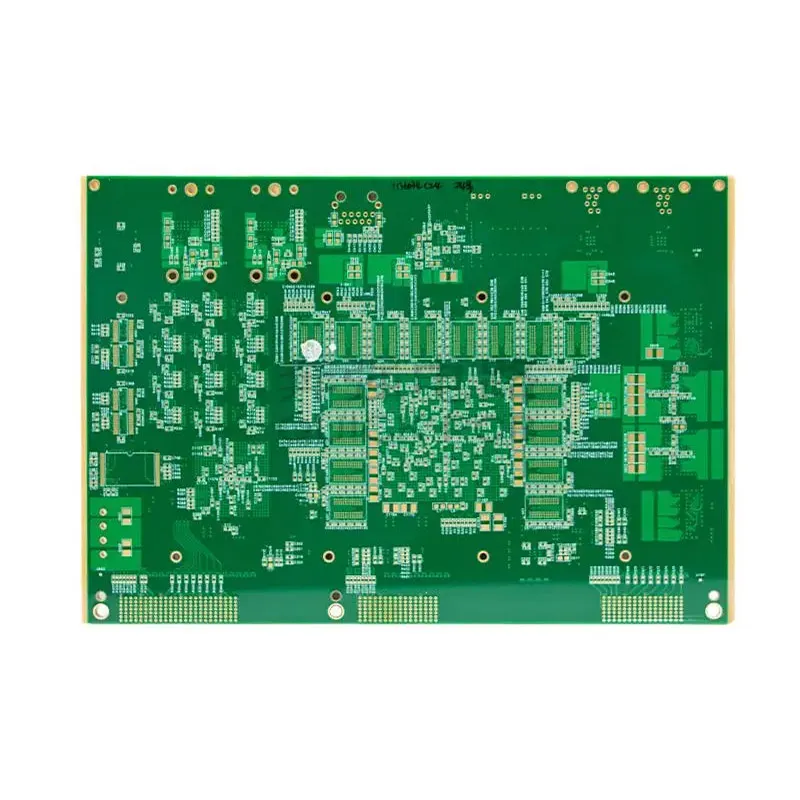
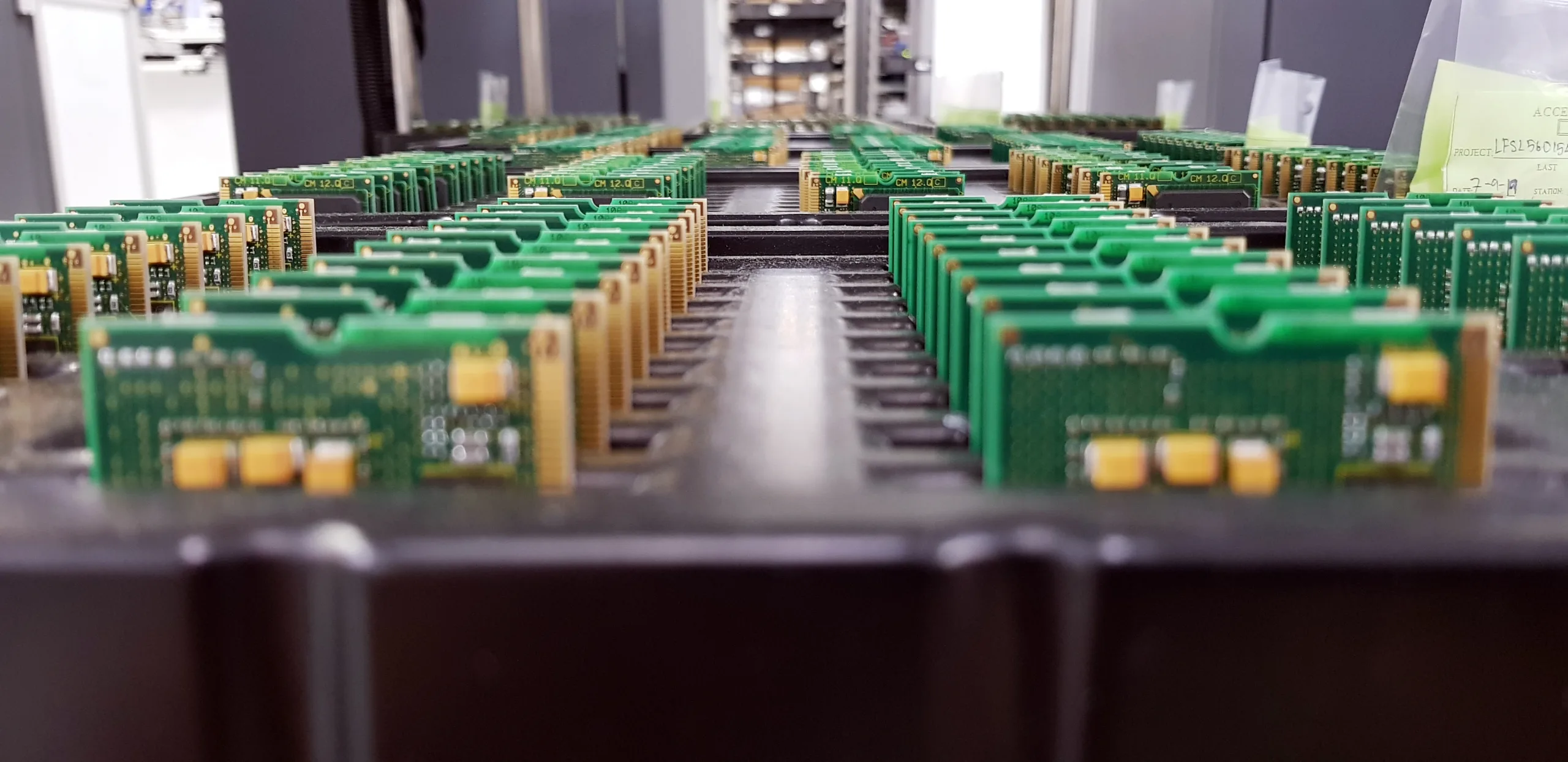
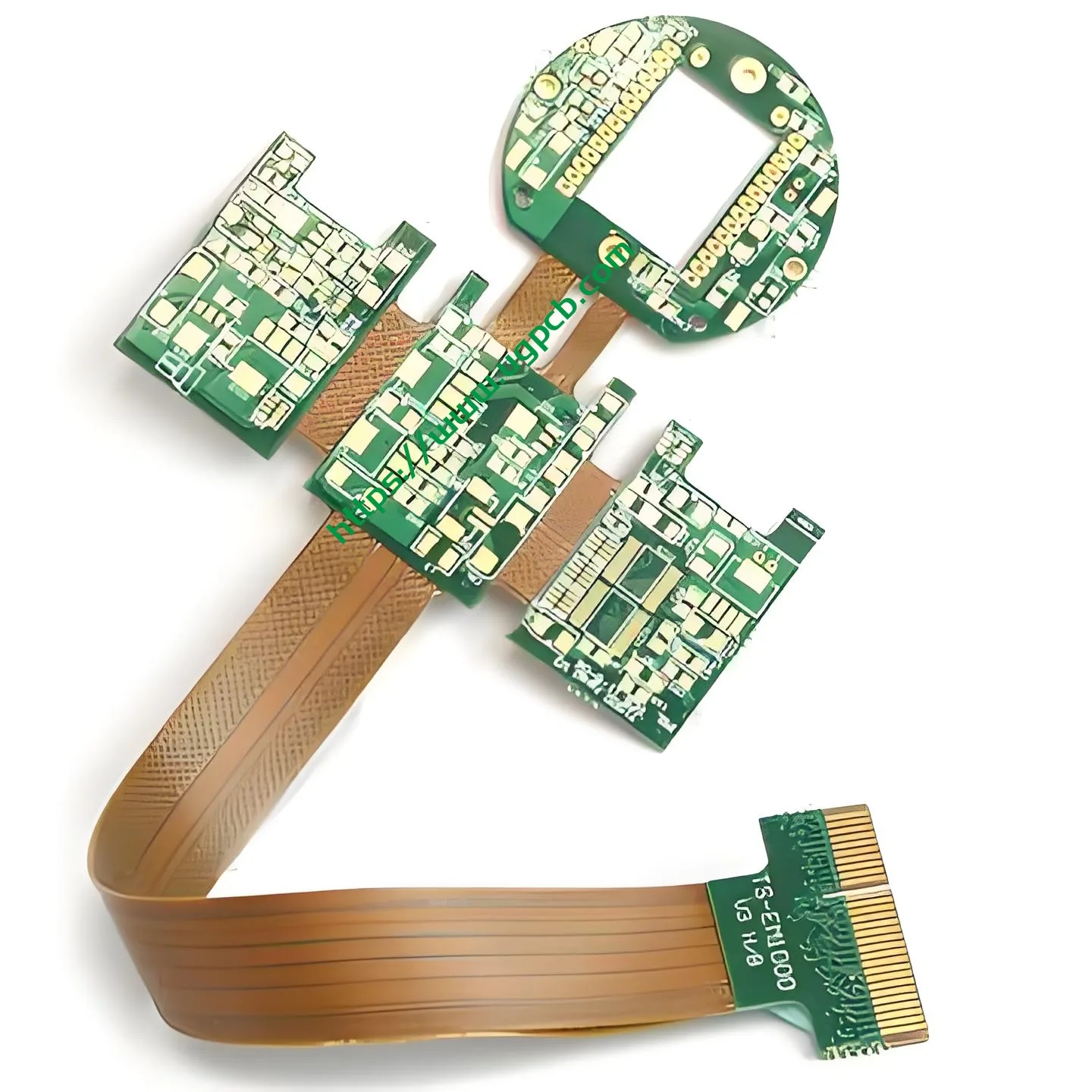
Ce PCB rigide-flexible à 6 couches de haute précision est conçu pour les assistants de santé intelligents, dispositifs médicaux portables, et moniteurs patients portables. UGPCB™ intègre du FR-4 rigide et du polyimide flexible (PI) dans un module robuste. Cette conception supprime les connecteurs et les câbles internes. Il réduit les points de défaillance et améliore la stabilité du système.
Présentation du produit
Le PCB Rigid-Flex UGPCB Smart Health Assistant appartient à IPC 6013 Taper 4 (panneau rigide-flexible multicouche avec trous traversants métallisés). La couche rigide utilise du tissu de verre époxy FR-4. La couche flexible utilise du polyimide (PI). Cette combinaison offre une grande fiabilité, profil mince, et intégration 3D.
Les données du marché montrent que le marché mondial des appareils de santé portables intelligents a atteint $28.6 milliards dans 2025. Le marché chinois est le seul touché $4.53 milliard. Le marché chinois des PCB médicaux croît à 5.2% TCAC, juste derrière l'aérospatiale. Dans ce domaine en pleine croissance, les PCB rigides et flexibles de haute précision deviennent la solution d'interconnexion de base pour les appareils de santé intelligents.
L'UGPCB fournit un support complet: Conception de circuits imprimés, prototypage, et production en volume. Nous vous aidons à raccourcir votre cycle de développement de produits, coûts de fabrication inférieurs, et améliorer la fiabilité.
Classement scientifique & Définition
Définition: Un rcarte de circuit imprimé igid-flex (aussi appelé PCB rigide-flexible ou FPCB) combine des substrats rigides et flexibles en une seule structure. Il contient une ou plusieurs zones rigides (pour composants et support mécanique) et une ou plusieurs zones flexibles (pour plier et plier des appareils compacts).
Classement CIB: Type IPC-6013 4 – Panneau rigide-flexible multicouche avec sections multicouches rigides et multicouches flexibles.
| Paramètre | Description |
|---|---|
| Type CIB | IPC 6013 Taper 4, avec PTH |
| Qualité médicale | Classe 2/Classe 3, OIN 13485 conforme |
| Utilisation de la zone flexible | Courbure statique (formé une fois lors de l'assemblage) |
| Pile de calques | 6-couche hybride: 6 interconnexions en rigide + multicouche en flex |
| Finition de surface | D'ACCORD selon IPC-4552 (Or 0,025–0,125 μm, Nickel 3 à 6 μm) |
Paramètres de base & Matériels
| Paramètre | Spécification | Standard |
|---|---|---|
| Modèle | Circuit imprimé rigide-flexible Smart Health Assistant | - |
| Nombre de couches | 6 | Type IPC-6013 4 |
| Matériau rigide | FR-4 (tissu de verre époxy) | IPC-4101 Classe B/L |
| Matériau flexible | Polyimide (PI) | IPC-6013D |
| Épaisseur rigide | 0.8mm | - |
| Épaisseur de flexion | 0.2mm | - |
| Épaisseur du cuivre | 0.025mm (environ. 0.7 onces/pied²) | - |
| Finition de surface | Immersion Or / ACCEPTER | CIB-4552 |
| Trace / espace min | 0.1mm (4 mil) | CIB-2221 |
| Couleur du masque de soudure | Vert / Blanc (facultatif) | - |
| Application | Assistants de santé intelligents, appareils portables, moniteurs portables | - |
Détails du matériau:
-
FR-4 (Rigide): Stratifié époxy renforcé de verre. Tg≥130°C. CDT 12–16 ppm/°C. Excellente résistance mécanique, résistance chimique, et isolation (≥10¹²Ω à 500 V CC). Il s'agit du substrat rigide standard de l'industrie pour les PCB médicaux..
-
Polyimide (Fléchir): Film PI avec Tg >300° C. Fonctionne de -55°C à +300°C. Rayon de courbure minimum 0,1 mm. Durée de vie en flexion dynamique ≥50 000 cycles. PI offre une stabilité thermique et une flexibilité exceptionnelles.
-
Cuivre (0.025mm / 0.7 once): Équilibre la capacité actuelle et la gravure fine. Selon IPC-2221, une trace de 0,1 mm (couche externe, 10°C augmentation de la température) transporte environ 100 à 150 mA – suffisant pour la plupart des signaux de capteurs médicaux.
Principe de fonctionnement
Le PCB rigide-flexible fonctionne grâce à une interconnexion coordonnée et une transmission de signal entre les zones rigides et flexibles.
Zone rigide: Six couches de cuivre empilées et stratifiées sur FR-4. Trous traversants plaqués (PTH) fournir des interconnexions verticales. Vous soudez ou montez composants sur la surface rigide. Ceci forme le système de circuit central: microcontrôleur (MCU), CI de gestion de l'alimentation (PMIC), Module Bluetooth/Wi-Fi, etc.. La zone rigide offre un support mécanique stable pour une soudure fiable.
Zone flexible: Le substrat en polyimide porte des traces de signal pliables. Un coverlay protège les circuits en cuivre. La zone de flexion se plie, plis, ou des torsions pour connecter les capteurs (fréquence cardiaque, oxygène dans le sang, accéléromètre). Cela permet le routage du signal 3D. L'impédance reste continue le long du flex, assurer une transmission sans perte de signaux physiologiques à haute fréquence comme l'ECG et le PPG.
Directives de conception (CIB-2221 & CIB-2223)
Suivez ces règles clés lors de la conception de votre PCB rigide-flexible pour assistant de santé intelligent:
-
Conception empilable: Utilisez une pile rigide à 6 couches symétriques (par ex., Haut-GND-Signal-Puissance-GND-Bas). Gardez la chaîne en dessous 0.75%. Pour la zone flexible, utiliser 2 à 4 couches maximum pour conserver la flexibilité de flexion.
-
Trace/espace: Minimum 0,1 mm (4 mil) pour signaux standards selon IPC-2221. Pour paires différentielles à grande vitesse (I²C, IPS, RF), utilisez 0,15 mm pour améliorer l'adaptation d'impédance.
-
Acheminement de la zone de pliage: Utilisez des arcs et des traces inclinées – jamais des coins à 90° – pour éviter la concentration des contraintes. Pour un flex dynamique, utiliser 0.5 cuivre oz (plus mince que 0.7 once) pour prolonger la durée de vie de la flexibilité.
-
Contrôle d'impédance: Contrôler les signaux à grande vitesse (≥1 GHz) à ±10% de tolérance. Ajuster la largeur de trace et l'espacement des couches. Cible 50 Ω asymétrique ou 90/100 Ω différentiel. Pour les signaux ECG (basse fréquence, haute impédance), assurer l'impédance d'entrée >10MΩ.
-
Gestion thermique: Les appareils de santé intelligents sont compacts et denses en chaleur. Ajoutez du cuivre ou des vias thermiques sous les modules d'alimentation - surface en cuivre au moins 1,5 fois la surface des composants. Gardez les composants chauds à au moins 5 mm des capteurs de température pour éviter les interférences thermiques..
L'UGPCB propose un examen DFM gratuit. Nous vérifions votre conception rigide-flexible par rapport à Normes IPC et fabricabilité. [Soumettez vos fichiers de conception pour examen gratuit →]
Structure & Composants
Le PCB rigide-flexible de l'assistant de santé intelligent comprend trois parties principales:
-
Zone rigide (6-couche FR-4, 0.8mm total): Peut contenir de gros composants: MCU, Module Bluetooth/Wi-Fi, PMIC, connecteur de batterie. Les composants sont attachés via SMT.
-
Zone flexible (0.2mm polyimide): Connecte les zones rigides aux capteurs. Courbes et plis pour l'assemblage 3D. Coverlay protège les traces de cuivre.
-
Zone de transition (interface rigide-flexible): Les préimprégnés sans écoulement collent les couches FR-4 et PI couche par couche. Tolérance d'alignement critique: ≤ ± 0,05 mm.
Performance & Conformité aux normes
| Standard | Description | Exigence clé |
|---|---|---|
| CIB-2221 | Conception de PCB générique | Trace/espace minimum ≥0,1 mm, résistance d'isolement ≥10¹²Ω |
| Type IPC-6013 4 | Qualification flexible/rigide-flex | Résistance au pelage ≥0,6N/mm, flexion dynamique ≥50 000 cycles |
| CIB-4552 | Spécification ENIG | Or 0,05–0,23 μm, Nickel 3 à 6 μm |
| IPC-6012 | Qualification des PCB rigides | Tolérance de trace ±0,03 mm, écart de position du trou ≤0,05 mm |
| J-std-003C | Test de soudabilité | 288Bain de soudure °C pour 10 secondes, pas de délaminage ni de cloquage |
| OIN 13485 | Gestion de la qualité médicale | Contrôle de processus pour les PCB de qualité médicale |
| UL 94 V-0 | Indice d'inflammabilité | Matériau de base FR-4 – V le plus élevé-0 notation |
Capacité actuelle (référence IPC-2221): Pour une largeur de 0,2 mm, 0.025mm (0.7 once) trace de la couche externe à 25°C ambiant avec une augmentation de 10°C, la capacité est d'environ 0,25 à 0,3 A (empirique). Concevoir avec 30% marge – objectif de courant de fonctionnement maximum de 0,2 A.
Finition de surface: ACCEPTER (Immersion Or)
L'UGPCB utilise ENIG selon IPC-4552.
-
Épaisseur de l'or: 0.025–0,125μm (1–5 micropouces). Nous verrouillons à 0,05 μm – garantit la soudabilité, résistance à l'oxydation, et faible résistance de contact.
-
Épaisseur de nickel: 3–6μm (118–236 micropouces). Cette barrière de diffusion empêche la formation intermétallique fragile entre le cuivre et l'or..
-
Avantage clé: Excellente planéité (±15μm). Idéal pour les paquets à pas fin (BGA, Fournisseur de services de chiffrement) et liaison par fil d'aluminium.
ENIG résiste à la corrosion due à la sueur, gel d'alcool, et résidus biologiques. Il passe le test au brouillard salin de 72 heures sans rouille.
Flux de processus de fabrication
-
Coupe du matériau PI Flex → 2. Percer des trous & nettoyage au plasma → 3. Cuivre chimique / PTH → 4. Modèle de circuit (film sec/gravure) → 5. Inspection de la zone d'intérêt → 6. Stratifié (FR-4 + PI) → 7. Foret secondaire (zone rigide) → 8. Circuit de couche externe → 9. Masque de soudure (vert/blanc) → 10. Finition de surface ENIG → 11. Routage / Coupe en V / dépanner → 12. Test électrique (sonde volante/fixation) → 13. CQ final → Emballage sous vide
Caractéristiques & Avantages
-
3L'intégration D permet d'économiser de l'espace: La zone flexible se plie et se plie, réduire le volume de l'appareil de 30 à 50 %. Pas de connecteurs ou de câbles carte à carte.
-
Haute fiabilité: Moins de connecteurs et de joints de soudure réduisent de plus le taux de défaillance du système 60%. Durée de vie flexible et dynamique >50,000 cycles.
-
Fabrication de précision: Trace/espace minimum 0,1 mm (4 mil). Désalignement couche à couche ≤ ± 0,05 mm. Conforme à la classe IPC 3 norme de haute fiabilité.
-
Finition de surface de qualité médicale: ENIG réussit les tests de brouillard salin et de vieillissement des soudures de 72 heures pour une durabilité à long terme.
-
Service à guichet unique: Prototypes rapides en 3 à 7 jours. Production en volume en 10 à 15 jours. Traçabilité complète et conservation des échantillons.
Scénarios d'application (Circuit imprimé rigide-flexible Smart Health Assistant)
-
Montres de santé intelligentes (ECG, pression artérielle, Surveillance SpO₂)
-
Glucomètres continus (CGM)
-
Patchs ECG portables / moniteurs cardiaques
-
Patchs de température intelligents / thermomètres portables
-
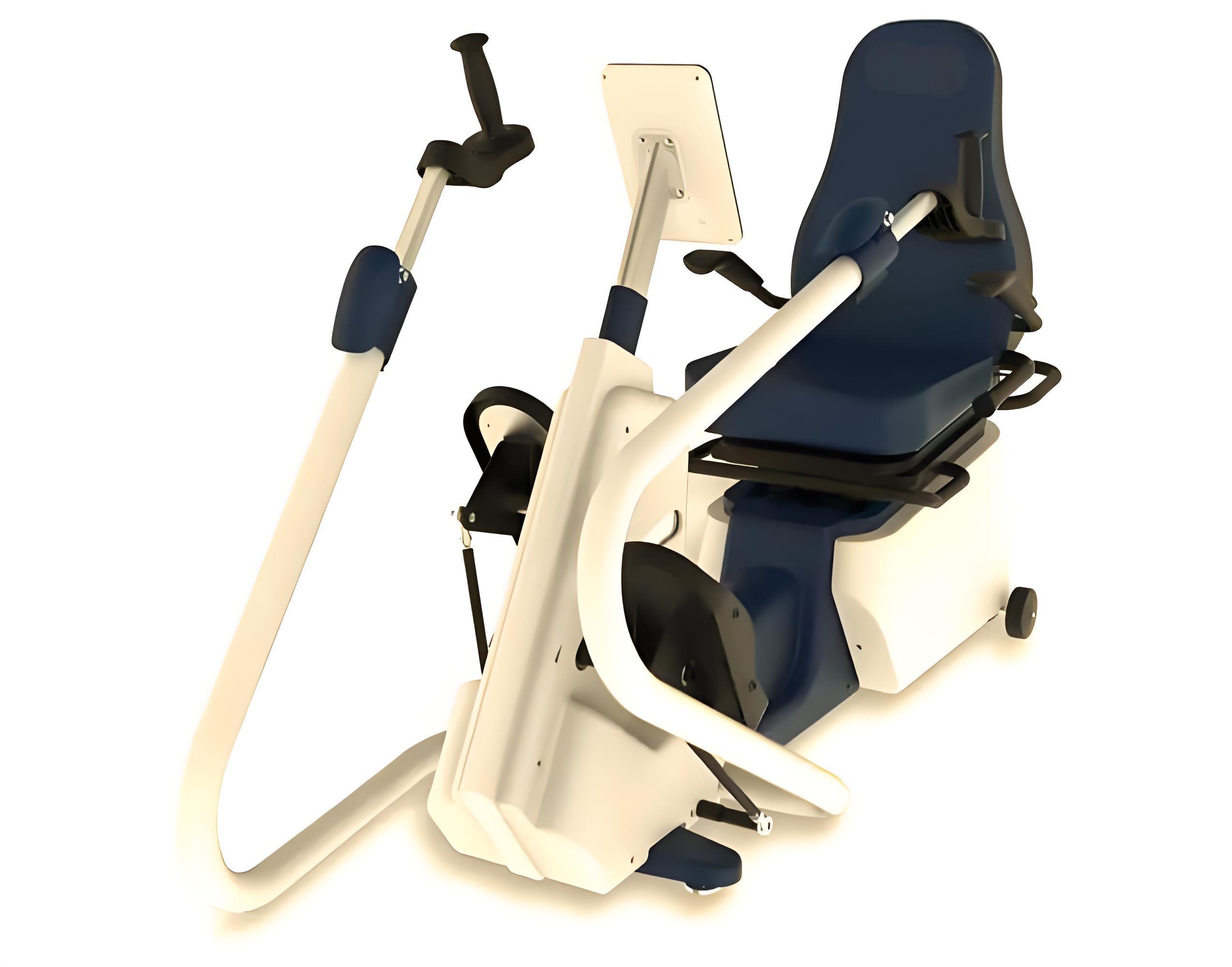
Appareils intelligents de rééducation et de soins infirmiers
-
Stations de contrôle de santé multiparamétriques à usage domestique
Pourquoi choisir UGPCB?
L'UGPCB a plus 10 années d'expérience dans la fabrication de PCB haut de gamme. Nous détenons l'ISO 9001, OIN 13485, et certifications UL. Nous offrons un service complet: Fabrication de circuits imprimés, Approvisionnement des composants, Assemblage SMT, et PCB tests fonctionnels.
Votre appareil d'assistant de santé intelligent est-il aux prises avec des limites d'espace, durée de vie courte, ou pannes de connecteur? Contactez l'UGPCB pour une solution PCB rigide-flex personnalisée.
📧 E-mail: sales@ugpcb.com
🌐 Site Internet: www.ugpcb.com
📞 Hotline technique: +86 755-27211481
Lors de l'envoi d'une demande, veuillez fournir à notre équipe d'ingénierie: Fichiers Gerber / Exigences de conception de PCB / type d'appareil d'assistant de santé intelligent / volume annuel estimé.
Pour un rapport d'analyse DFM gratuit, envoyez vos fichiers de conception par e-mail. L’équipe d’ingénierie de l’UGPCB répondra dans les plus brefs délais 24 heures avec des conseils d'optimisation des processus et des propositions de réduction des coûts.
*(Sources de données: CIB-2221, Type IPC-6013 4, CIB-4552; données de marché de CSRankings, Zhiyan Consulting, Rapport sur le marché futur)*