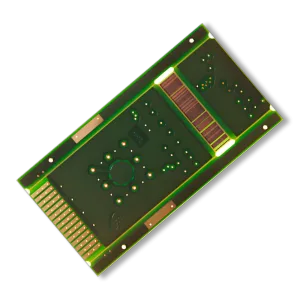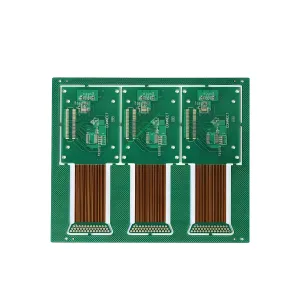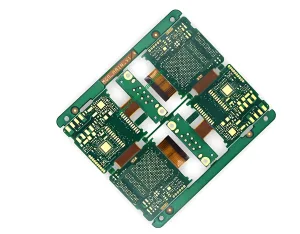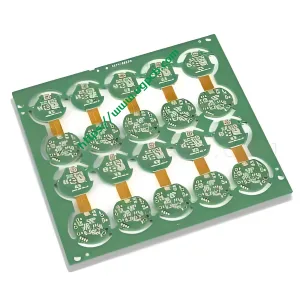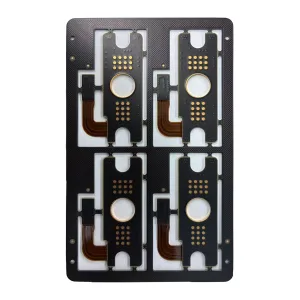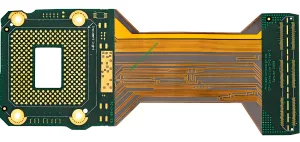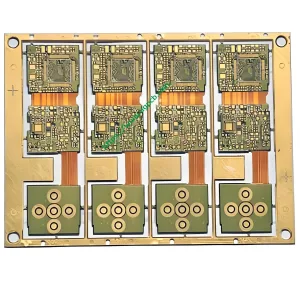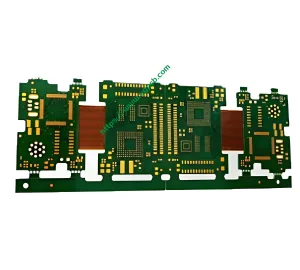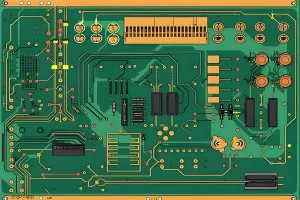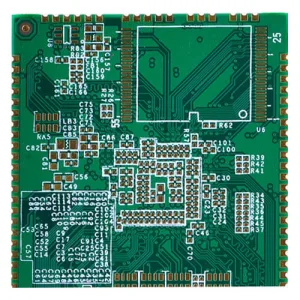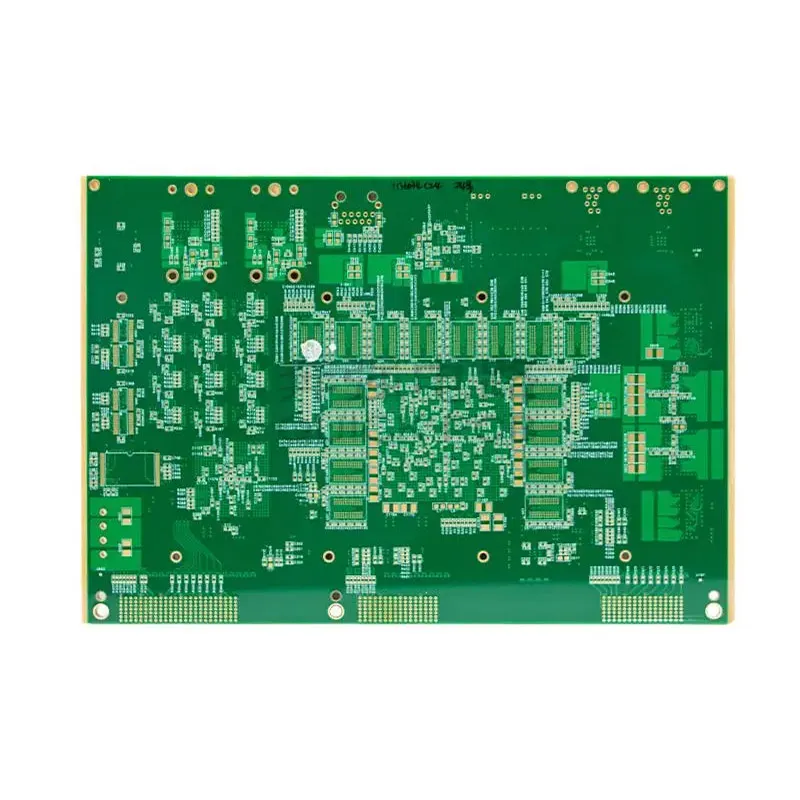
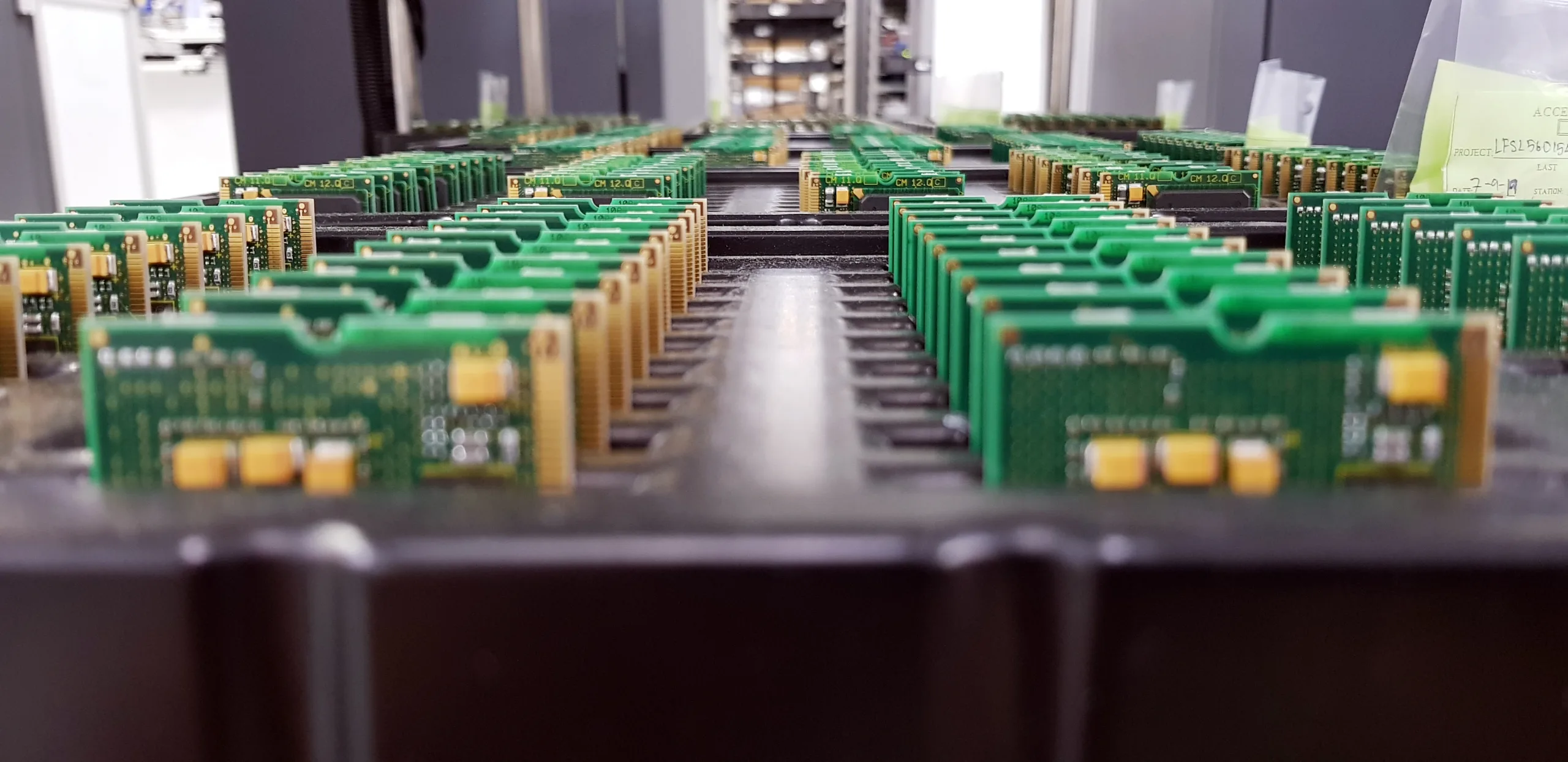
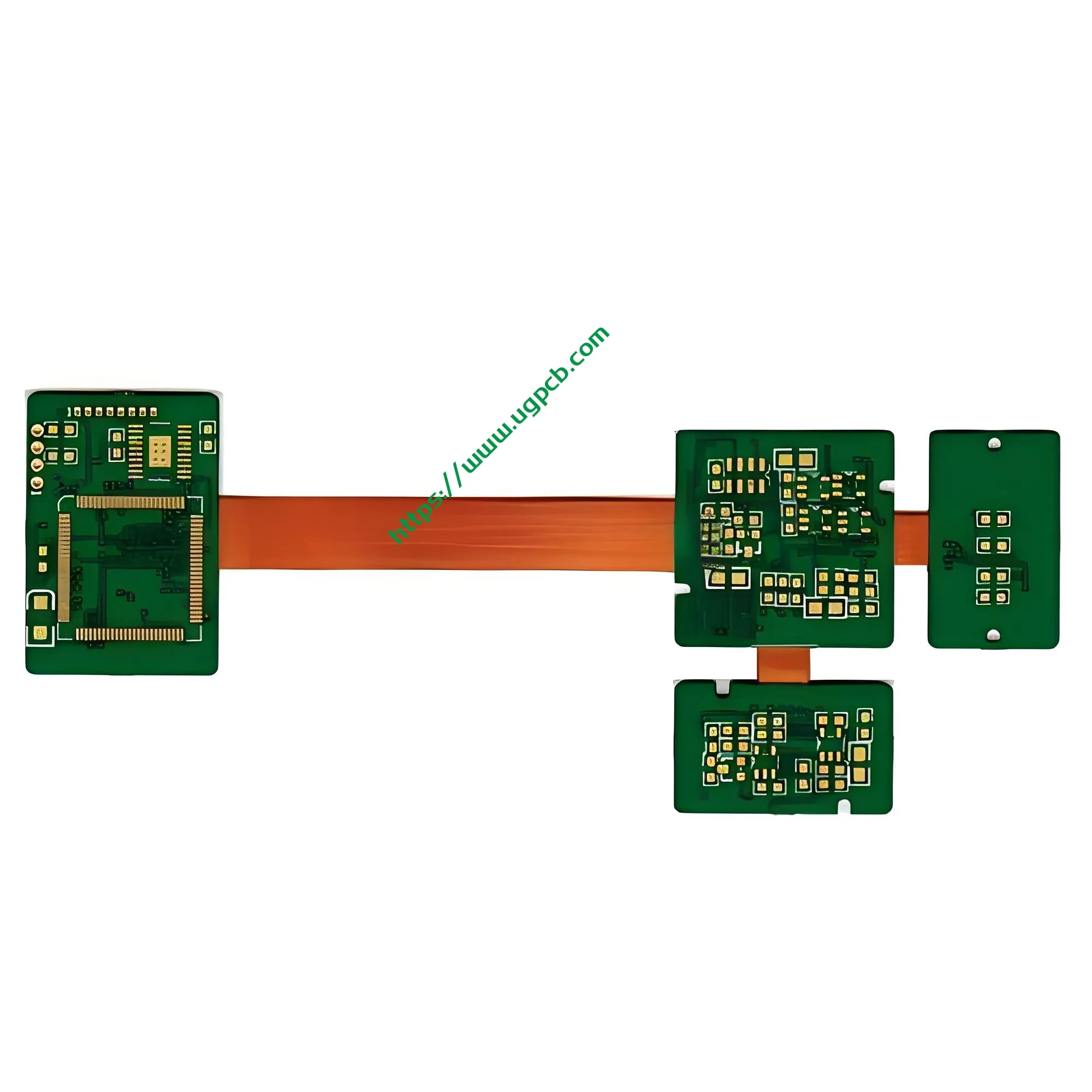
Da sich elektronische Produkte in Richtung bewegen Hochfrequenz, hohe Geschwindigkeit, leicht, und faltbar Entwürfe, herkömmliche starre Leiterplatten oder flexible gedruckte Schaltungen (FPCs) allein kann den Anforderungen komplexer HF-Module nicht mehr gerecht werden, Smartphone-Kameras, oder medizinische Endoskope. Als vertrauenswürdiger Anführer in Leiterplattenherstellung, UGPCB stellt vor 8-Layer-Hochgeschwindigkeits-Starrflex-Leiterplatte. Mit seiner einzigartigen 6-Schicht starr + 2-Schichtflex integrierte Struktur, Dieses Board bietet eine optimale Balance von Signalintegrität, mechanische Stabilität, und Raumnutzung.
Einen detaillierten Überblick hierzu gibt dieser Artikel Starrflex-Leiterplatte– deckt seine Definition ab, Materialien, Herstellungsprozess, und Anwendungen – um Ihnen zu helfen, zu verstehen, warum es die bevorzugte Wahl für hohe Leistung ist Modulplatinen.
1. Produktübersicht und Definition
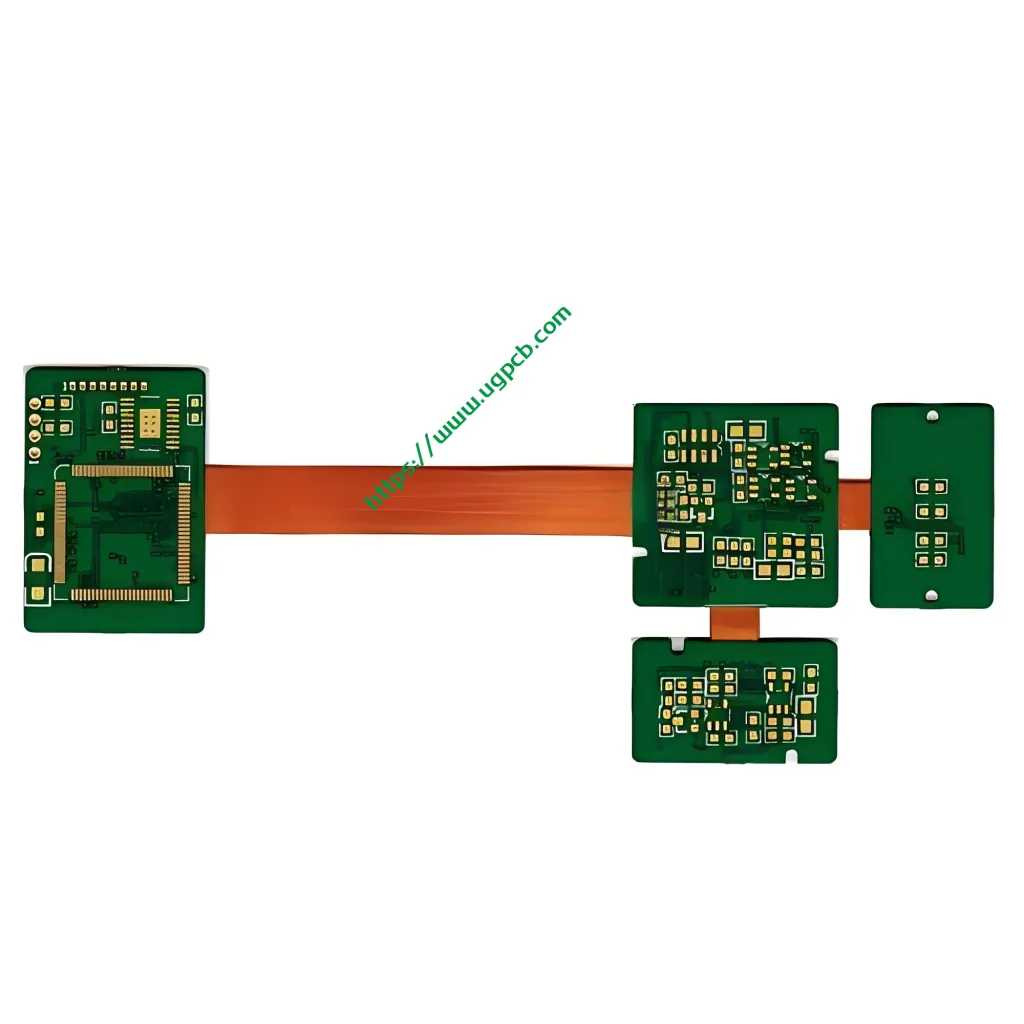
Der8-Layer-Hochgeschwindigkeits-Starrflex-Leiterplatte ist nicht einfach eine starre Platine, die über einen Stecker mit einer flexiblen Platine verbunden ist. Stattdessen, Es handelt sich um eine einheitliche Struktur, die durch Laminieren entstehtFR4 (starres Substrat) UndPI (Polyimid, flexibles Substrat) in eine einzige Komponente.
- Strukturaufschlüsselung: Starr 6l (6-Schicht starrer Abschnitt) + Flex 2l (2-Schicht flexibler Abschnitt).
- Kernpositionierung: Ideal für kompakte elektronische Geräte, die Folgendes benötigen Hochgeschwindigkeits-Signalübertragung, dynamisches Biegen, Und hohe Zuverlässigkeit.
Dieses Design macht herkömmliche Board-to-Board-Anschlüsse überflüssig, Reduzierung des Risikos von Lötstellenfehlern bei gleichzeitiger deutlicher Verbesserung elektromagnetische Kompatibilität (EMC) . Es stellt einen entscheidenden Fortschritt dar Hochgeschwindigkeitsplatine Technologie.
2. Designüberlegungen und Funktionsprinzip
Konstruktionsüberlegungen
Beim Entwerfen diesesStarrflex-Leiterplatte, Das Ingenieurteam von UGPCB konzentriert sich auf drei kritische Bereiche:
- Impedanzkontrolle: Für Hochgeschwindigkeitssignale, Wir kontrollieren streng Spurbreite und -abstand. Dieses Produkt erreicht ein Minimum 3Mil/3mil Spur/Raum, Gewährleistung einer konsistenten Differenzimpedanz (z.B., 90Ω oder 100Ω).
- Übergangszonenschutz: Die Verbindung zwischen starren und flexiblen Abschnitten ist ein Spannungskonzentrationspunkt. Wir bewerben uns Tränenkompensation und optimierte Coverlay-Öffnungen, um Stromkreisunterbrechungen beim dynamischen Biegen zu verhindern.
- Stapelsymmetrie: Um einen durch CTE verursachten Verzug zu vermeiden (Wärmeausdehnungskoeffizient) Nichtübereinstimmung beim Hochtemperaturlöten, Der starre Abschnitt verwendet einen 6-schichtigen symmetrischen Aufbau, während der Flex-Bereich hochmoduliges PI-Material verwendet.
Arbeitsprinzip
Der Flexschicht (PI) fungiert als Brücke zwischen mehreren starren Funktionsmodulen. Beim Biegen, Der flexible Abschnitt überträgt Hochgeschwindigkeits-Datensignale (wie MIPI oder USB 3.0) und Macht, während die starren Abschnitte BGA mit hoher Dichte tragen Komponenten und passive Geräte. Durch dieses Design passt das gesamte Schaltungssystem in kompakte oder unregelmäßige Produktgehäuse.
3. Materialien und wichtige Spezifikationen
UGPCB verwendet erstklassige Materialien von weltweit führenden Marken, um elektrische Leistung und Zuverlässigkeit zu gewährleisten. Nachfolgend finden Sie die wichtigsten Spezifikationen für dieses Modell:
| Parameter | Spezifikation | Technischer Einblick |
|---|---|---|
| Grundmaterial | FR4 + PI | Der starre Abschnitt verwendet FR4 mit hoher Tg (Tg > 150°C) für Lötstabilität; Flexabschnitt besteht aus Polyimid (PI) für Flexibilität und Hitzebeständigkeit. |
| Kupferdicke | 1 OZ | Fertig 1 Unzen Kupfer unterstützen höhere Strombelastungen und tragen dazu bei, den Hauteffektverlust zu reduzierenHochgeschwindigkeitssignale. |
| Dicke der fertigen Platte | 1.0 mm | Vereint mechanische Unterstützung mit den Anforderungen dünner Geräte. |
| Oberflächenbeschaffung | Immersionsgold | 2M” Golddicke. Bietet eine Wohnung, lötbare Oberfläche mit ausgezeichneter Oxidationsbeständigkeit, Ideal für Fine-Pitch-BGAs und Aluminiumdrahtbonden. |
| Mindestlochgröße | 0.2 mm (mechanisch) | Unterstützung hochdichte Verbindung (HDI) Entwürfe; Blind- und Buried-Vias können zusätzlich Platz beim Routing sparen. |
| Minimale Spur / Raum | 3Mil / 3Mil | Fine-Line-Fähigkeit für Routing mit hoher Dichte, Gewährleistung der Signalintegrität bei hohen Frequenzen. |
4. Produktklassifizierung und Strukturmerkmale
Wissenschaftliche Klassifikation
Gemäß IPC-2223-Standards, Dieses Produkt ist als klassifiziertDynamische Flex-Starrflex-Leiterplatte.
- Durch Struktur: Asymmetrischer Starrflex (6-Schicht starr + 2-Schichtflex).
- Durch Anwendung: Hohe Geschwindigkeit, Hochfrequenz Modulplatine.
Strukturelle Merkmale
- Integrierte Verbindung: Eliminiert Anschlüsse, Reduzierung von Einfügedämpfung und Signalreflexion. Die Signalintegrität verbessert sich um ca 30% im Vergleich zu herkömmlichen Lösungen mit starren Platinen und Steckverbindern.
- Hohe Flex-Haltbarkeit: Der 2-lagige Flexabschnitt verwendet gewalzt geglüht (Ra) Kupfer, was eine bessere Biegelebensdauer bietet als galvanisch abgeschieden (Ed) Kupfer, hält Zehntausenden dynamischen Kurven stand.
- Dünn und leicht: Mit einer Gesamtdicke von 1.0 mm, es spart bis zu 60% Platz auf der Z-Achse im zusammengeklappten Zustand.
5. Herstellungsprozess und Qualitätskontrolle
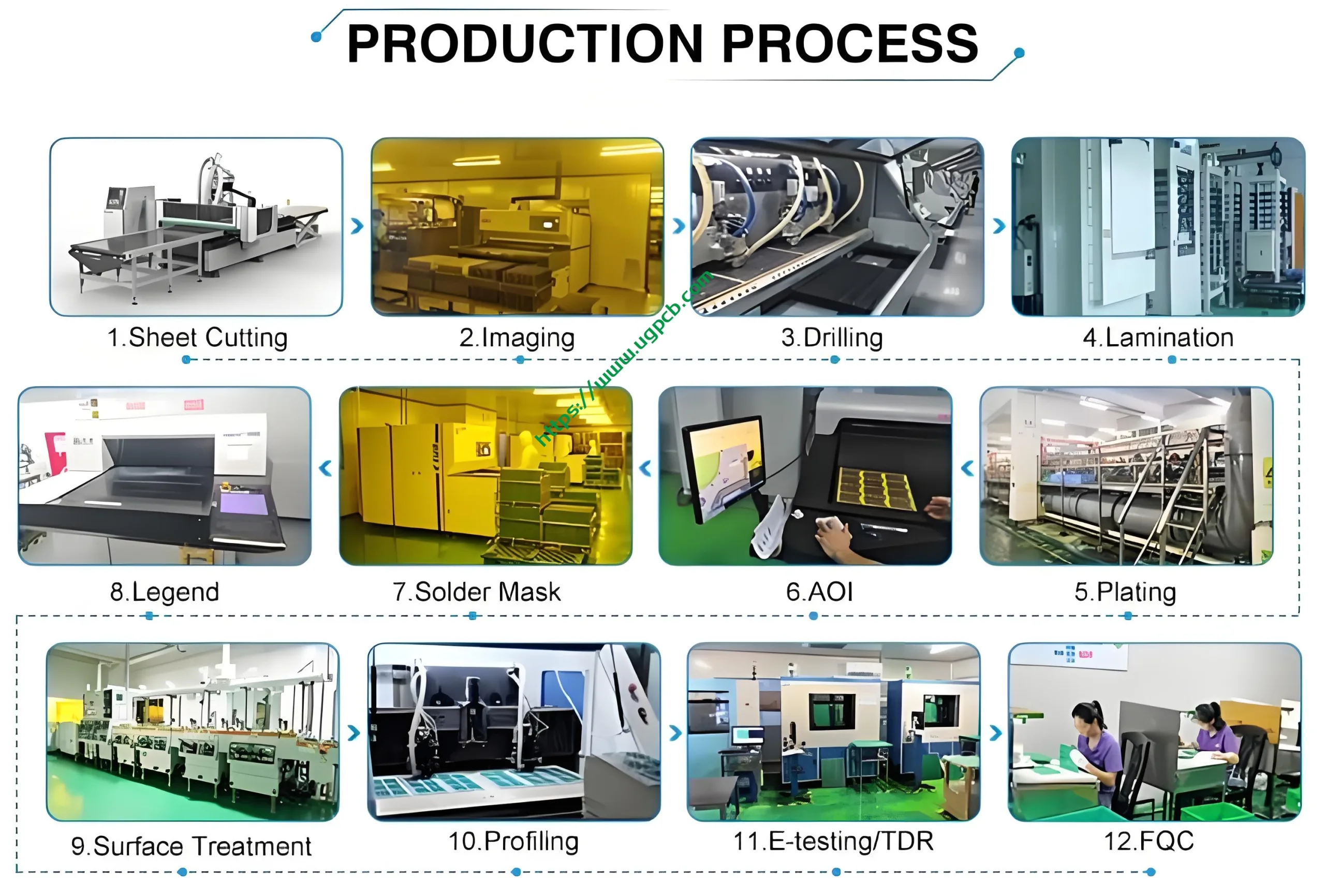
UGPCB betreibt eine vollständig integrierte Produktionslinie, um alles zu gewährleistenHochgeschwindigkeits-Starrflex-Leiterplatte erfüllt strenge Qualitätsstandards. Der Kernprozess umfasst:
- Vorbereitung der Flexschicht: Das PI-Substrat wird mittels Trockenfilm und Ätzen der Innenschicht verarbeitet, um feine Schaltkreise zu bilden (3mil-Spurbreite) im flexiblen Bereich.
- Coverlay-Laminierung: Über den flexiblen Schaltkreisen wird eine Schutzschicht angebracht, um sie zu schützen und den Biegebereich zu definieren.
- Starre Schichtstapelung: FR4-Prepreg ist exakt auf die verarbeitete Flexschicht ausgerichtet. Dies ist ein entscheidender Schritt, um sicherzustellen, dass das Harz die Starr-Flex-Schnittstelle ohne Hohlräume ausfüllt.
- Laminierung: Die starren und flexiblen Schichten werden unter hoher Temperatur und hohem Druck verschmolzen.
- Bohren und Plattieren: 0.2 mm mechanisches Bohren durchgeführt wird, Anschließend erfolgt eine stromlose Verkupferung zur Herstellung von Zwischenschichtverbindungen.
- Oberflächenbeschaffung: Immersionsgold wird mit einer kontrollierten Dicke von aufgetragen 2M” um die Lötbarkeit und Oxidationsbeständigkeit sicherzustellen.
- Routing und elektrische Prüfung: Laserschneiden oder Stanzen formen die Platine, gefolgt von 100% Flying-Probe- oder Fixture-Tests, um sicherzustellen, dass keine Kurzschlüsse oder Unterbrechungen auftreten.
6. Anwendungsszenarien
Das8-Schicht-Hochgeschwindigkeits-Starrflex-Leiterplatte ist für hohe Dichte ausgelegt, Anwendungen mit hoher Zuverlässigkeit, einschließlich:
- Smartphones und Wearables: Wird in faltbaren Telefon-Mainboard-Anschlüssen und Kameramodulen verwendet (CCM) Versammlungen, Nutzung der Biegefähigkeiten für die Scharnierintegration.
- Medizinprodukte: Zum Beispiel Ultraschallendoskope und Hörgeräte. Die kompakte Größe und Zuverlässigkeit von Starrflex-Leiterplatten gewährleisten eine stabile Signalübertragung in kritischen Umgebungen.
- Kfz -Elektronik: Fahrzeuginterne Kameramodule und LiDAR-Systeme. Erfüllt die Anforderungen der Automobilindustrie hinsichtlich Vibrationsfestigkeit und Temperaturwechsel (-40° C bis 125 ° C.).
- Luft- und Raumfahrt und Verteidigung: Satellitenkommunikationsmodule und Raketenleitsysteme. Reduziert das Gewicht bei gleichzeitig hoher Zuverlässigkeit.
- Industrielle Steuerung: Robotergelenke und servomotorische Antriebe. Der Flexbereich absorbiert mechanische Belastungen durch Bewegung.
7. Warum wählen Sie UGPCB??
Die Herstellung von Starrflex-Leiterplatten stellt technische Herausforderungen dar, besonders inlunkerfreie Laminierung an der Starr-Flex-Schnittstelle UndKontrolle der Materialschrumpfung von PI. UGPCB geht diese mit bewährter Expertise an:
- Präzise Schwundkompensation: Mit umfangreichen Daten zu den unterschiedlichen Expansionsraten von PI und FR4, Wir halten die Schicht-zu-Schicht-Registrierung innerhalb von ±2 mil aufrecht.
- Hochgeschwindigkeits-Signalsicherung: Für Hochgeschwindigkeitsplatine Anwendungen, Wir kontrollieren die Dielektrizitätskonstante streng (Dk) und Verlustfaktor (Df), und stellen Impedanztestberichte bereit.
- Anpassungsunterstützung: Vom Prototypen bis zur Massenproduktion, Wir unterstützen maßgeschneidert Modulplatine Lösungen mit zuverlässigen Lieferzeiten.
8. Holen Sie sich noch heute ein Angebot ein
Ist Ihr Produkt der nächsten Generation immer noch durch die Steckergröße und den Signalverlust eingeschränkt?? Es ist Zeit für ein Upgrade auf8-Layer-Hochgeschwindigkeits-Starrflex-Leiterplatte.
[Wenden Sie sich an UGPCB -Ingenieure] für:
Wettbewerbsfähige Mengenpreise.
Kostenloser DFM-Analysebericht (innerhalb 24 Std.).
Empfehlungen zur Impedanzoptimierung.