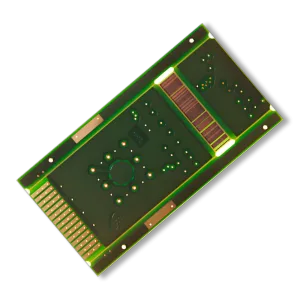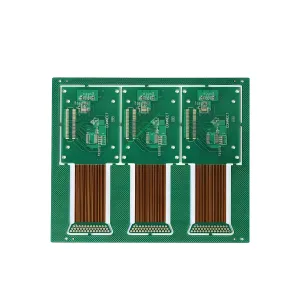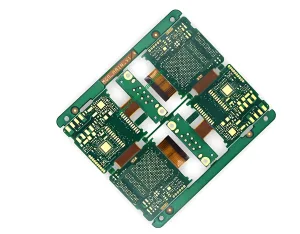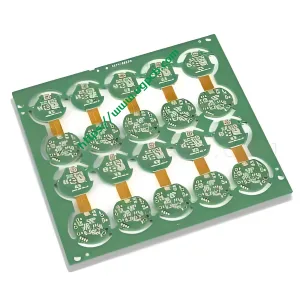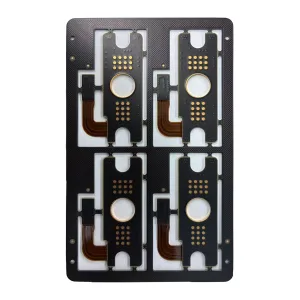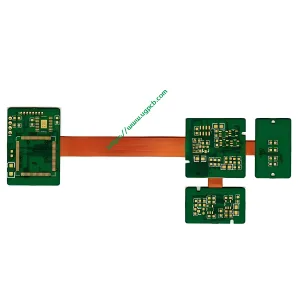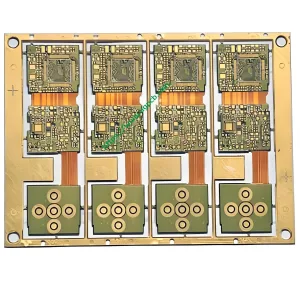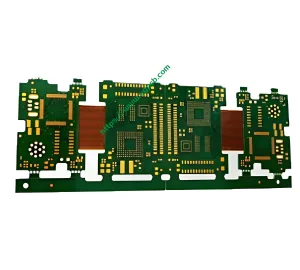
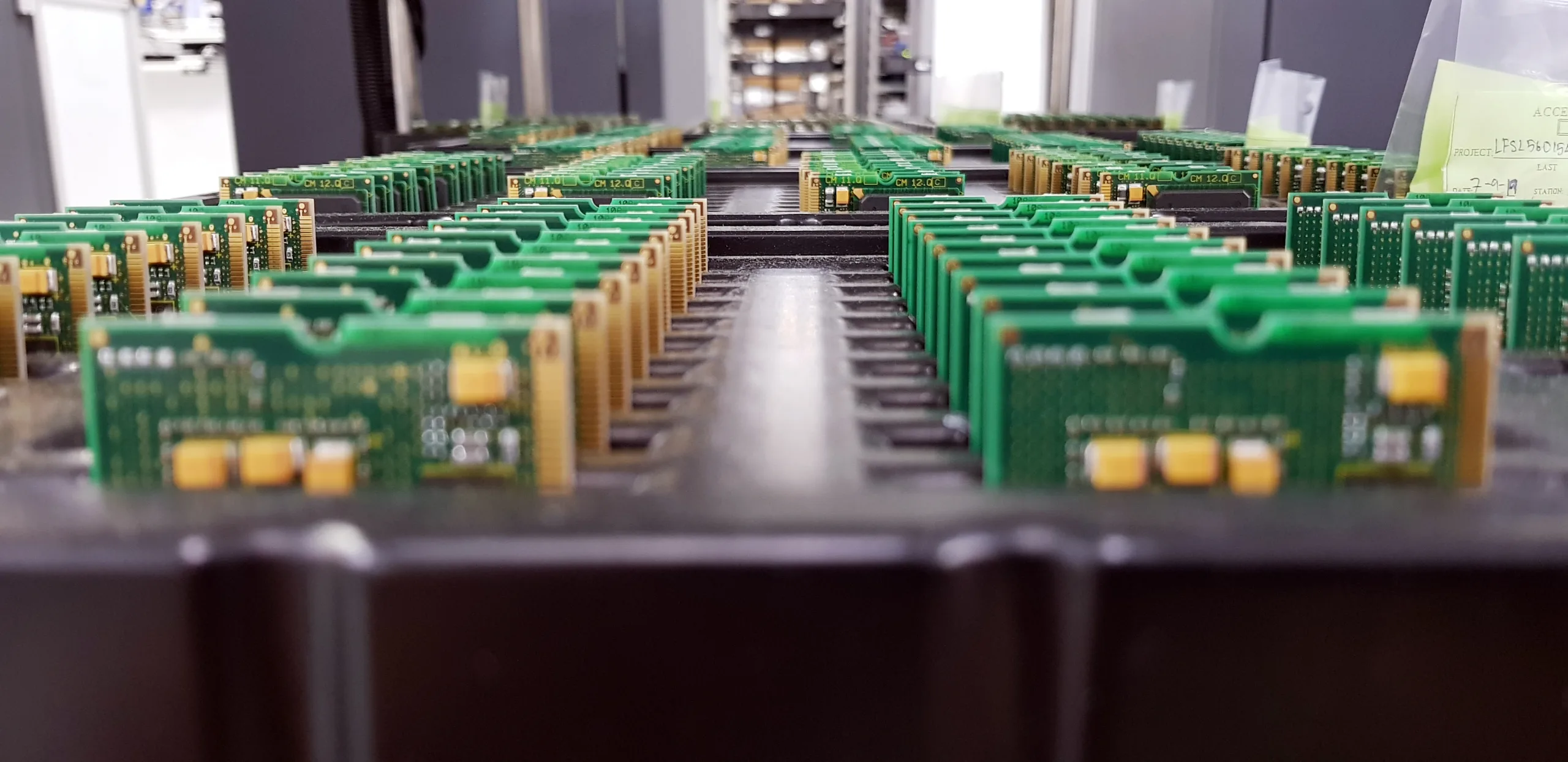
Da moderne elektronische Produkte eine höhere Integration erfordern, Kleinere Formfaktoren, und verbesserte Zuverlässigkeit, Herkömmliche starre Leiterplatten oder eigenständige flexible Leiterplatten reichen bei komplexen dreidimensionalen Designs oft nicht aus. Starr-Flex-PCBs bieten eine Lösung, indem sie die mechanische Unterstützung starrer Platinen mit der Biegsamkeit flexibler Schaltkreise kombinieren, Dies macht sie zu einer bevorzugten Wahl für High-End-Elektronikanwendungen.
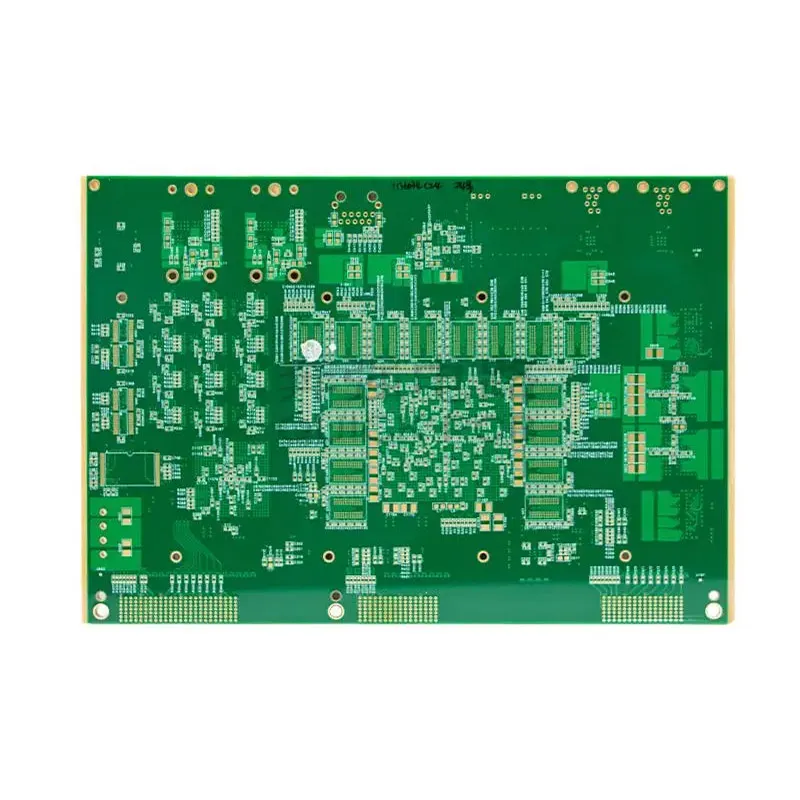
UGPCB ist auf Präzision spezialisiert Leiterplattenherstellung. In diesem Artikel stellen wir unser Flaggschiffprodukt vor – das Mehrschichtige starre Flex-Leiterplatte (4 Starre Schichten + 2 Flexschichten) – und erklärt, wie seine Struktur fortschrittliche digitale Produktdesigns unterstützt.
1. Was ist eine Starrflex-Leiterplatte??
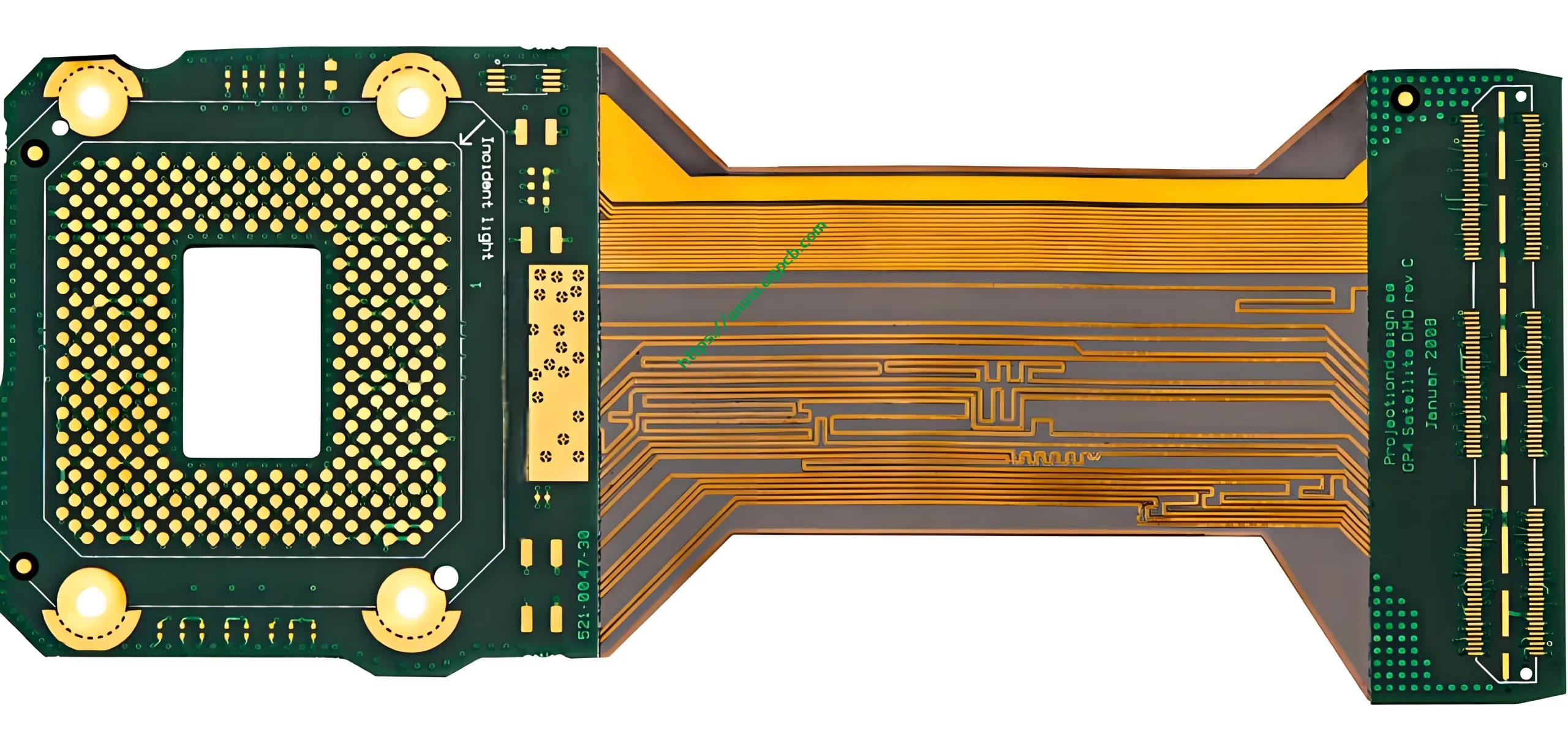
A Starrflex-Leiterplatte Integriert starre Platinenabschnitte und flexible Schaltungsabschnitte durch Laminierung zu einer einzigen Einheit. Im Gegensatz zu herkömmlichen Baugruppen, bei denen Steckverbinder zum Verbinden separater starrer und flexibler Platinen verwendet werden, Eine starr-flexible Leiterplatte stellt nahtlose elektrische Verbindungen durch plattierte Durchkontaktierungen und Schichtübergänge her.
Diese Struktur bietet eine größere Designflexibilität. Dadurch kann die Leiterplatte im Inneren des Geräts gefaltet oder gebogen werden, Reduzierung des Platzbedarfs und Eliminierung von Anschlüssen und Kabeln. Dies verbessert die Stoßfestigkeit und Signalintegrität.
2. Produktübersicht: UGPCB 4+2 Mehrschichtige starre Flex-Leiterplatte
UGPCB bietet eine Starrflex-Leiterplatte mit einem Klassiker starr-flex-starr Stapeln. Die wichtigsten Parameter sind unten aufgeführt.
-
Modell: Mehrschichtige starre Flex-Leiterplatte
-
Schichtaufbau: 4 starre Schichten + 2 Flexschichten
-
Material: FR-4 (starre Abschnitte) + Polyimid (Flexabschnitt)
-
Oberflächenbeschaffung: Immersionsgold (ZUSTIMMEN)
-
Fertige Dicke: 1.0mm (starrer Bereich) + 0.15mm (Flexbereich)
-
Kupferdicke: 1 oz
-
Minimale Spur / Raum: 3 Mil / 3 Mil
-
Anwendung: Digitale Produkte
3. Klassifizierung und Anwendungen
Starrflexible Leiterplatten werden im Allgemeinen nach Struktur und Verwendungszweck klassifiziert. Die Angebote von UGPCB unterstützen die folgenden gängigen Typen:
-
Einseitige oder doppelseitige Starrflex-Leiterplatten – geeignet für kompakte Geräte wie TWS-Ohrhörer und Smartwatches.
-
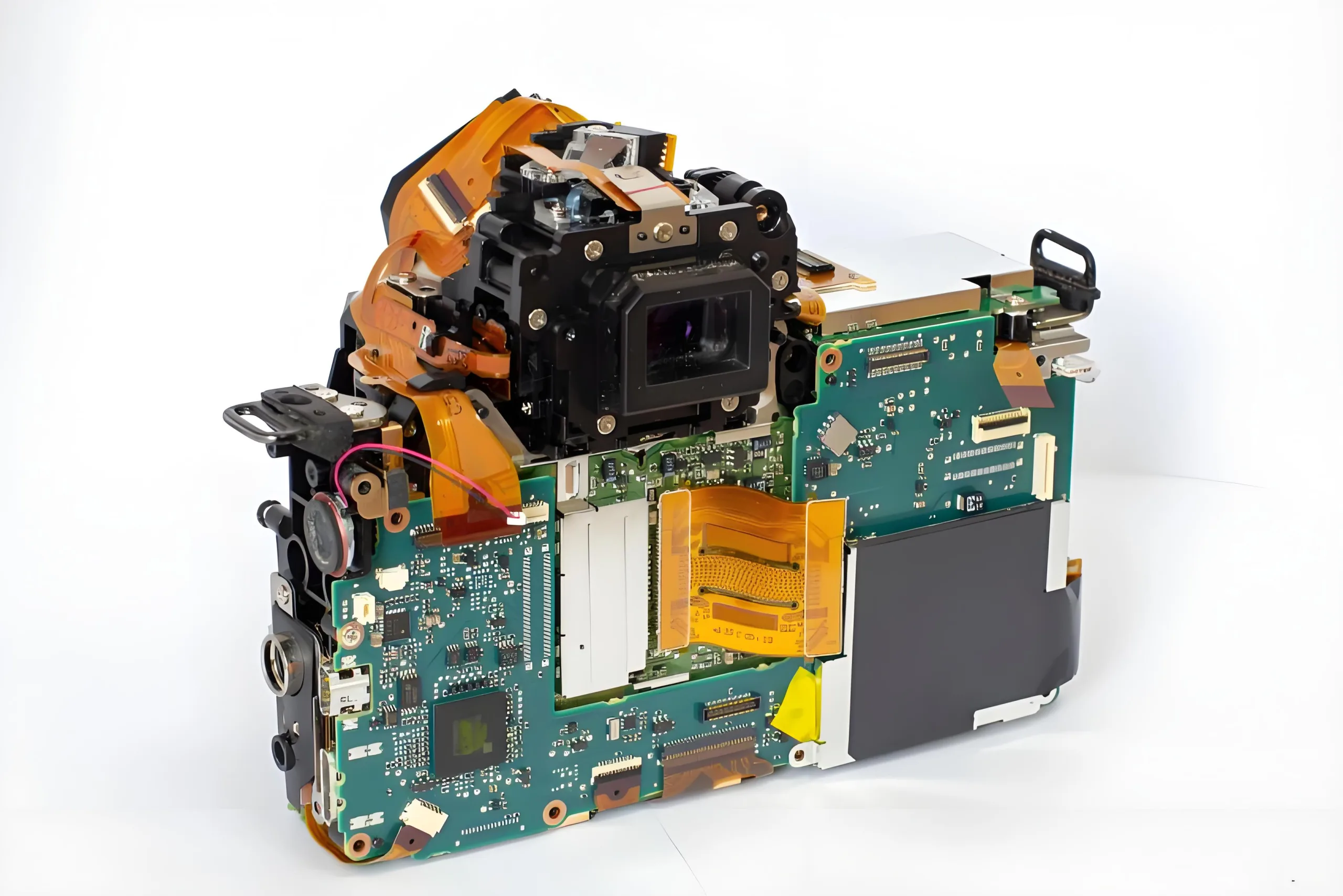
Mehrschichtige Starrflex-Leiterplatten – UGPCBs 4 starr + 2 Flexschicht Design gehört zu dieser Kategorie. Es unterstützt die Platzierung von Komponenten mit hoher Dichte und komplexes Routing, Damit ist es ideal für Smartphones, Digitalkameras, und ähnliche digitale Produkte.
-
Lokal verstärkte Starrflex-Leiterplatten – Wird in der Industrierobotik oder bei faltbaren Displays verwendet, bei denen eine hohe Biegelebensdauer erforderlich ist.
4. Designüberlegungen und Funktionsprinzip
Das Funktionsprinzip einer Starrflex-Leiterplatte ist unkompliziert: Starre Abschnitte tragen Komponenten, während flexible Abschnitte biegsame Verbindungen bereitstellen. Jedoch, Eine erfolgreiche Umsetzung erfordert eine sorgfältige Gestaltung.
Zu den wichtigsten Designpraktiken gehören::
-
Stapelsymmetrie – Symmetrische Schichtaufbauten verhindern Verzug durch thermische Belastung beim Laminieren.
-
Behandlung der Übergangszone - Der Starr-Flex-Schnittstelle ist der empfindlichste Bereich. UGPCB folgt den DFM-Richtlinien und verwendet tropfenförmige Pads und konische Leiterbahnen, um die Belastung zu reduzieren. Scharfe Spurwinkel werden vermieden, um Risse zu vermeiden.
-
Flex-Layer-Routing – Leiterbahnen im Flexbereich sollten verlegt werden senkrecht zur Biegeachse. Um die Flexibilität aufrechtzuerhalten, sollten abrupte Richtungsänderungen oder gestapelte Leiterbahnen vermieden werden.
5. Materialien und Leistung
Die Materialauswahl wirkt sich direkt auf Leistung und Zuverlässigkeit aus.
-
Starrer Abschnitt – FR-4 – Sorgt für mechanische Stabilität und Wärmeableitung Komponenten wie BGAs und Steckverbinder.
-
Flexabschnitt – Polyimid (PI) – Bietet eine hohe Hitzebeständigkeit, Isolierung, und flexibles Leben. In Kombination mit 1 oz gewalztes geglühtes Kupfer, Es unterstützt dynamische Flex-Anwendungen.
-
Oberflächenveredelung – Immersionsgold (ZUSTIMMEN) – Bietet eine Wohnung, Oxidationsbeständige Oberfläche, geeignet für Fine-Pitch-Bauteile und sorgt für zuverlässige Lötbarkeit.
6. Herstellungsprozess
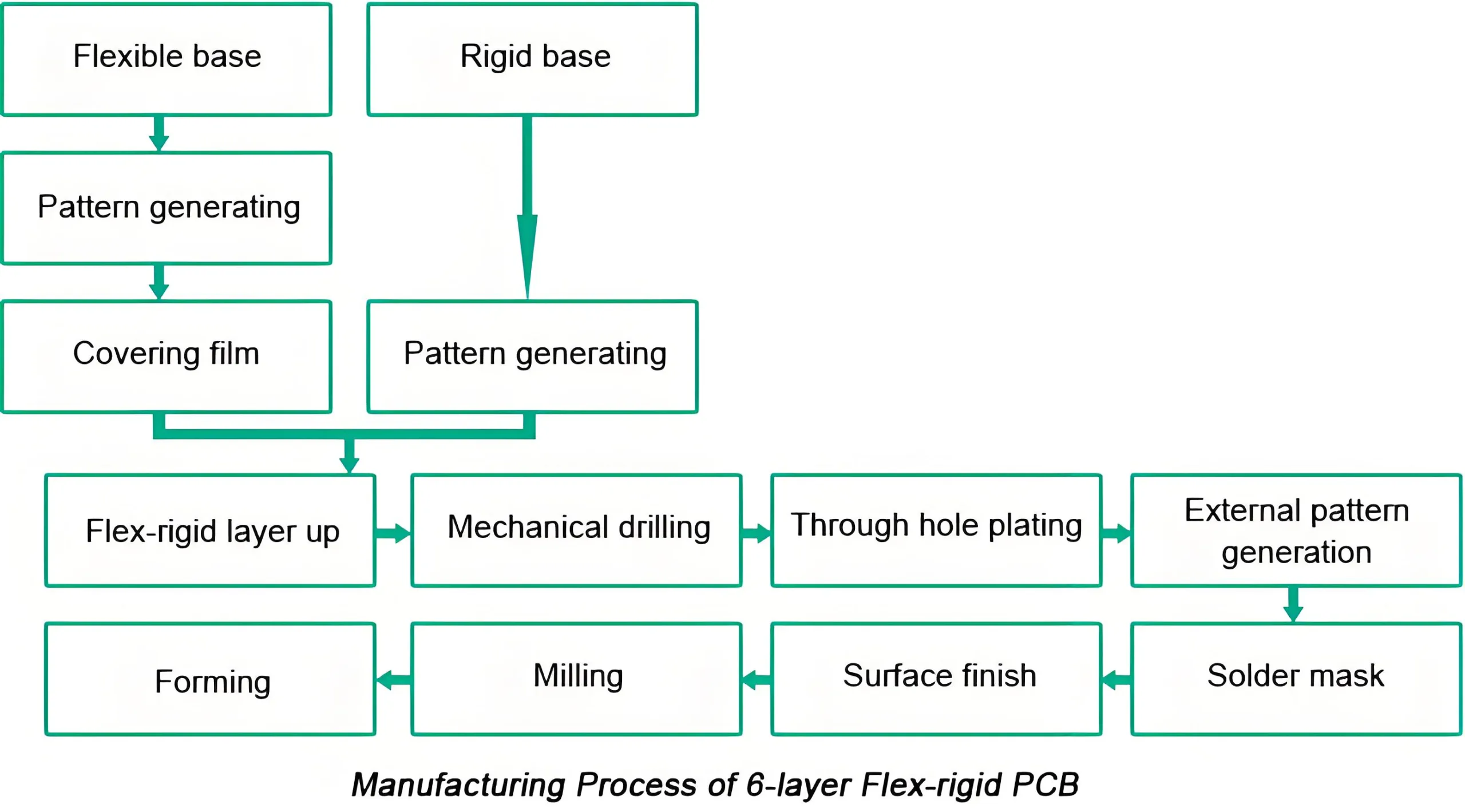
Die Herstellung einer hochwertigen mehrschichtigen Starrflex-Leiterplatte erfordert eine strenge Prozesskontrolle. UGPCB befolgt branchenübliche Verfahren, um Zuverlässigkeit zu gewährleisten.
-
Materialvorbereitung und Bildgebung der Innenschicht – FR-4- und PI-Materialien werden separat geschnitten. Die Schaltkreise der inneren Schicht werden durch Belichtung gebildet, Entwicklung, und Radierung, mit 3 Präzise gesteuerte Mil-Spurbreite. Die AOI-Inspektion überprüft die Qualität.
-
Plasmabehandlung und Bräunung – Die Plasmareinigung erhöht die Oberflächenaktivität und verbessert die Haftung zwischen FR-4 und PI vor der Laminierung.
-
Laminierung – Die inneren Schichten, Prepreg, und Kupferfolie werden unter Vakuum und hoher Temperatur laminiert. Die Kontrolle des Prepreg-Flusses ist von entscheidender Bedeutung, um ein Ausbluten des Harzes in den Flexbereich zu verhindern.
-
Bohren und Beschichten – Durch mechanisches und Laserbohren werden Zwischenschichtverbindungen hergestellt. Durch stromlose Kupferabscheidung und elektrolytische Plattierung entstehen plattierte Durchgangslöcher, die die miteinander verbinden 4 starre Schichten und 2 Flexschichten.
-
Bebilderung der Außenschicht und Entfernung der Deckschicht – Nach der Bildung der äußeren Schaltkreise, Die Deckschicht über dem flexiblen Bereich wird mithilfe von Laser- oder chemischen Methoden präzise entfernt, um den flexiblen Abschnitt freizugeben.
-
Oberflächenbeschaffenheit und Fräsen – Es wird Immersionsgold aufgetragen, Anschließend folgt das endgültige Fräsen in die gewünschte Form.
7. Schlüsselvorteile
Die mehrschichtige Starrflex-Leiterplatte von UGPCB bietet mehrere Vorteile:
-
Raumeffizienz – Ersetzt zwei starre Platinen und eine Kabelbaugruppe durch eine einzelne gefaltete Einheit, bis zu sparen 40% des Innenraums.
-
Verbesserte Zuverlässigkeit – Eliminiert Anschlüsse und Kabel, Reduzierung potenzieller Fehlerquellen. Der durchgehende Kupferpfad verbessert die Stoßfestigkeit.
-
Bessere Signalintegrität – Jeder Anschluss führt zu Impedanzdiskontinuitäten. Starrflexible Leiterplatten bieten einen kontinuierlichen Übertragungsweg, der für Hochgeschwindigkeitssignale geeignet ist.
-
Hohe Präzision - - 3 Mil-Trace- und Space-Fähigkeit, kombiniert mit Immersionsgold-Finish, unterstützt Fine-Pitch-Komponenten und HDI -Designs.
-
Niedrigere Gesamtkosten – Die Stückkosten können jedoch höher sein, reduzierte Montageschritte, weniger Stücklistenpositionen, und niedrigere Arbeitskosten führen oft zu Gesamtkosteneinsparungen.
8. Fordern Sie ein Angebot an
UGPCB bietet Designunterstützung, Prototyping, und Volumenproduktion. Wenn Ihr Projekt Platzbeschränkungen unterliegt, Bedenken hinsichtlich der Zuverlässigkeit, oder Herausforderungen bei Hochgeschwindigkeitssignalen, Unser Team steht Ihnen gerne zur Verfügung.
Machen Sie den nächsten Schritt:
-
Kostenlose DFM-Rezension – Senden Sie Ihre Gerber-Dateien. Unsere Ingenieure geben Feedback zur Herstellbarkeit.
-
Kurzes Angebot – Nutzen Sie das Anfrageformular, um Ihre Anforderungen mitzuteilen. Innerhalb dieser Frist wird Ihnen ein wettbewerbsfähiges Angebot unterbreitet 24 Std..
-
Technische Unterstützung – Unsere Anwendungsingenieure stehen zur Verfügung, um das Aufbaudesign oder die Materialauswahl zu besprechen.
[Fordern Sie ein Angebot an / Holen Sie sich Muster / Kontaktieren Sie den Support]