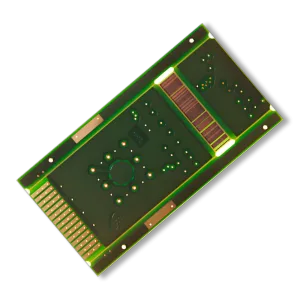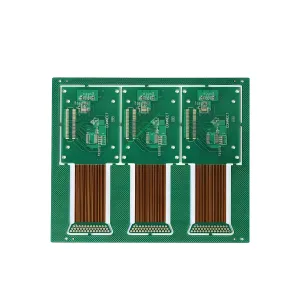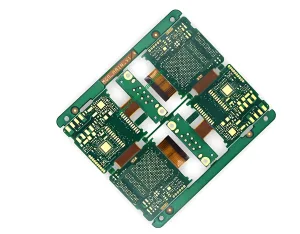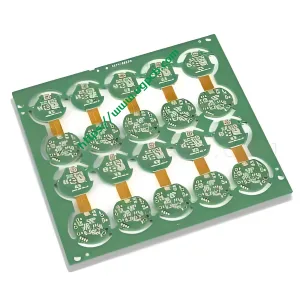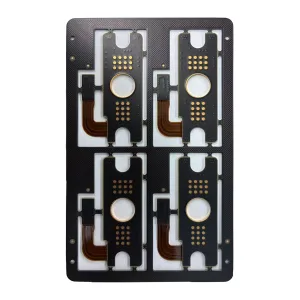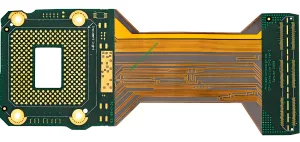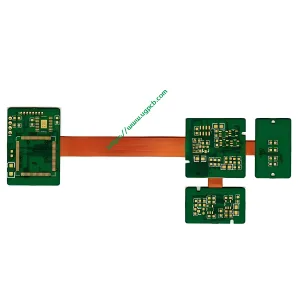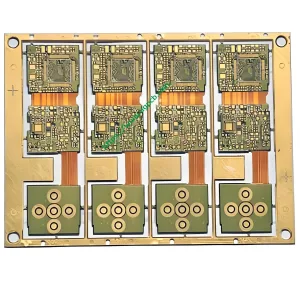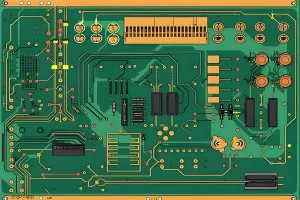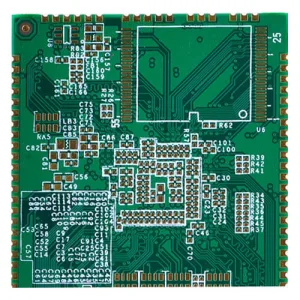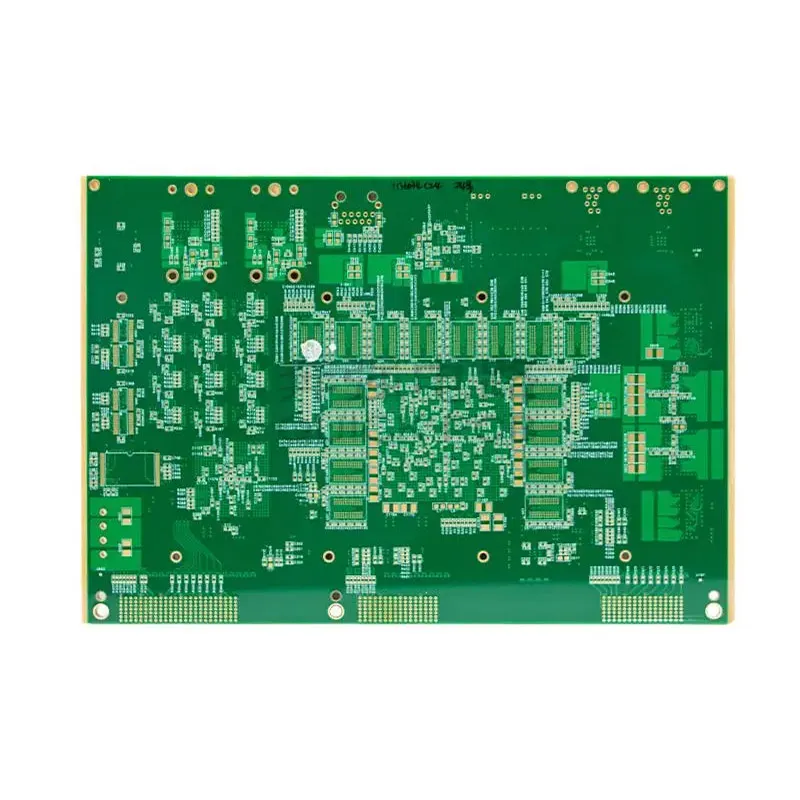
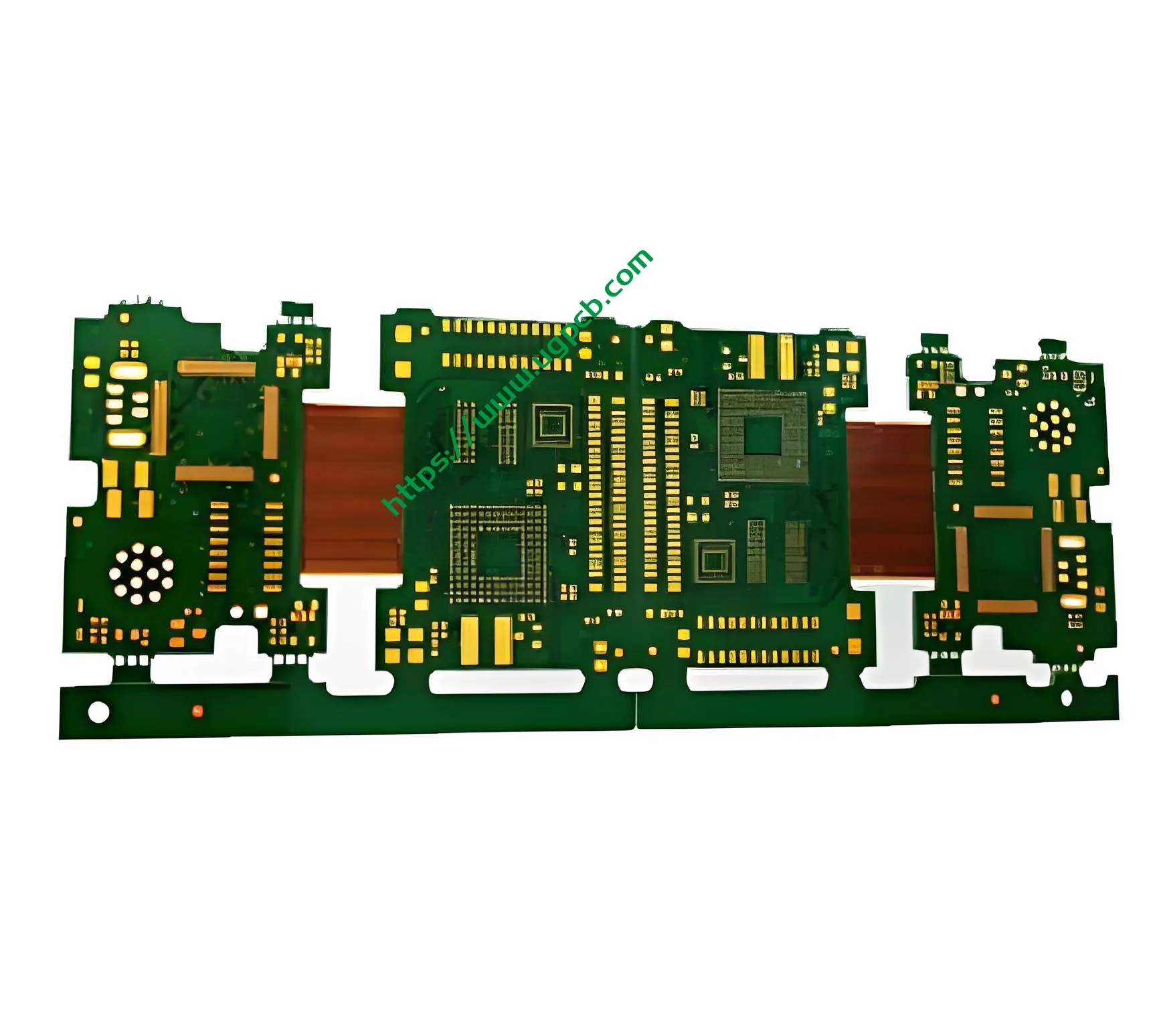
Als unbemannte Luftfahrzeuge (Uavs) evolve, Jedes Gramm beeinflusst die Flugzeit, und jedes Signal entscheidet über die Flugsicherheit. Herkömmliche starre Leiterplatten passen nicht in kompakte Leiterplatten, gefaltete Drohnenrahmen, während es flexiblen Leiterplatten allein an struktureller Unterstützung mangelt. UGPCB löst diese Herausforderung mit dem Starrflex-Leiterplatte für unbemannte Luftfahrzeuge– eine spezielle Leiterplatte, die für hohe Vibrationen ausgelegt ist, platzbeschränkte Luft- und Raumfahrtanwendungen.
Dieser Artikel erklärt das Design, Materialien, und Herstellungsstandards hinter diesem Fortschritt Starrflex-Leiterplatte. Sie erfahren, warum es die bevorzugte Verbindungslösung für moderne Drohnenelektronik ist.
1. Produktübersicht und Definition
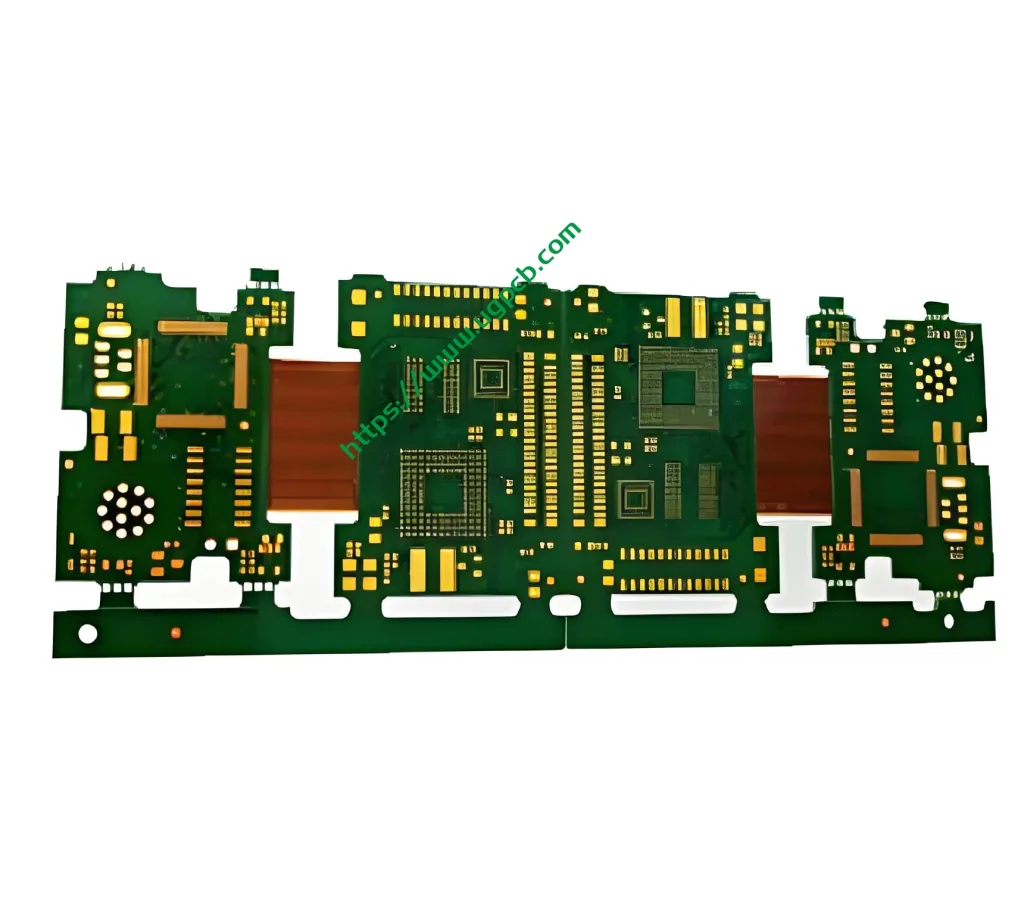
A UAV-Starrflex-Leiterplatte vereint starre Leiterplattenabschnitte mit flexiblen Leiterplattenabschnitten in einem, einheitliche Struktur. Die starren Bereiche (Hergestellt aus FR-4) unterstützen schwere Komponenten wie Prozessoren und Anschlüsse. Die flexiblen Bereiche (aus Polyimid, oder PI) ermöglichen das Biegen und Falten. Dieses Design macht Steckverbinder und Kabelbäume überflüssig.
Dieses UGPCB, Wir definieren eine hohe Qualität Starrflex-Leiterplatte als eines, das die Signalintegrität unter drohnenspezifischen Belastungen aufrechterhält, einschließlich hoher Vibration, enges Falten, und große Temperaturschwankungen. Unser Modell ist auf Flugsteuerungssysteme zugeschnitten, Videoübertragungsmodule, und kardanische Baugruppen.
2. Wichtige Spezifikationen und Struktur
In der folgenden Tabelle sind die Kernspezifikationen für dieses UGPCB-Modell aufgeführt.
| Parameter | Spezifikation |
|---|---|
| Modell | UAV Starr-Flex-Leiterplatte |
| Material | FR-4 (starr) + PI (biegen) |
| Layer -Stackup | Starr: 4 Schichten / Biegen: 2 Schichten |
| Fertige Dicke | Starrer Bereich: 1.0mm / Flexbereich: 0.15mm |
| Kupferdicke | 1 oz (innere und äußere Schichten) |
| Oberflächenbeschaffung | Immersionsgold (ZUSTIMMEN) |
| Min. Verfolgen / Raum | 4 Mil / 4 Mil |
| Farbe der Lötmaske | Grün (starr) / Weiße Deckschicht (biegen) |
3. Wie es funktioniert und wichtige Designüberlegungen
Wie es funktioniert
Das Starrflex-Leiterplatte fungiert als zentrales Nervensystem einer Drohne. Der 4-lagige starre Abschnitt bietet eine stabile Plattform zum Löten von Kernkomponenten wie dem Hauptprozessor, Gyroskop, und Power-Management-ICs. Der zweischichtige flexible Abschnitt verbindet bewegliche Teile – wie Motoren und kardanische Kameras – ohne mechanische Anschlüsse. Dies ermöglicht eine freie Bewegung und ein Zusammenklappen, ohne den elektrischen Pfad zu unterbrechen.
Konstruktionsüberlegungen
-
Übergangszonenschutz: Der Übergang zwischen starrem und flexiblem Bereich ist der spannungsanfälligste Punkt. UGPCB verstärkt diesen Bereich durch tropfenförmige Pads und sich verjüngende Leiterbahnbreiten. Dies verhindert Stromkreisunterbrechungen, die durch kontinuierliche Drohnenvibrationen verursacht werden.
-
Impedanzkontrolle: Für hochfrequente Videoübertragungssignale (typischerweise 50 Ω oder 100 Ω Differenz), Wir nutzen das 4 mil-Leiterbahnbreite und -abstand, um eine konsistente Impedanz sowohl über starre als auch flexible Abschnitte aufrechtzuerhalten.
4. Materialauswahl: FR-4 und PI
Warum verwendet UGPCB hierfür FR-4 und PI? Starrflex-Leiterplatte für unbemannte Luftfahrzeuge?
-
Strenge Bereiche (FR-4): Wir wählen High-Tg (Glasübergangstemperatur) FR-4. Dadurch wird sichergestellt, dass das Board bei Hochleistungsdrohnenflügen nicht weich wird oder sich verzieht, Verhinderung von Lötstellenfehlern.
-
Flex-Bereiche (PI – Polyimid): Die flexiblen Abschnitte bestehen aus hochwertigem Polyimid. Dieses Material widersteht wiederholtem Biegen und extremen Temperaturen von -40 °C bis +150 °C. Die asymmetrische Dicke (1.0mm starr vs. 0.15mm Flex) Gleicht die mechanische Festigkeit mit der für eine dichte Faltung erforderlichen Dünnheit aus.
5. Leistungsmerkmale
Die Kombination aus 1 Oz Kupfer, Eintauchen Gold, Und 4 mil Trace/Raum liefert messbare Leistungsvorteile.
-
Hohe Zuverlässigkeit: Immersionsgold (ZUSTIMMEN) schafft eine Wohnung, Oxidationsbeständige Oberfläche. Dies unterstützt das Fine-Pitch-BGA-Löten und eliminiert das Risiko von Lotkugeln, die bei HASL-Oberflächen üblich sind.
-
Signalintegrität: Der 4 Die mil-Leiterbahnbreite ermöglicht es Designern, Differentialpaare auf engstem Raum zu verlegen. Dadurch werden elektromagnetische Störungen reduziert (EMI), Dies ist entscheidend für empfindliche GPS- und Videosignale.
-
Gewichtsreduktion: Ersetzen eines „starren Boards“. + Stecker + Kabel“-Baugruppe mit einem einzigen Starrflex-Platine kann das Gesamtgewicht der Verbindungen um bis zu reduzieren 40%. Diese Gewichtseinsparung verlängert die Flugzeit der Drohne.
-
Wärmeleistung: Die weiße Abdeckung des flexiblen Abschnitts reflektiert mehr Wärme als herkömmliche gelbe Abdeckung. Dies hilft dabei, die Temperaturen während eines längeren Schwebeflugs der Drohne zu regulieren.
6. Branchenklassifizierung
Bezogen auf IPC und Industriestandards, Dieses Produkt fällt darunter:
-
Primäre Kategorie: Flexible und starr-flexible Leiterplatten
-
Sekundäre Kategorie: Mehrschichtiges Rigid-Flex mit asymmetrischer Konstruktion
-
Anwendungsklasse: Elektronik für Luft- und Raumfahrt und unbemannte Luftfahrzeuge
7. Herstellungsprozess (IPC-6013 & UL-Konformität)
UGPCB folgt einem kontrollierten Prozess, um IPC-6013 zu erfüllen (Qualifikation für flexible/starr-flexible Platinen) und UL 94 V-0 Entflammbarkeitsnormen. Die wichtigsten Schritte hierfür 4-Schicht starr + 2-Schichtflex Design sind:
-
Materialvorbereitung: FR-4- und PI-Basismaterialien werden gereinigt und vorbereitet.
-
Coverlay und Laminierung: Die flexiblen Bereiche erhalten passgenaue Coverlay-Öffnungen. Der 4 starre Schichten und 2 Die flexiblen Schichten werden dann unter hoher Temperatur und Vakuum zusammenlaminiert. Dieser Schritt erfordert eine präzise Kontrolle des Klebstoffflusses, um Hohlräume an der Starr-Flex-Grenze zu verhindern.
-
Bohren und Plattieren: Für Microvias in den flexiblen Bereichen kommt Laserbohren zum Einsatz. Um dies zu erreichen, wird Kupfer plattiert 1 Unzen Dicke in allen Durchkontaktierungen.
-
Bildgebung und Beschichtung der Außenschicht: Die Schaltkreise der äußeren Schicht werden gebildet, und die abschließende Verkupferung rundet das Ganze ab 1 oz-Spezifikation.
-
Oberflächenbeschaffung (Immersionsgold): ENIG wird auf alle freiliegenden Kupferpads aufgetragen.
-
Profilierung und elektrischer Test: Das Brett wird in seine endgültige Form gefräst. Jedes Board durchläuft 100% Flying-Probe-Tests um die elektrische Integrität zu überprüfen.
8. Typische Anwendungen
Das Starrflex-Leiterplatte für unbemannte Luftfahrzeuge ist für folgende Anwendungen geeignet:
-
Faltbare Verbraucherdrohnen: Wird in Scharnierbereichen verwendet, die im Laufe der Produktlebensdauer Tausende von Falten erfordern.
-
FPV (Ich-Perspektive) Renndrohnen: Eliminiert Anschlüsse, um das Gewicht zu reduzieren und das Schub-Gewichts-Verhältnis zu verbessern.
-
Kamera-Gimbals: Verbindet Motoren mit feinen flexiblen Schaltkreisen mit der Hauptplatine, die bei schnellen Bewegungen keine Signalverzögerung gewährleisten.
-
Angebundene Drohnen: Der 1 Unzen Kupfer in starren Abschnitten verarbeiten hohe Ströme und leiten die Wärme bei Langzeitbetrieb effektiv ab.
9. Warum wählen Sie UGPCB??
UGPCB ist spezialisiert auf Starr-Flex-gedruckte Leiterplatten mit komplexen Aufbauten. Wir verfügen über nachgewiesene Erfahrung in der Herstellung von Fine-Line-Designs (4 Tausend/4 Tausend) und asymmetrische Strukturen (1.0mm starr + 0.15mm Flex). Unser Engagement umfasst:
-
Exakte Spezifikationsübereinstimmung: Wir bauen streng nach Ihren Gerber-Dateien und Stackup-Anforderungen.
-
Schnelles Prototyping: Wir bieten an 5- bis hin zum 7-tägigen beschleunigten Service für Drohnenentwickler, die eine schnelle Iteration benötigen.
-
Entwurfsunterstützung: Unser Ingenieurteam überprüft Ihre Dateien, um Starr-Flex-Übergänge zu optimieren und Herstellungsrisiken zu minimieren.
10. Fordern Sie ein Angebot an
Entwickeln Sie eine Drohne und benötigen eine UAV-Starrflex-Leiterplatte das gleicht das Gewicht aus, Haltbarkeit, und Signalintegrität? UGPCB unterstützt Projekte vom Prototyp bis zur Massenproduktion. Kontaktieren Sie unser Vertriebsteam für ein wettbewerbsfähiges Angebot basierend auf Ihrem 4-Schicht-Rigid, 2-Layer-Flex-Anforderungen.
Klicken Sie auf „Jetzt anfragen“, damit UGPCB Ihr Drohnendesign der nächsten Generation unterstützen kann.