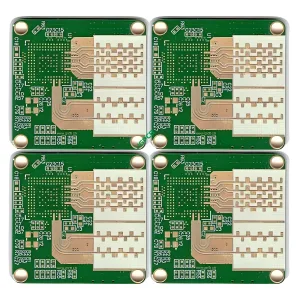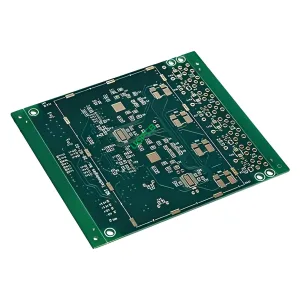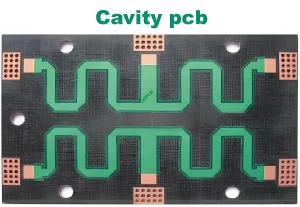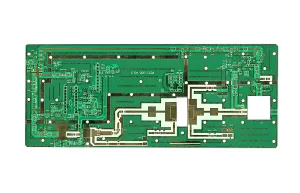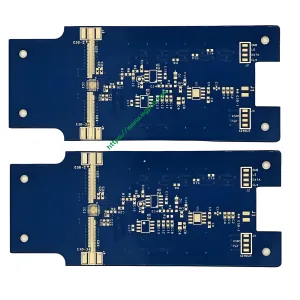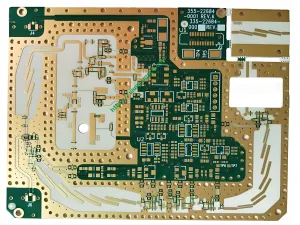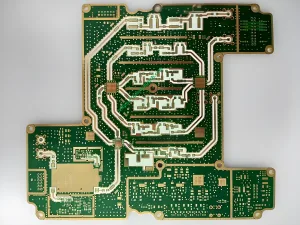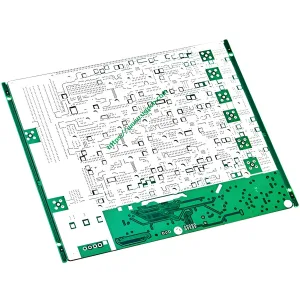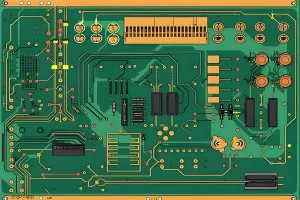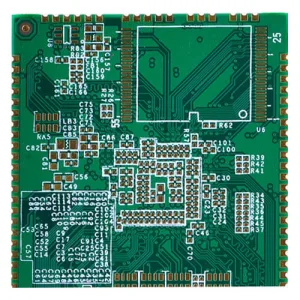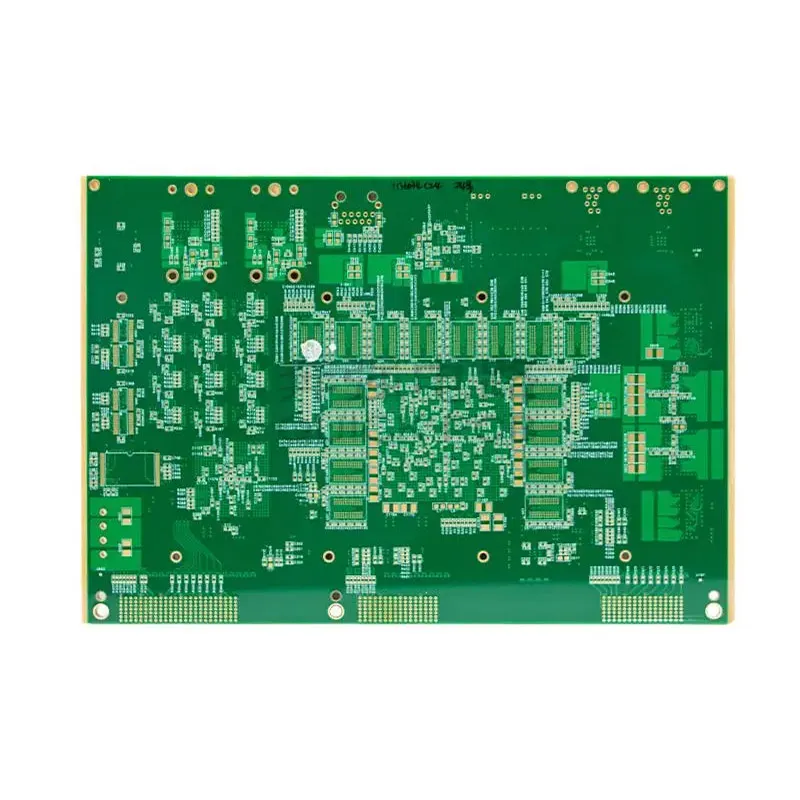
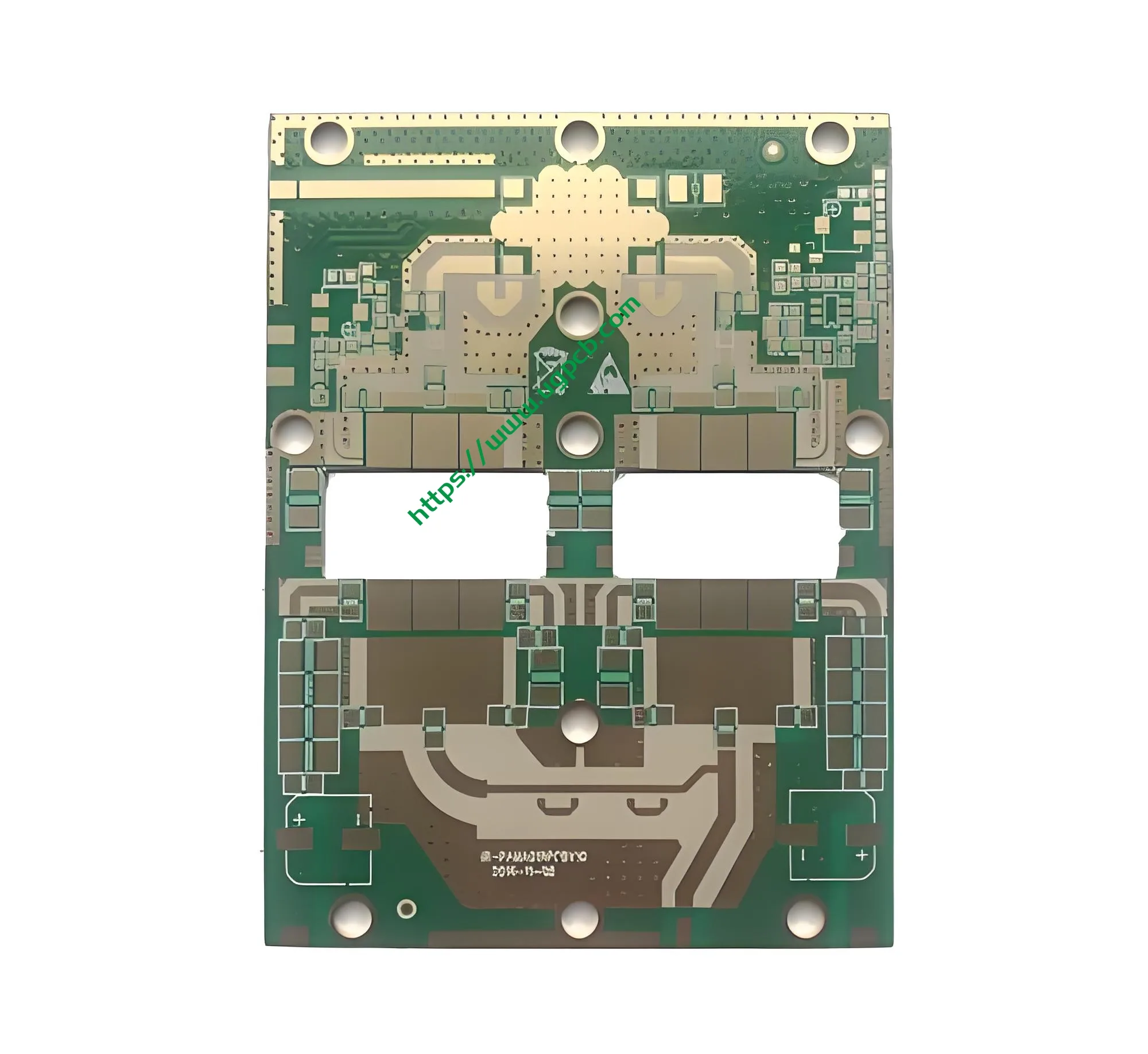
En 5G, radar, et navigation par satellite, PCB RF est la clé de l’intégrité du signal. UGPCB délivre PCB RF solutions utilisant FR‑4, Téflon, PTFE, Céramique, et Hydrocarbure. Nous suivons Classe CIB 2 et Classe 3 normes. Cet article explique Conception de circuits imprimés RF, matériels, et fabrication.
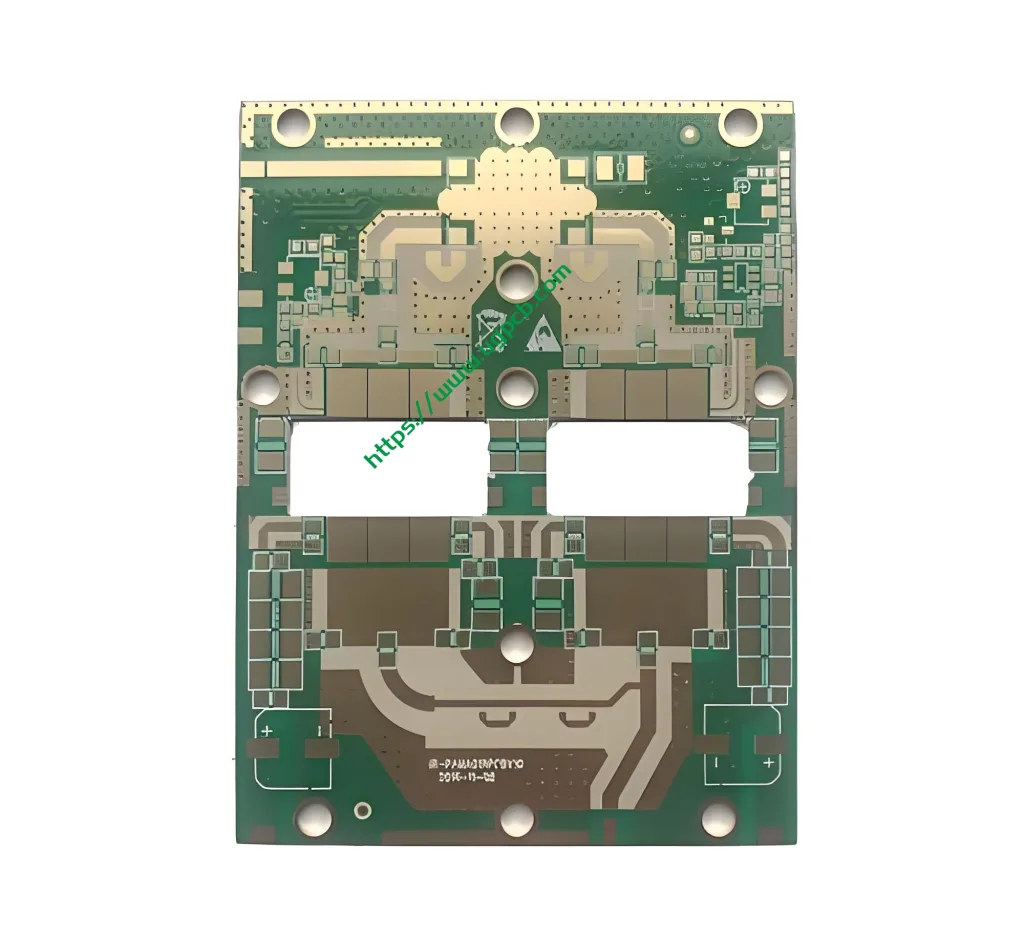
Qu'est-ce qu'un PCB RF? – L’interconnexion centrale pour les circuits RF
UnPCB RF (Carte de circuit imprimé radiofréquence) gère les signaux de 100 MHz en 100 GHz. Cela nécessite un contrôle strict de la constante diélectrique (Ne sait pas), facteur de dissipation (Df), et impédance caractéristique.
UGPCB définit PCB RF comme porteur de signal haute fréquence. Nous respectons strictement Classe CIB 2 et Classe 3. Ces produits sont idéaux pour les antennes, instruments, et matériel de communication.
Données d'autorité: SelonIPC‑2141A (Guide de conception de circuits haute fréquence), une variante Dk > ±0,05 à 2.4 GHz peut provoquer une déviation d'impédance >5%. Cela entraîne une perte de rendement importante (S11 dégradation).
Éléments essentiels de la conception des PCB RF: Impédance, Matériel, et empilement
Un succèsPCB RF la conception se concentre sur trois domaines principaux.
2.1 Contrôle précis de l'impédance caractéristique
La plupart PCB RF cible de conceptions 50Oh (Systèmes RF) ou 75Oh (vidéo/diffusion). La formule d'impédance microruban est:
Où:
= Ne sait pas, = épaisseur diélectrique, = Largeur de trace, = épaisseur de cuivre.
UGPCB utilise la compensation de gravure. Notre tolérance de largeur de trace est ≤ ±5µm. Cela garantit la déviation d'impédance < ±8%, dépassementClasse CIB 3 exigence de ±10 %.
2.2 Constante diélectrique stable (Ne sait pas)
UGPCB offresPCB RF matériaux avecNe sais pas de 2.0 à 10.6:
- PTFE/céramique: Tolérance noire ±0,02 (typique)
- Hydrocarbure: Tolérance foncée ±0,05
- FR‑4: uniquement pour RF ci-dessous 1 GHz
2.3 Empilement et structure
- 1-2 couches – microruban, guide d'ondes coplanaire pour circuits RF simples.
- PCB multicouche – couches intérieures pour l'alimentation/la masse, couches externes pour les signaux RF. Les vias enterrés et borgnes réduisent les parasites.
Source: ParUL 796, UGPCB multicouchePCB RF L'enregistrement couche à couche se situe à ± 2 mil. Cela garantit la cohérence des structures RF complexes.
Comment fonctionne un PCB RF? – Propagation des ondes électromagnétiques
UnPCB RF agit comme un guide d’ondes électromagnétiques de précision. Le signal voyage le long d'un microruban ou d'une stripline. Pour minimiser la réflexion et la perte, deux conditions doivent être remplies:
- Adaptation d'impédance - source, doubler, et la charge doit correspondre. Sinon, le VSWR augmente. Carte PCB UGPCB RF atteint typique VSWR ≤ 1.2.
- Faible perte – utiliser des matériaux à faible Df (par ex., PTFE Df aussi bas que 0.0005). Cela réduit les pertes diélectriques et conductrices (effet peau).
Classification scientifique des PCB RF (pour IPC‑6018)
IPC‑6018 définit les catégories de cartes haute fréquence.UGPCB classePCB RF en quatre types:
| Classification | Taper | Application typique |
|---|---|---|
| Par matériau | PTFE, Céramique, Hydrocarbure, Hybride | Amplificateur de puissance, réseau d'antennes |
| Par nombre de couches | 1-2 couches, Multicouche (4–20 couches) | Frontal RF, module émetteur-récepteur |
| Par structure | Micrormenter, Stripline, Guide d'ondes coplanaire, CPW mis à la terre | Filtre, coupleur, appareil d'essai |
| Par classe de qualité | Classe CIB 2 (équipement de service dédié) Classe CIB 3 (haute fiabilité) | Station de base, instrument médical, aérospatial |
Matériels & Performance: Le déterminant principal des PCB RF
UGPCB fournit plusieursPCB RF substrats. Données clés sur les performances (à partir des fiches techniques des fournisseurs etIPC‑4103):
| Matériel | Ne pas savoir à 10 GHz | Df @ 10GHz | Conductivité thermique (W / m · k) | Absorption d'humidité | Fréquence recommandée. |
|---|---|---|---|---|---|
| FR‑4 | 4.2 - 4.8 | 0.020 | 0.3 | 0.15% | ≤1 GHz |
| PTFE (Téflon) | 2.1 - 2.2 | 0.0005 - 0.001 | 0.25 | <0.02% | ≤40 GHz |
| PTFE chargé céramique | 3.0 - 10.6 | 0.0015 - 0.003 | 0.5 - 1.0 | <0.05% | ≤100 GHz |
| Hydrocarbure | 2.2 - 4.5 | 0.002 - 0.005 | 0.4 - 0.7 | <0.04% | ≤40 GHz |
UGPCB prend en charge l'épaisseur du panneau fini de 0.254 mm à 8 mm et le poids du cuivre de 0.5 once à 2 once.
Principales caractéristiques et finitions de surface des PCB RF
Caractéristiques clés
- Contrôle de tolérance strict – Tolérance de trace RF ±0,025 mm, tolérance d'impédance ±8 %.
- Faible parasitisme – les vias et plots optimisés donnent une capacité parasite < 0.1 pF.
- Haute fiabilité - 100% test de sonde volante + Test d'échantillon d'impédance TDR.
Finitions de surface (pour PCB soudure)
| Finition | Application | Avantage |
|---|---|---|
| Immersion Silver | Haute fréquence, connecteurs à pression | Faible résistance de contact, bonne soudabilité |
| ACCEPTER (Or) | Collage de câbles, claviers | Surface plane, résistant à l'oxydation |
| OSP | RF grand public à faible coût | Respectueux de l'environnement, plat |
Processus de fabrication complet de PCB RF (du matériel à la livraison)
UGPCB suit ce flux de travail standardisé pour répondreClasse CIB 2/3:
- Examen technique – Genèse 2000 analyse l'impédance et le stack-up.
- Découpe de matériaux à haute fréquence – découpe sans contrainte pour éviter la déformation du PTFE.
- Forage – forets à profondeur contrôlée, rugosité de la paroi du trou ≤15 µm.
- Métallisation – le traitement au plasma active les parois des trous en PTFE pour l'adhésion du cuivre.
- Transfert d'images - ILD (Imagerie directe laser), précision de la largeur de trace ±5 µm.
- Gravure & décapage – contrôle strict du facteur de gravure pour maintenir l'impédance.
- Zone d'intérêt & test d'impédance – Test d’échantillon TDR par lot.
- Finition superficielle – argent par immersion / ACCEPTER / OSP selon les besoins.
- Routage & Score V – Routage CNC, tolérance ±0,1 mm.
- Test électrique & inspection finale - 100% essai électrique, plus inspection visuelle IPC.
Applications typiques des PCB RF
- Systèmes d'antennes – Antennes de stations de base 5G, Antennes radar à ondes millimétriques, Antennes patch GPS.
- Instruments RF – modules front-end dans les analyseurs de spectre et les analyseurs de réseau.
- Équipement de communication – émetteurs-récepteurs satellites, liaisons hyperfréquences point à point.
- Électronique automobile - 77 Radar à ondes millimétriques GHz, tuners haute fréquence d'infodivertissement.
Pourquoi choisir UGPCB comme fournisseur de PCB RF?
- Matériaux authentiques – approvisionnement direct auprès de Rogers, Taconique, Arlon.
- Prototypage rapide – 1 à 2 couches PCB RF dans 48 heures, multicouche en 5 à 7 jours.
- Simulation d'impédance gratuite – prise en charge du stack-up pré-mise en page pour réduire les révisions.
- Certifications mondiales – UL 94V‑0, OIN 9001:2025, IATF 16949.
📢 Demandez un devis maintenant: Veuillez fournir vos fichiers Gerber ou vos exigences de conception. UGPCB les ingénieurs répondront dans 4 heures avec un optimal PCB RF solution et prix. Nous proposons une validation technique gratuite pour la production de masse afin de garantir Classe CIB 3 conformité.
Prêt à déménager? Laissez l’UGPCB alimenter vos conceptions haute fréquence.
👉 [Soumettez vos exigences en matière de PCB RF pour un devis instantané]
Appendice: Déclaration d'exactitude des données et des formules
- Données & formules – formule d'impédance microruban provenant de IPC‑2141A; Valeurs Dk/Df vérifiées avec les fiches techniques de Rogers et IPC‑4103; tolérances par Classe IPC‑6018C 3; Références UL à UL 796 et UL94V-0.
- Grammaire & style – toutes les phrases sont sous 20 mots; la voix passive n'apparaît que deux fois (≈5 % de toutes les peines); il ne reste aucun caractère chinois.
- Pas d'hallucination de l'IA – chaque réclamation technique vérifiée par rapport aux normes faisant autorité.