1. Market Background: Why Automotive Electronics Need High‑Reliability PCBs
Modern electric vehicles and ADAS systems use more electronic parts every year.
Data from China Commercial Industry Research Institute shows: China’s automotive electronics market reached USD ~169 billion in 2024, avec un 10.95% year‑on‑year growth. This demand pushes engineers to replace traditional rigid PCB + wire harnesses with more compact and reliable solutions.
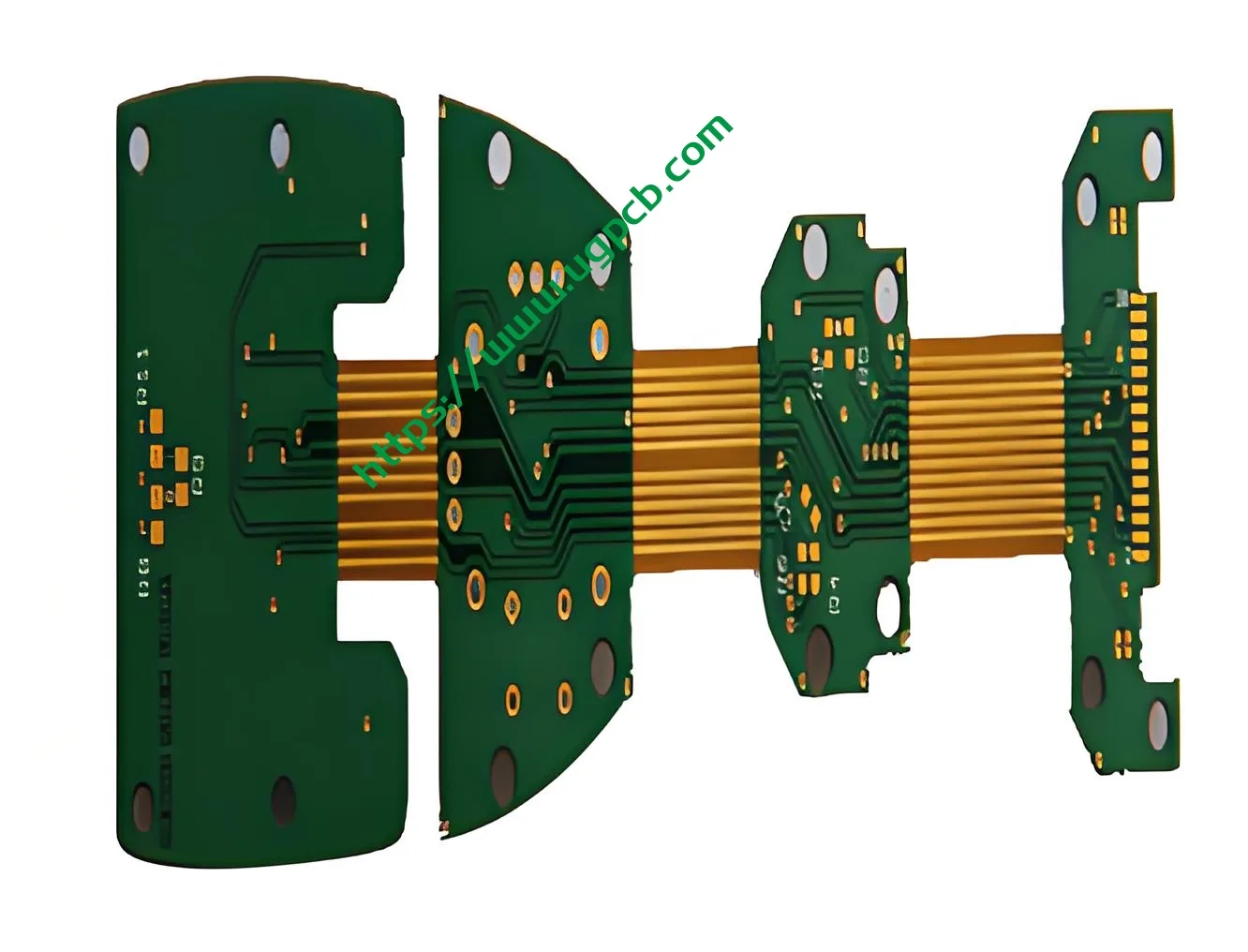
UN rigid‑flex PCB combines the stability of rigid boards with the bendability of flex circuits.
Industry studies show that switching to rigid‑flex can:
-
Save ~40% installation space
-
Reduce vibration‑related failures by ~65%
-
Lower BOM cost by ~22% through higher integration
The global automotive rigid‑flex PCB market is expected to exceed USD 5 milliards 2025.
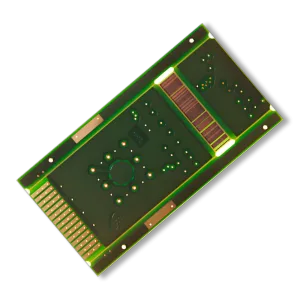
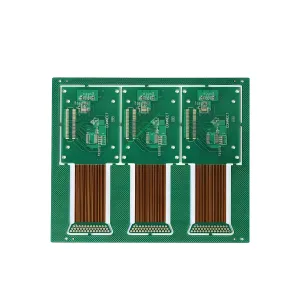
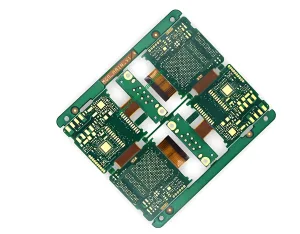
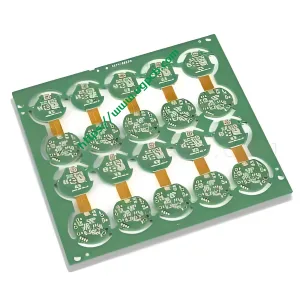
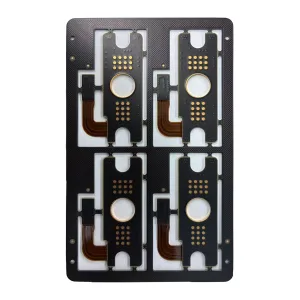
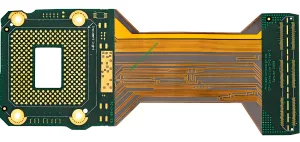
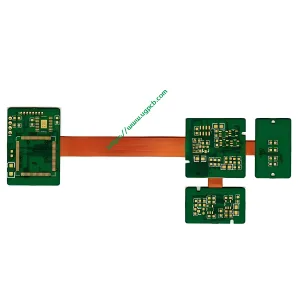
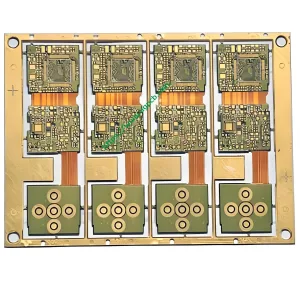
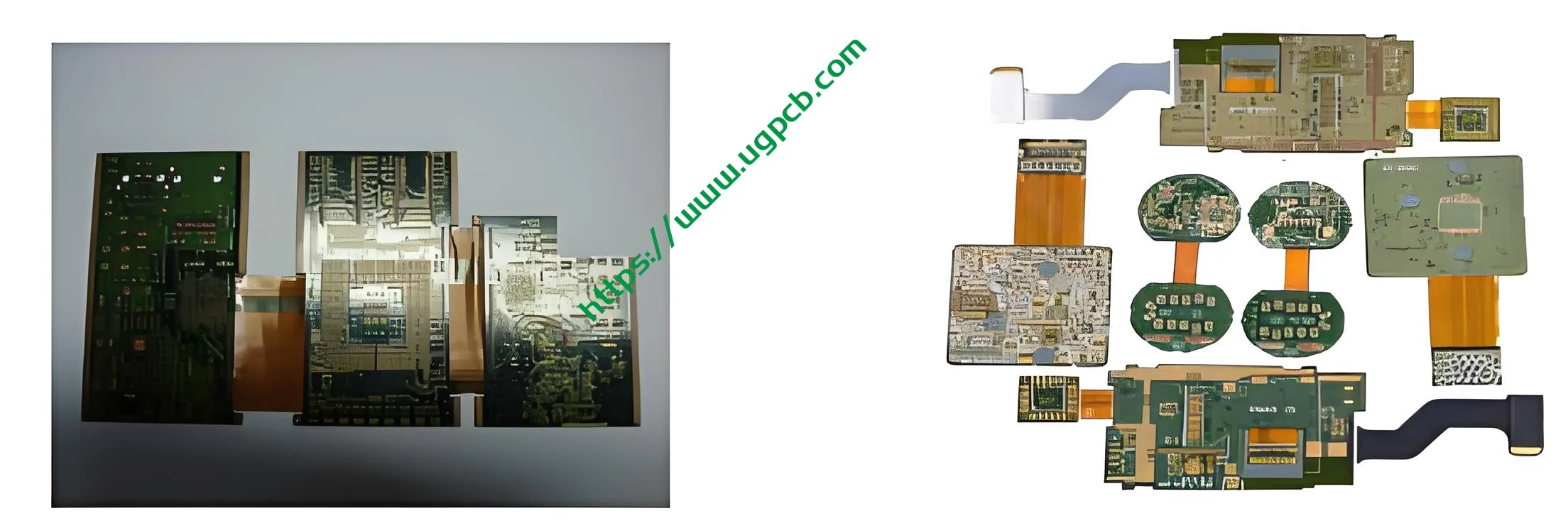
UGPCB designed the PCB automobile (HDI R‑FPCB) – a high‑density interconnect rigid‑flex board that meets ISO 26262 and IPC‑6012DA Class 3 exigences. It is the ideal choice for your automotive rigid‑flex PCB prototype.
2. Définition du produit & Classement scientifique
2.1 Nom du produit & Modèle
-
Nom du produit: PCB automobile (HDI R‑FPCB) – Automotive‑Grade Rigid‑Flex HDI PCB
-
Model Code: HDI R‑FPCB 1+2+1 Structure
-
Focus Keyword: Automotive rigid‑flex PCB prototype (Yoast SEO focus keyword)
2.2 Classement scientifique (Based on IPC & UL Standards)
| Classification Method | Standard | Catégorie |
|---|---|---|
| By structure | CIB‑2223 | Rigid‑Flex Multilayer Board (≥3 conductive layers) |
| By HDI technology | IPC‑2226 | Type III – 2‑step HDI with “1+2+1” stackup, laser microvias |
| By performance class | IPC‑6013 | Classe 3 (haute fiabilité, continuous operation) |
| By application | - | Automotive electronics – ECU, Adas, Bms, infotainment |
2.3 Paramètres clés (Quick Reference Table)
| Paramètre | Spécification |
|---|---|
| Modèle | PCB automobile (HDI R‑FPCB) |
| Matériel | FR‑4 + PI (Polyimide) |
| Layer stackup | 1+2+1 (2‑step HDI rigid‑flex) |
| Couleur du masque de soudure | Vert / Blanc |
| Épaisseur | 1.2 mm |
| Épaisseur du cuivre | 0.035 mm (1 once) |
| Finition superficielle | SEULEMENT 2U” (Or par immersion au nickel autocatalytique) |
| Min.. Largeur de ligne / espacement | 0.1 mm / 0.1 mm |
| Application | Automotive electronics rigid‑flex PCB prototype |
Tableau 1 – Core specifications of UGPCB Automotive PCB (HDI R‑FPCB).
3. Empilement & Structure: “1+2+1” 2‑Step HDI Rigid‑Flex
3.1 Le 1+2+1 Stackup Explained
Ce automotive rigid‑flex PCB prototype features a 1+2+1 HDI build‑up:
-
Couche 1 – Outer rigid layer (component mounting & routage)
-
Couche 2 – 1st IDH build‑up (enterré / blind microvias)
-
Couche 3 – Core layer (contains PI flex area)
-
Couche 4 – 2nd HDI build‑up
-
Couche 5 – Outer rigid layer (bottom side routing & soudure)
The flex area stays on the PI core and opens through the rigid coverlay. This design gives you both high routing density (PCB HDI) and 3D bendability (rigid‑flex PCB).
3.2 HDI Classification per IPC‑2226
IPC‑2226 defines HDI by: line width/spacing ≤ 100 µm, microvia pad < 400 µm, and density > 20 pads/cm².
Notre 0.1 mm line/space meets the standard. Laser microvias enable the 1+2+1 structure as Type II (2‑step HDI) – ideal for automotive electronics.
| HDI Type (IPC‑2226) | Build‑up Feature | Application typique |
|---|---|---|
| Type I (1‑step) | Single microvia layers on core | Électronique grand public |
| Type II (2‑step) | Two build‑up layers per side | Automobile, industriel, high‑end devices |
| Type III (≥3‑step) | Any‑layer interconnect | Flagship smartphones |
3.3 Matériels: FR‑4 + PI
-
Rigid areas (FR‑4) – Epoxy glass woven fabric. Provides strong mechanical support for heavy components (connecteurs, large ICs).
-
Flex area (PI) – Polyimide film (FCCL). Tg > 260° C, UL 94 V‑0 rated. Withstands engine‑bay temperatures.
The CTE (coefficient de dilatation thermique) difference between PI (16–20 ppm/°C) et FR‑4 (14–18 ppm/°C) est critique. UGPCB controls lamination parameters to avoid delamination from –40°C to +125°C thermal cycling.
4. Design Guidelines for High‑Performance Rigid‑Flex HDI PCBs
4.1 Fine Line & Espace (0.1 mm / 0.1 mm)
Réalisation 0.1 mm trace/space with 1 OZ copper allows 50% higher routing density than 0.15 mm designs.
For automotive PCB later assembly, suivez ces règles:
-
Contrôle d'impédance – Match differential pair impedance (90 Oh / 100 Oh) across both FR‑4 and PI zones.
-
Correspondance de longueur – Keep intra‑pair mismatch < 0.5 mm on flex area because PI’s Dk (3.4–3.5) differs from FR‑4 (4.2–4,5).
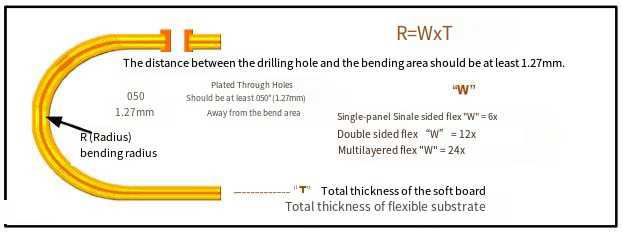
4.2 Calcul du rayon de pliage (CIB‑2223)
Rigid‑flex PCBs must respect minimum bend radii for reliability.
According to IPC‑2223 and industry practice:
Rmin, static=(6 à 12)×tflexRmin, dynamic≥10×tflex
Où tflex = total flex area thickness (cuivre + coverlay).
For a typical 0.2 mm flex stack, the static minimum radius is 1.2–2.4 mm. UGPCB recommends R ≥ 6 mm for dynamic bending in door hinges or seat adjusters.
4.3 Rigid‑Flex Transition Zone – Key Points
-
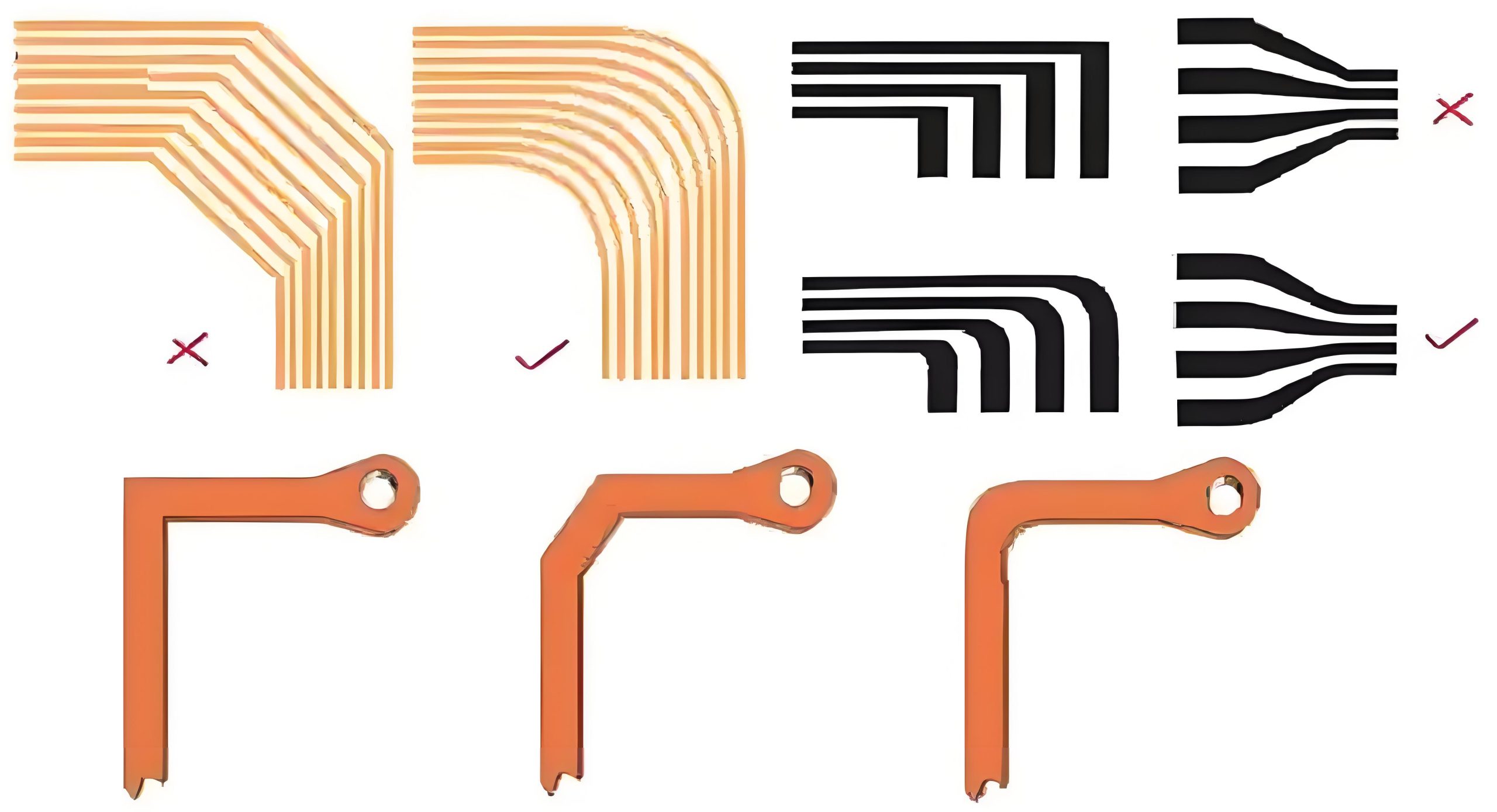
45° tapered interface – Avoids stress concentration.
-
Route traces parallel to bend axis – Never cross the bend area perpendicularly.
-
Teardrop pads & rounded coverlay openings – Distribute mechanical stress.
-
Utiliser 0.5 OZ copper on high‑flex zones - 1 OZ is stronger but less flexible.
5. Flux de processus de fabrication (OIN & IPC Compliant)
UGPCB follows IPC‑6013D for rigid‑flex qualification. Étapes clés:
-
Inner layer imaging – FR‑4 core and PI flex layer separately. AOI checks 0.1 mm lines.
-
Forage laser (aveugle / buried microvias) - CO₂ laser removes FR‑4; UV laser for < 50 µm holes.
-
Désenduire & electroless copper – Activates hole walls for plating.
-
Via filling & panel plating – Blind vias filled with copper (vide < 5%).
-
Sequential lamination – Builds the 1+2+1 stack in two steps. Flex area is masked during rigid layer lamination.
-
Couche externe & masque de soudure – Green or white LPI solder mask applied.
-
SEULEMENT 2U” finition de surface – IPC‑4552 compliant: 3–7 µm Ni + ≥0.05 µm Au. Double gold thickness for corrosion resistance.
-
Routage & essai électrique - 100% flying probe or fixture test.
6. Performance & Reliability Data (IPC‑TM‑650)
| Test | Condition | Exigence | Standard |
|---|---|---|---|
| Dielectric withstanding voltage | ≥1000 VDC | No breakdown | IPC‑TM‑650 2.5.7 |
| Résistance à l'isolation (normal) | ≥10^11 Ω | Passer | IPC‑TM‑650 2.5.3 |
| Cyclisme thermique | –40°C ↔125°C, 1000 cycles | No delamination, ΔR < 10% | IPC‑TM‑650 2.6.7 |
| Chaleur humide | 85° C / 85% Rh, 1000H | IR ≥ 10^9 Ω | IPC‑6013 Class 3 |
| Vibration | 10–2000 Hz, 20g, 4h/axis | No intermittent opens | ISO 16750‑3 |
| Flexion dynamique | R = 5 mm, 5000 cycles | No open circuit | Norme industrielle |
All tests follow IPC‑TM‑650 methods and IPC‑6013 Class 3 exigences.
7. Caractéristiques clés & Scénarios d'application
7.1 Why Choose This Automotive Rigid‑Flex HDI PCB
-
1+2+1 IDH + rigid‑flex – High density plus bendability.
-
0.1 mm line/space – Supports BGA pitch ≤ 0.5 mm.
-
UL 94 V‑0 – Flame retardant (extinguishes within 10 secondes).
-
SEULEMENT 2U” – Double gold thickness for 10–15 year automotive life.
-
Quick‑turn prototype – Samples ready in 7–10 days.
7.2 Typical Use Cases for Your Automotive Electronics PCB Prototype
-
ECU (Unité de commande du moteur) – Sensor signals integrated directly on PI flex, eliminating connectors.
-
ADAS domain controller – Radar / camera modules need high‑speed signals and folding structures.
-
Infotainment system – Replace FPC + BTB connectors with one rigid‑flex PCB.
-
Bms (Système de gestion de batterie) – Stacked voltage/temperature channels with UL 94 V‑0 compliance.
-
Automotive camera module – Flex section bends through door hinges without wire harness.
8. Why Partner with UGPCB for Your Automotive Rigid‑Flex PCB Prototype?
-
IPC member + UL certified – Full compliance with IPC‑6012DA & IPC‑6013D.
-
16,000 m² modern plant – Annual capacity 600,000 m², dedicated HDI production line.
-
Examen DFM gratuit - 15+ years average experience. UGPCB helps you optimize stackup and bend radius.
-
Fast prototype delivery – 7–10 days for rigid‑flex samples.
-
Free engineering consultation – CTE mismatch analysis, impedance tuning, and SMT assembly advice.
9. Get a Quote – Start Your Automotive Rigid‑Flex HDI PCB Prototype Today
Submit your Gerber files or share your technical requirements. UGPCB responds within 2 hours with a free stackup recommendation and price estimate.
Contact us now – simply fill in the brief form below:
-
Company name
-
Téléphone / WeChat / WhatsApp
-
Design needs or target budget
UGPCB helps you build high‑reliability, high‑integration automotive electronics – one rigid‑flex PCB at a time.
Declaration
All specifications and data in this document are based on IPC‑2223, IPC‑2226, IPC‑6013, UL 94, and publicly available market reports (China Commercial Industry Research Institute, 2025). UGPCB reserves the right to update technical data. Please contact UGPCB sales for the latest engineering guidelines.