UGPCB-LOGO
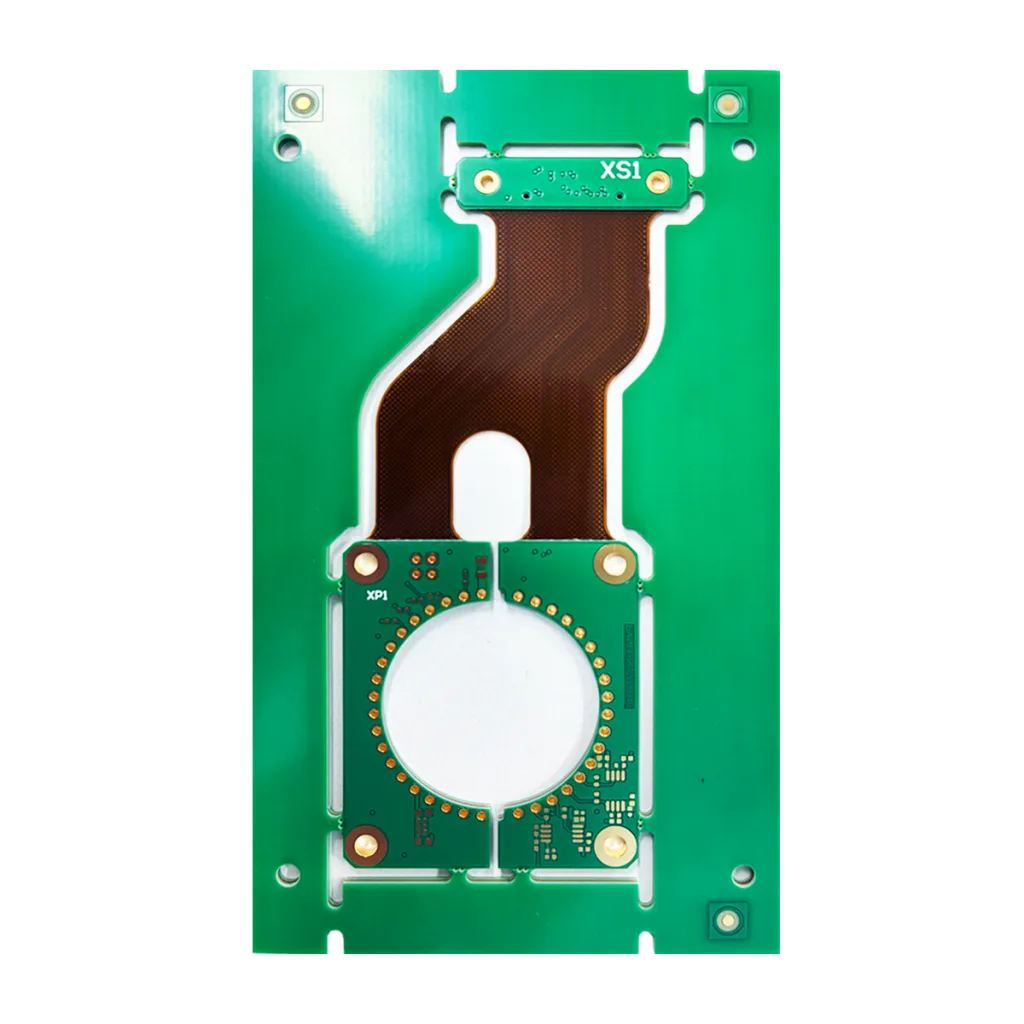
 UGPCB 6-Layer Adhesive-Free Rigid-Flex PCB Produktübersicht & Definition
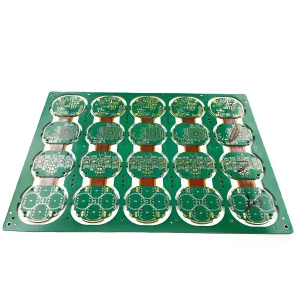
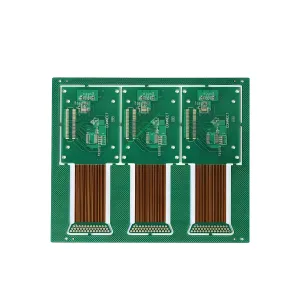
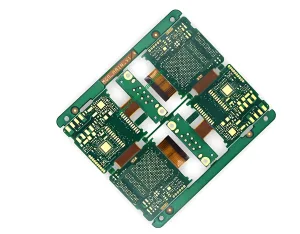
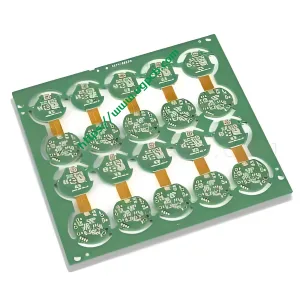
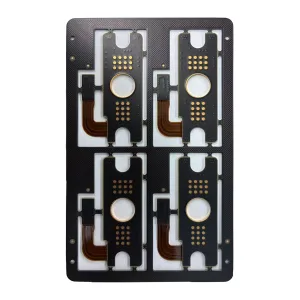
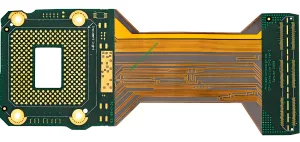
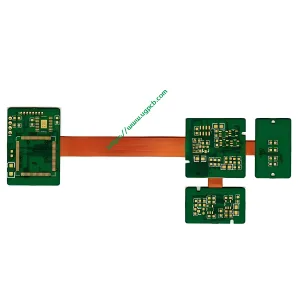
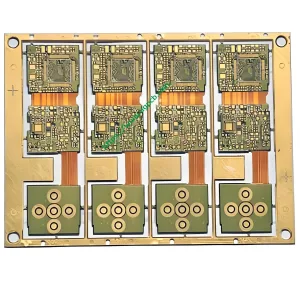
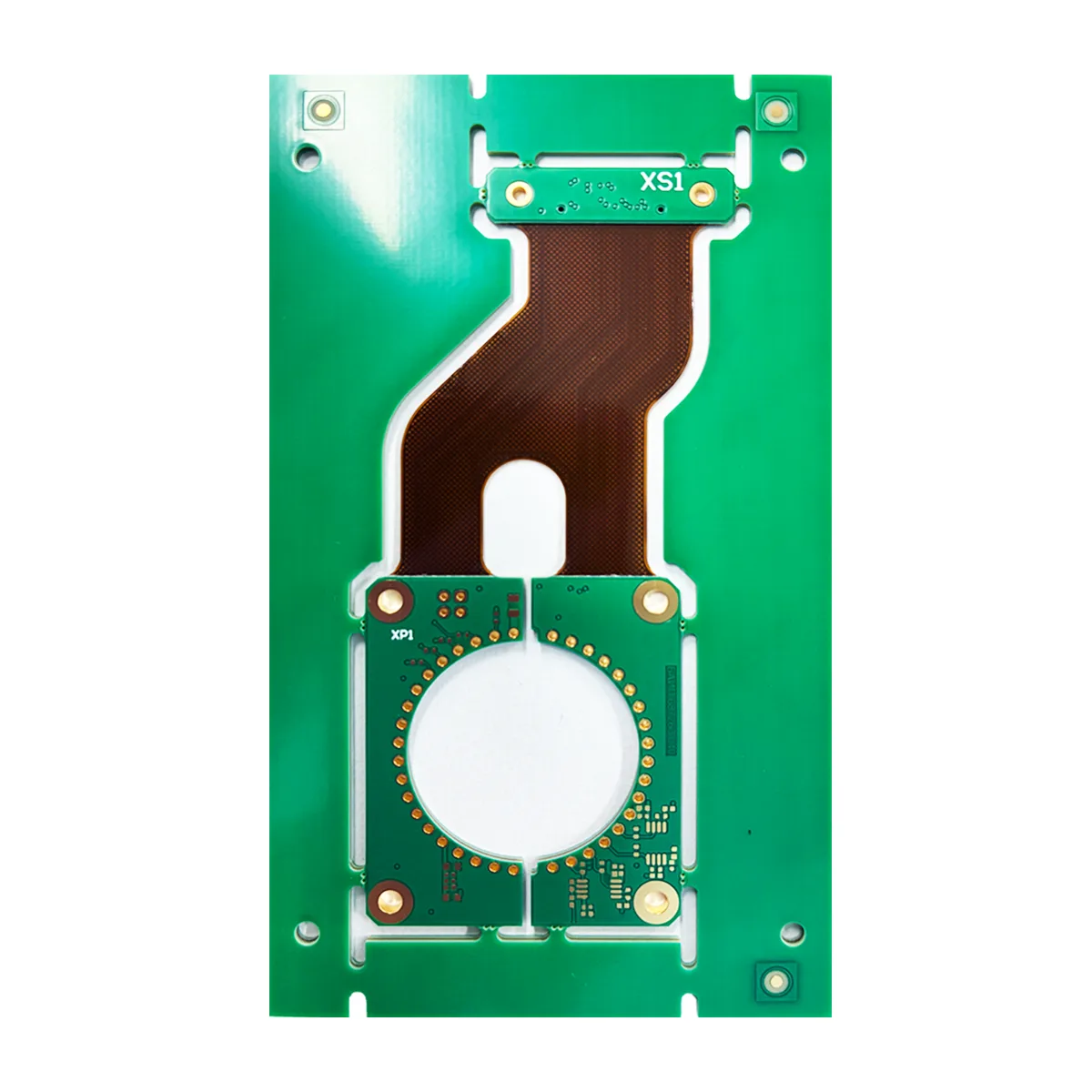
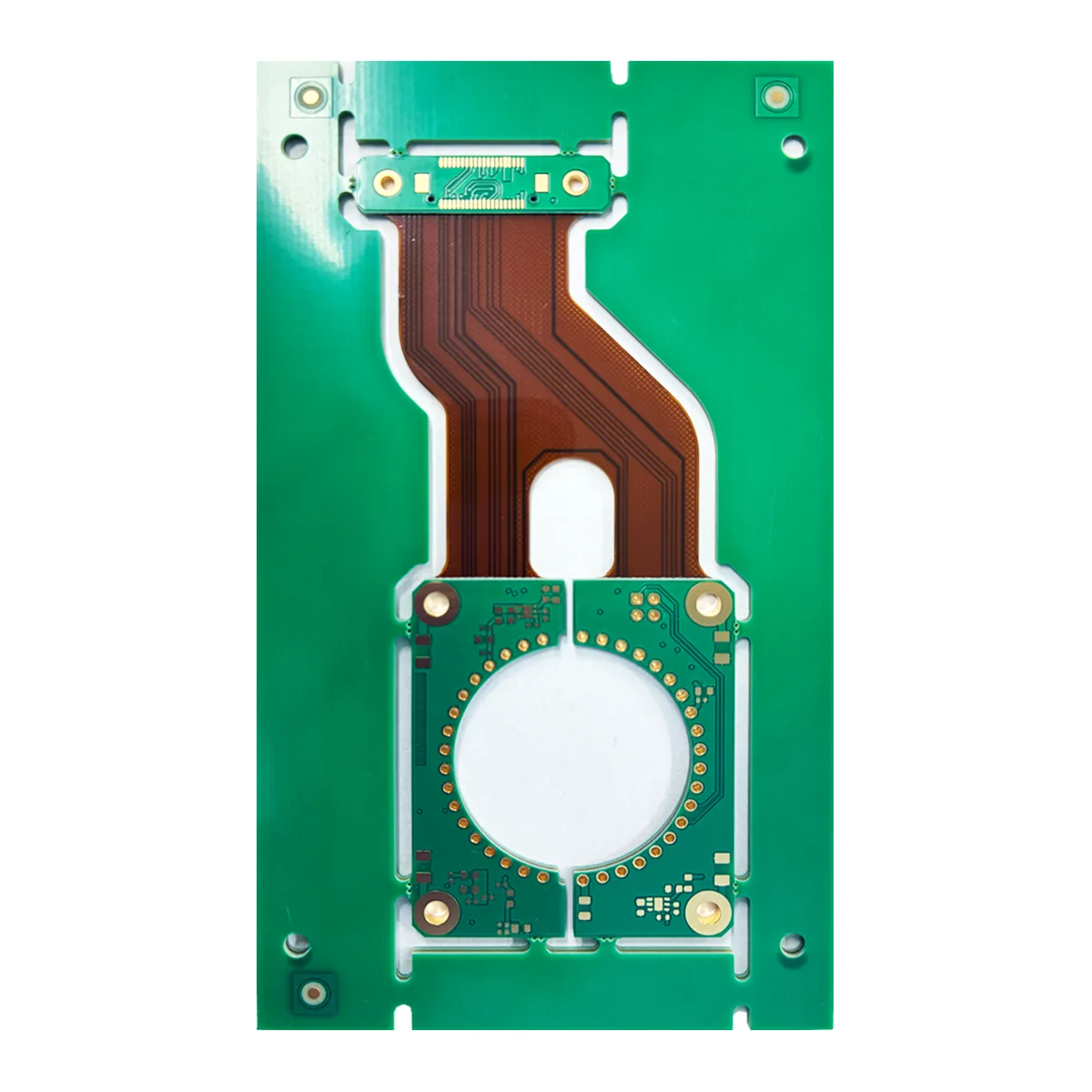
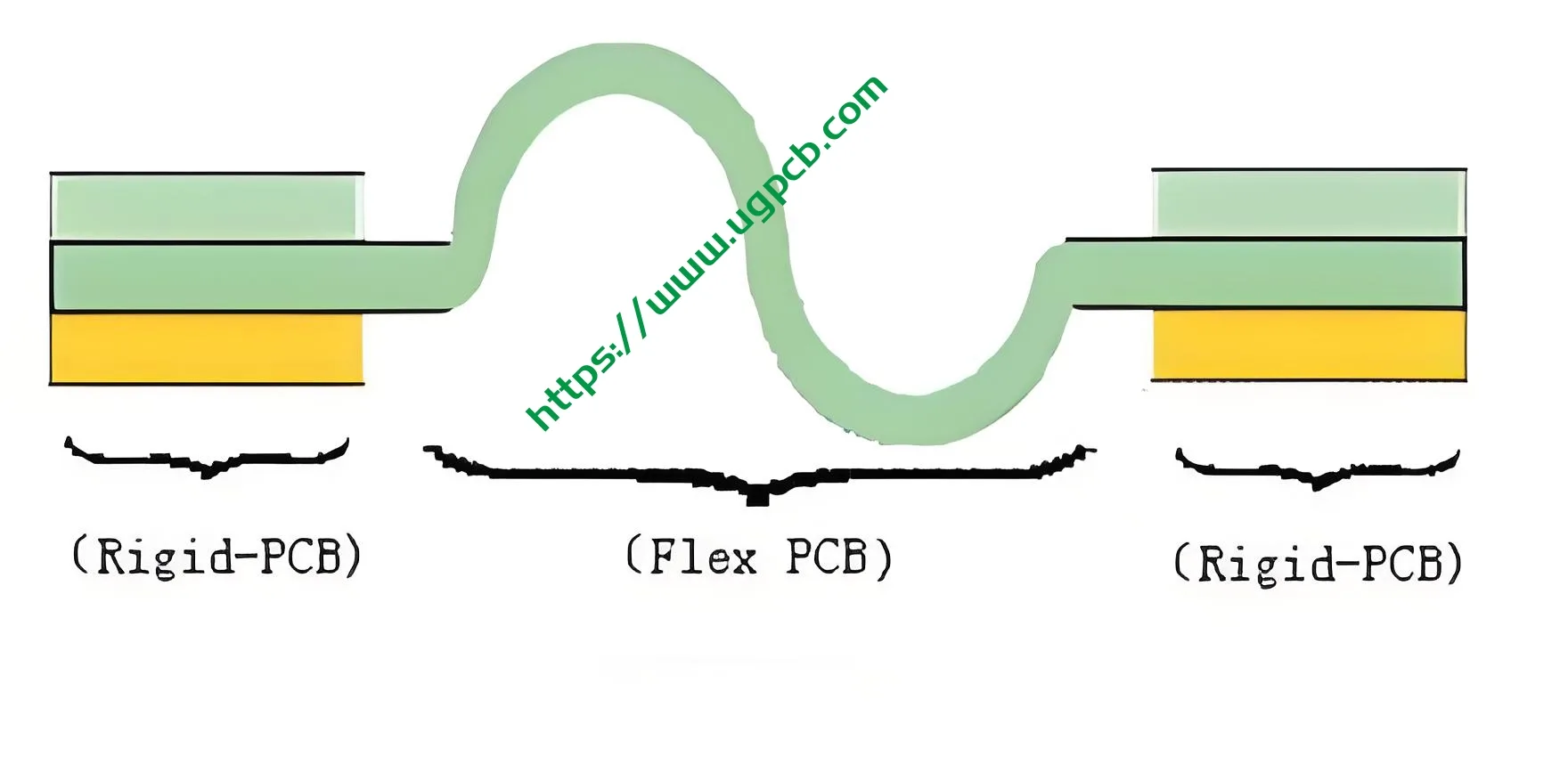
A 6-Layer Rigid-Flex PCB is an advanced Leiterplatte technology that integrally combines rigid board stability with flexible circuit dynamic bending capability. This product from UGPCB utilizes a premium adhesive-free lamination Verfahren, resulting in a final board thickness of 1.50mm, dimensions of 120x80mm, and features an ZUSTIMMEN (Elektrololes Nickel -Eintauchgold, 3M”) Oberflächenbeschaffung. It represents a cutting-edge solution for Hochdichte Interconnect (HDI) and three-dimensional electronic packaging, solving complex spatial and mechanical challenges in modern electronics.
Scientific Product Classification
According to IPC-6013D standards and product construction, this board is accurately classified as:
-
By Construction: Rigid-Flex Printed Board (Typ 4)
-
Für Schichtzahl: Six-Layer Board (combining rigid and flexible layers)
-
Nach Technologie: Adhesive-less (Adhesive-Free) Flexible Material Rigid-Flex PCB
-
Durch Anwendung: High-Reliability, High-Flex-Cycle Industrial & Medical Grade PCB
Core Structure & Materialien
The exceptional performance is rooted in its sophisticated layered structure and top-tier materials:
-
Core Flex Material: Merkmale Shengyi’s 18/50/18 μm adhesive-free double-sided substrate. “18/50/18” denotes a structure of 1 oz (18μm) Kupfer / 50μm Polyimide (PI) dielectric / 1 oz (18μm) Kupfer. Der adhesive-free construction bonds copper to PI chemically, eliminating adhesive layers, which significantly enhances thermal resistance, chemical resistance, Und flex circuit Zuverlässigkeit.
-
Rigid Section Material: Uses 25/25 Prepreg for lamination in rigid areas, providing robust mechanical support.
-
Oberflächenbeschaffung: The entire board employs ZUSTIMMEN (3M”). This 3-microinch gold layer offers excellent flatness, Oxidationsbeständigkeit, and solderability for PCB pads, making it ideal for assembling Fine-Pitch-Komponenten like BGAs.
Design Key Considerations & Arbeitsprinzip
Rigid-flex PCB design is critical for success. The board operates by routing electrical signals through flexible polyimide areas for dynamic movement, while using rigid FR-4 sections for component mounting and structural support.
Essential Design Guidelines Include:
-
Bend Area Definition: Clearly distinguish between static (one-time install) Und dynamic (repeated operation) bend zones. Design the bend radius accordingly. A dynamic bend radius should be at least 10x the flex area thickness (for this board, ≥15mm is recommended).
-
Transition Zone Reinforcement: The rigid-to-flex junction is a stress point. Verwenden teardrop pads, curved traces, Und stiffeners to prevent delamination and cracking.
-
Impedanzkontrolle: For high-speed signals (z.B., differential pairs) crossing flex areas, precisely calculate trace width and dielectric thickness to maintain consistent charakteristische Impedanz (z.B., 50Ω single-ended, 100Ω differential).
-
Flex Routing Rules: In flexible areas, route conductors perpendicular to the bend axis. Use curved or staggered traces to distribute stress evenly.
Leistungseigenschaften & Vorteile
Compared to traditional adhesive-based rigid-flex PCBs or rigid-board+connector assemblies, this UGPCB product offers distinct PCB advantages:
-
Verbesserte Zuverlässigkeit: The adhesive-free structure prevents delamination risks from adhesive aging or moisture absorption, increasing flex life by up to 10x and withstands over 100,000 Dynamische Biegerzyklen.
-
Superior Electrical Performance: Uniform PI dielectric with stable dielectric constant (Dk~3.4) ensures signal integrity for high-frequency applications and reduces loss.
-
Leicht & Hochdichte: Eliminates connectors, Kabel, and solder joints, enabling 3D assembly. Can reduce system weight by up to 60% and save over 50% Raum.
-
Excellent Durability: Resists extreme temperatures (-55°C bis +125°C) and chemical exposure, suitable for harsh environments.
-
Simplified Assembly: A single integrated component reduces assembly steps, potential failure points, and improves final product yield.
Überblick über den Produktionsprozess
UGPCB rigid-flex PCB manufacturing combines advanced rigid PCB fabrication Und flexible circuit production Prozesse:
-
Inner Layer Fabrication: Separate etching of rigid FR-4 and flexible PI core layers.
-
Laminierung: Precise alignment and high-temperature/pressure bonding of rigid layers, adhesive-free flex cores, and prepreg into a monolithic structure—a critical step in mehrschichtige Leiterplatte Verarbeitung.
-
Bohren & Überzug: Mechanical and laser drilling (if needed) followed by copper deposition and plating to create Durchkontaktierte Löcher (PTH) for interlayer connection.
-
Outer Layer Imaging & Radierung: Pattern formation for outer layer circuits.
-
Anwendung der Oberflächenveredelung: ENIG chemical deposition.
-
Coverlay & Profilierung: Application of protective film (coverlay) on flex areas. Precise Routenführung Und Laserschnitt define the board outline and flex section openings.
-
Elektrische Prüfung & Endinspektion: 100% fliegende Sonde or fixture testing for electrical continuity, followed by rigorous visual and dimensional inspection.
Primäranwendungen & Anwendungsfälle
Das 6-layer high-reliability PCB is the ideal choice for demanding applications:
-
Luft- und Raumfahrt & Verteidigung: Satellite deployment mechanisms, guidance systems, avionics sensors requiring utmost reliability and weight reduction.
-
Advanced Medical Devices: Endoskope, ultrasound probes, wearable monitors needing complex motion and signal transmission in minimal space.
-
Industrial Robotics: Robot joints, internal robotic arm assemblies for seamless power/signal transmission across moving parts.
-
Precision Instruments & Unterhaltungselektronik: Advanced camera modules, foldable display hinges, drone gimbals pursuing slimness and durability.
-
Kfz -Elektronik: Automated parking sensors, foldable dash displays, in-vehicle camera modules resistant to vibration and thermal cycling.

Ready to integrate superior reliability into your design? Contact UGPCB engineers today for a free design review and quote on your custom 6-Layer Rigid-Flex PCB solution.